“Poor Miles… has suffered ten thousand deaths.”

Today, we remember Yadkin County native Miles Melmouth Cowles, Adjutant of the 38th North Carolina Troops, who died on this date, 163 years ago.

Miles Melmouth Cowles, 1861

As Cowles’ full life story could fill numerous pages, this installment will focus only on his wounding and the subsequent days leading up to his death.

Arriving in Richmond in the late spring of 1862, the 38th North Carolina was a relatively “green” regiment. That soon changed, none more so when they marched off on June 26 into what would become the start of the Seven Days’ Battles around Richmond. For regimental Adjutant Miles M. Cowles though, this was not his first test. A seasoned veteran at the mere age of 27, Cowles had served previously as a First Lieutenant with the “Yadkin Grey Eagles,” comprising Company B of the 11th North Carolina Volunteers (later designated the 21st NC Troops) from its organization in April of 1861 well through the Manassas campaign.

Now, Cowles was on the field & staff of the regiment as its chief administrative officer, and spent the months leading prior to assisting with drill and training his young volunteers. Going into the fight though he knew his men were ready for their baptism by fire. Likewise, he and his fellow officers felt a certain security under the watchful eyes of Brigadier General and fellow Tar Heel, William Dorsey Pender, along with their division commander, Major General A.P. Hill.

Describing the start of the battle that would take on many names, to include “Mechanicsville,” “Beaver Dam Creek,” and “Ellerson’s Mill,” then Captain (later Lt. Colonel) George W. Flowers wrote:

“The division crossed Meadow Bridge on June 26th… As soon as the 38th NC Regiment had gotten a little beyond Mechanicsville it was saluted with heavy shelling. A line of battle was formed and the march continued until the order was given to charge the battery that was throwing the deadly missiles. The heat was intense and the double-quick march exhausting, but the charge was kept up over the open field until the regiment reached the summit of the last elevation when a farm house, yard, and garden broke the line somewhat. The Yankee batteries were upon the summit of the opposite hill with their supporting infantry in their entrenchments, and the old field pines in front cut down and piled across the stumps which were left about three (3) feet high, forming an almost impassable barrier. The 38th NC Regiment, alone and unsupported, charged down the hill, the long line of infantry playing upon it with a cross fire. On the soldiers charged, in the face of the fatal volleys, until the obstacles were reached, when the whole line stopped and began returning the fire under every disadvantage. The men were falling rapidly and it was soon seen that to take the works was impossible.”

Picking up from here on the account of Lt. Colonel Robert F. Armfield of the 38th:

“I was an eye witness of the noble gallantry of Adjutant Cowles during that dreadful charge; and as we rushed furiously down the hill-side fronting the enemy’s battery, only about two hundred yards distant, through a storm of bombs, solid shot, grape and canister, and Minie balls, never surpassed in fury on any battlefield, and whilst the wounded and the killed were falling on every side ‘thick as grain before the reapers sick,’ I could distinguish his manly form through the smoke of battle, far in front of everyone else, and I could hear his clarion voice amid the roar of artillery and musketry, cheering on the brave men who pressed after him. Still he was untouched, as if by a miracle; until a retreat was ordered, when, in utter disregard of his personal safety, he rushed to a small portion of our men who had taken shelter in a clump of trees on our extreme right, and who, it seems had not heard the command to retreat, and were remaining behind. He went from tree to tree, admonishing the men to retreat; and whilst thus nobly engaged in endeavoring to save the men from falling into the hands of the enemy as prisoners, he received a flesh wound in the thigh… I met him a few minutes afterwards at the place where the regiment was reformed, still in reach of the enemy’s incessant fire of artillery. He was assisting in rallying the men, apparently unconscious of his wound. I told him he must go to the rear, he replied he could not leave me; and when I repeated that he must go, he took me by the hand, and whilst the tears ran down his cheek, he said, ‘I want to stay with you until the battle is over.’ I never saw him afterwards.”

Adjutant Cowles remained with his men until they had reached safety, under cover of darkness. Though adamant in his refusal to have his wound dressed or leave the field until the battle was over, he finally heeded his commander’s call. Mounting his horse, Cowles rode the several miles back into Richmond, arriving early in the morning of the 27th. He was initially received and treated at the “Kent Hospital” (formerly warehouse of Kent, Paine & Co.), but transferred to a private residence on June 30th.

Sadly, it was said “he never rallied from the shock caused by the loss of blood.” Word was sent out immediately to his family in North Carolina warning of his grave condition. His older brother Andrew C. Cowles, a member of the North Carolina House of Representatives, arrived from Raleigh in just a few days. Another brother, William Henry Harrison Cowles, serving as Captain of Company A of the 1st North Carolina Cavalry, and a nephew Calvin Benham (also of the 1st NC Cavalry), were granted furloughs and joined him soon thereafter.

Adjutant Cowles lingered for days, with his family keeping watch around the clock, ever holding on hope of his survival. A letter to their father on July 8th reported, “Miles, poor Miles, has suffered ten thousand deaths, but today our kind and accomplished Surgeon Dr. Chambliss thinks his symptoms are slightly better,” though warning, “You must prepare yourself for the worst at any time.”

His life was not to be spared though, and at 6:50 PM on July 9th, 1862, Miles Melmouth Cowles breathed his last, his nephew noting, “Miles bore himself gallantly.”

The news of his passing spread quickly to his comrades, with an outpouring of condolences coming in the wake.

Brigadier General William Dorsey Pender stated in his report of the battle that Adjutant Cowles, “nobly maintained his position until after dark,” and in another account that, “he had never seen anyone behave with more distinguished bravery.”

Colonel William J. Hoke wrote: “The heroic gallantry of Adj. M.M. Cowles… in every duty he was called upon to fulfill on the battlefield. During the entire charge he was in front of the regiment nobly urging on the men, and when ordered to retreat, he was the last to leave the field.”

Lt. Colonel Robert F. Armfield: “A purer, nobler, braver spirit than his, never passed from this to the spirit world; and Liberty herself never made a more precious sacrifice, than when she gave his young heart to death for her cause.”

From his nephew Calvin Cowles Benham: “He was generous, kind & noble. And his life has been fully given in defense of his home… Like others he gives himself a martyr to his country. Oh may God bless him…”

After his passing, the body of Adjutant Cowles – accompanied by his brothers and nephew – took the final trip home to Hamptonville, Yadkin County, North Carolina. He was buried at the Flat Rock Baptist Church Cemetery.

A six month old daughter survived him.

Image: 1/6th plate melainotype (tintype) taken by photographer Esley Hunt in Raleigh, circa September 1861. This image composes part of the Cowles Family Collection, courtesy of Fred D. Taylor.

July 2, 1863

Yesterday’s #fredonhistory post got a lot of comments, so here we go remembering day 2 of Gettysburg, with two images featuring officers of the 33rd North Carolina, one of whom fell on the field that day…

When North Carolina seceded in May of 1861, forty-three year old attorney Tod Robinson Caldwell of Morganton held strong to his allegiance to the Union. A five time member of the North Carolina General Assembly, Caldwell was said to be an old line, “Henry Clay Whig,” who could not support secession.

Without a doubt then, he also hoped his teenaged son, John “Jack” Caldwell, would do the same. Young Jack was a Cadet at the Hillsboro Military Academy at the time though, and it did not take long for him to cast his lot with the South. By September of 1861, Caldwell was serving as a 2nd Class Drill Instructor for the state of North Carolina in training camps in and around Asheville. He continued in this capacity through 1862, until most of the volunteer regiments had organized and marched off.

Cadet John “Jack” Caldwell,
Hillsboro Military Academy

Reaching the age of 18 and longing to command in the field, Jack Caldwell called on his old family friend and neighbor, Colonel Clarke Moulton Avery, commander of the 33rd North Carolina Troops. When Caldwell reached the regiment in early May 1863, the 33rd (a part of Lane’s Brigade) was in action at the battle of Chancellorsville. That same day Caldwell was appointed to serve as a 2nd Lieutenant in Company E of the 33rd.

After receiving his baptism under fire at Chancellorsville, young Lieutenant Caldwell marched northward with the 33rd North Carolina in Lee’s second invasion of the north. The result was the battle of Gettysburg.

Colonel Clarke Moulton Avery
33rd North Carolina Troops

On the second day of the battle, Major General William Dorsey Pender called on the 33rd for volunteers to challenge a line of Yankee skirmishers who were wreaking havoc on their front. Seventy-five volunteered and were placed under the command of Lt. Wilson Lucas and Lt. Jack Caldwell. Lucas recalled Pender asking, “Can you take that road in front? If you can’t take it say so, and I will get someone who can.” Lucas responded, “We can take it if any other 75 men in the army of Northern Virginia can.” Lucas went on to describe:

“We formed the men in line, I commanded the right and Lieut. Caldwell the left. We had to charge through an open field, with no protection whatever… When we got within two hundred yards of the Federals, we charged with a yell, and they stood their ground until we were within ten steps of the road, then a part of them ran, but 26 surrendered. And the very last time they fired upon us, which was not more than twelve or fourteen feet from them, they shot Lieut. Caldwell in the left breast. I did not see him fall. As soon as we were in the road one of the men told me Lieut. Caldwell was killed. I went at once to the left and found him, lying partly on his back and side… I called two men, and we placed him on his back and spread his oil cloth over him. He was warm and bleeding very freely when I got to him. I could not send him out to the regiment, for it was such an exposed place the Federal skirmishers would have killed a man before he could get a hundred yards, as we were lying close to each other.”

As a result of his courage that day, Lt. Caldwell was recognized by his comrades on North Carolina’s Roll of Honor.

Following the engagement , Caldwell’s body was safely recovered and his remains returned home, where he is buried at the Forest Hill Cemetery in Morganton.

I should also add, Caldwell’s father went on to become Lieutenant Governor and Governor during the Reconstruction period in North Carolina.

Images:

1/4 plate tintype of John “Jack” Caldwell as a Cadet at the Hillsboro Military Academy. Courtesy of the Brem Family.

Carte-de-visite of Colonel Clarke Moulton Avery, M. Witt’s Photograph Gallery, Columbus, Ohio. Taken while prisoner of war at Johnson’s Island, 1862. Courtesy Fred D. Taylor Collection, Suffolk, Virginia.

162 Years – Remembering Day 1 of Gettysburg

A special Tuesday edition of #FredOnHistory

Without fail, the early days of July put me into a mood for history. Of course, it’s easy when remembering those three fateful days in 1863 at Gettysburg, followed by July 4th and its look back at the American Revolution / founding of the United States – now quickly approaching 250 years!

So today, it was not surprising that after a Court hearing, Archer and I spent the afternoon immersed in history, working on a conservation project and then trekking across a Richmond battlefield (more to come on those).

For July 1st though, I cannot fail to recall the brave boys of the 26th North Carolina regiment who “covered itself with glory,” under the command of their “Boy Colonel” Henry K. Burgwyn.

This brings me to a special photograph in my collection.

Charles McDowell Suddreth (also spelled Sudderth) was born on October 18, 1833, in what would become Caldwell County, North Carolina, the son of Thomas and Catherine Sudderth.

In 1856, he married Margaret E. Spainhour, and began a family, with their first child – Catherine Elizabeth – born in 1858. A second child, and mother, passed away from complications of childbirth in July of 1861.

With War now in its second year, Charles left his four year old daughter with family, and enlisted as a Private in the “Hibriten Guards,” Company F of the 26th North Carolina Troops, on March 20, 1862. He was elected second lieutenant on April 21, 1862, and promoted to first lieutenant on October 16, 1862.

When the 26th arrived on the outskirts of the town of Gettysburg in July of 1863, the regiment numbered some 800 officers and men. By the conclusion of the first day’s battle on McPherson’s Ridge, only 212 were left unhurt. As described by historian Greg Mast: “… the “Hibriten Guards” … achieved a terrible fame at the Battle of Gettysburg. During the fight against the Iron Brigade… every member of the company present was shot down: thirty-three men were killed or mortally wounded and fifty-eight were wounded. That “unparalleled loss” may be the only instance of an entire company’s being wiped out in one battle during the war.”

As for Lt. Charles M. Suddreth, he was severely wounded in the right hand. He escaped capture, however, and returned with the regiment back to Virginia, but was hospitalized. Military service records indicate he spent the majority of the fall and summer of 1863 in Richmond-area hospitals before returning to duty.

Lt. Suddreth remained with the 26th regiment through 1864, with an intermittent hospital visit in the summer, before he submitted his resignation on January 14, 1865, with a request to be allowed to return home and join one of the cavalry units defending western North Carolina. Though records are unclear whether that officially occurred, Suddreth returned home but could not escape the War. On April 15, 1865, he was captured in Lenoir, North Carolina, by Stoneman’s raiders. He was confined at Camp Chase, Ohio, and released on June 14, 1865, after taking the Oath of Allegiance.

Following his release, Suddreth started life anew, marrying Mary Elizabeth Ann “Betty” Corpening in the fall of 1865. With Betty, they raised ten children.

Suddreth went on to live a fulfilling life, farming in the Lenoir area of Caldwell County, until limited by a stroke in 1910 leaving him permanently paralyzed. He would receive a veteran’s pension from the state of North Carolina as a result of his service.

Charles McDowell Suddreth died on May 30, 1914, and was buried in the Littlejohn Church Cemetery, in Caldwell County. The Lenoir News reported:

“On last Saturday afternoon Mr. Charles M. Suddreth died at his home about five miles west of town after an illness of many months. He suffered a stroke of paralysis two or more years ago and has been an invalid ever since. He retained his mental faculties remarkably for one in his condition, but was practically unable to help himself in any way. He bore his long illness with great fortitude and resignation. He was about 75 years old and is survived by a widow and several grown children. He was a member of the Methodist Church, a modest worthy citizen, held in esteem by a large number of friends. He was one of four brothers to go through the Civil War and was a courageous soldier. The body was buried at Littlejohns Church on Monday.”

Image: Quarter plate ambrotype by an unknown photographer. This image appears to have been taken during his time as a 2nd Lieutenant, which would date the image between April-October, 1862. Suddreth is holding an Eagle-head, pre-War militia sword.

Courtesy of the Fred D. Taylor collection of “Tar Heel Faces.” For more information, see: https://tarheelfaces.omeka.net/

News from the Tar Heel Faces Photograph Project

Private John Dolphin Harris,
Company A, 50th North Carolina Troops

Some updates! A little over a year ago, I announced that we were transitioning and reviewing/revising much of the content from our Facebook page State Troops and Volunteers to a more permanent location. I am happy to report the progress at our website:

Tar Heel Faces

This site was created through Omeka, which is a web-publishing platform used for the display of library, museum, archives, and scholarly collections.

The site not only allows us to share images and stories, but also is much more user-friendly for research purposes. A full word/phrase search engine is included, and images can also be browsed by a topical tag. For example, if you want to find soldier images from a particular County or Regiment, we now have that capability. Additionally, you can directly submit your own images and stories for inclusion.

I could go on and on about all of the bells & whistles of the site, but I encourage you to take a look and find out for yourself! Likewise, let me know what you think, or any recommendations you may have for improvements.

Running the blockade…

A couple of new additions to my “crew” of blockade runner images.

George Washington Davis of North Carolina (1832 – circa 1900)

G.W. Davis was born into a seafaring family near Shackleford banks, Carteret County, North Carolina, in 1832. Little is known of his early life until he appears as the 2nd Mate of the iron-hulled paddle steamer, Britannia, which had been launched from Scotland in the spring of 1862. The Britannia made six runs through the blockade before being captured off of the Bahamas on June 22, 1863, by the USS Santiago de Cuba. Davis, along with many of his fellow crew members, were sent to Fort Lafayette, NY; and later transferred to Fort Warren, Boston, Massachusetts, in September of 1863. Davis remained imprisoned at Fort Warren for the remainder of the War and after, until June 20, 1865.

This CDV of G.W. Davis was taken by photographer J.W. Black, Boston, Massachusetts, during his imprisonment at Fort Warren. Black also appears in several of the group images of Fort Warren prisoners that have been published.

After the War, Davis settled in Smithville (now Southport), North Carolina, where he married, raised a family, and continued in maritime pursuits as a sailor and pilot. He died prior to 1900.

George E. Lyell of Virginia (1837 – 1868)

A native of Norfolk, Virginia, George E. Lyell had been a member of the 54th Virginia Militia before he enlisted as a Private in Captain Nathan W. Small’s Signal Corps Company on March 5, 1862. This Company ultimately became a part of Major James F. Milligan’s Independent Signal Corps, operating as scouts and signal officers along the James and Appomattox rivers. Lyell was present with his company, and primarily stationed in Petersburg, until detailed in 1864 for signal duty to Wilmington, North Carolina, where he would serve on ships intended to run the blockade. Although the particulars of this service are unknown, he does appear on a list of Confederates in Havana, Cuba, in April of 1865, and later back in the Confederacy, where he was paroled at Charlotte, North Carolina, on May 4, 1865.

After the War, Lyell operated a restaurant and saloon in Norfolk, until an untimely death on July 23, 1868.

The CDV of George E. Lyell was photographed by A. Hobday & Co., Norfolk, Virginia, circa 1866-1868.

(These images are in the collection of and are courtesy of Fred D. Taylor.)

A Life Well Lived

Nicholas Lusher, 1962-2024

It seems like these last few weeks have been filled with nothing but news of illness and loss; and again this morning I woke up to learn of the passing of another friend.

I was first introduced to Nicholas Lusher back in 2018, as I began my journey into the early history of photography in Bermuda. To say he was an expert – and I do not toss that word around lightly – was an understatement, having an academic, professional, and personal/family background that did in fact make him what his obituary referred to as an “internationally esteemed art and antiques dealer dedicated to preserving the island’s cultural heritage.” But he was so much more than the acclaimed Caribbean and New York art dealer on the surface.

Upon learning of my interests, Nicky welcomed me into his world immediately, excited to provide research material, make referrals, and open doors that I otherwise would never have had as an outsider to Bermuda. We collaborated for several years thereafter as collectors, historians, and ultimately as friends. Once I published my story on photographer Samuel W. Gault (which I naively thought would be the end of my research), we remained in contact to share new historical findings and “talk shop.” And despite the fact he was in the business to find and sell art, he would frequently tip me off when Gault images would pop up in the marketplace, giving me the first chance on them.

I will forever be grateful for Nicky’s mentorship and the legacy he leaves in the art world, but most of all I send my deepest condolences to his family, of which I know he so loved and cherished even more. Requiescat in pace, my friend.

Fearless on the Cape Fear River

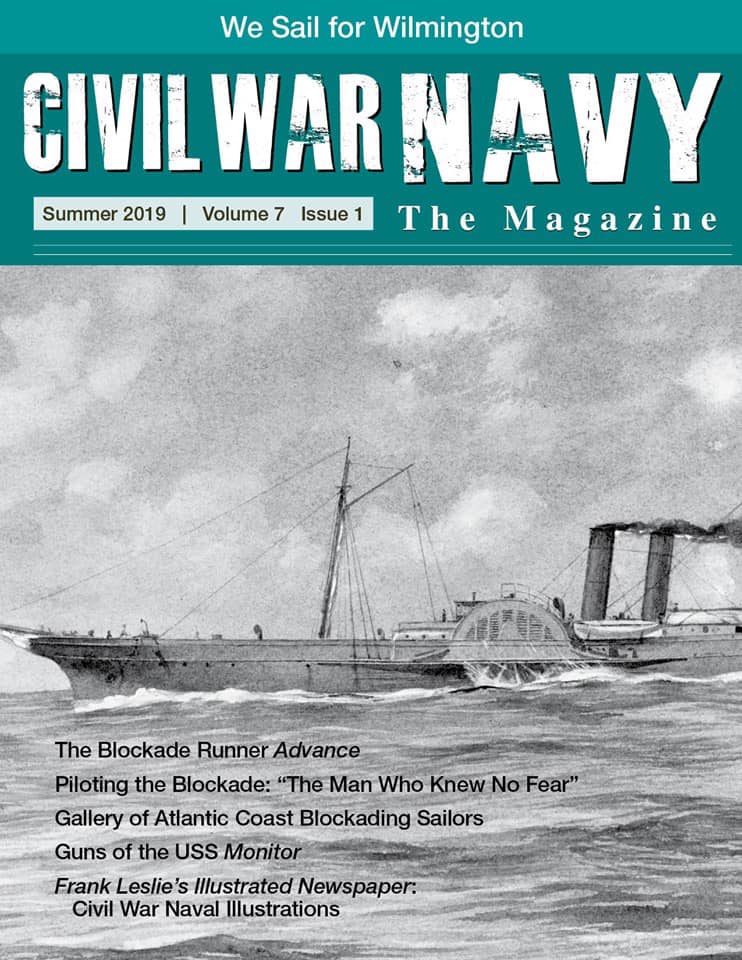
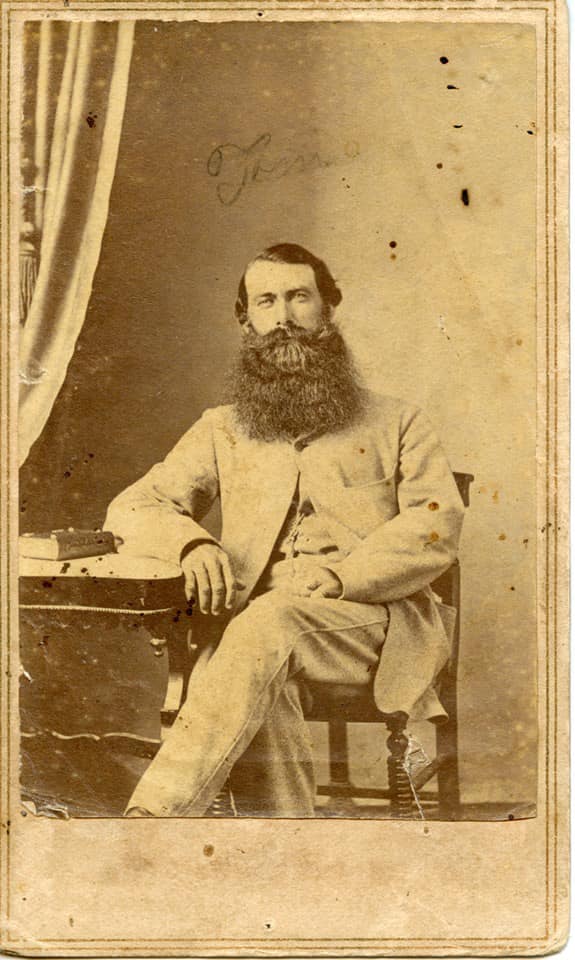
A sneak peak of my article in the Summer 2019 issue of Civil War Navy—The Magazine (civilwarnavy.com) profiles Thomas Mann Thompson, Jr., one of the Confederacy’s most successful blockade runner pilots, making over 30 runs through the blockade while escaping capture. Famed Confederate Captain Michael P. Usina called Thompson “an officer who knew no fear.”

(Thompson carte de visite courtesy of the Fred D. Taylor Collection. Image photographed by S.W. Gault, Hamilton, Bermuda, circa 1864.)

Military Images Magazine: Legacy Fulfilled

My latest project has recently been published in Military Images magazine, on the life of Captain William Rice Jones of Brunswick Mineral Springs.  Captain Jones was a Virginia native, West Point Cadet, Confederate artillery Captain, and ultimately, a Texas Rancher!

This all came together after years of research efforts, and the stars aligning to bring his story to life, through the help of the Jones family. I can’t express enough my gratitude to his family members who provided the images, Ron Coddington at Military Images, and the ever-faithful assistance of William J. Stier and my wife, who have always been willing to read drafts of my stories and provide much-needed critique!

Find out more about the article and Military Images magazine here.


Debut in Military Images Magazine

Many of you who know me are aware of my passion for history, and my interest and collection of Civil War-related items. For several years, that has included a focus on identified items in which I can bring the stories of the men and women from that period “to life.”  Particularly, period images.  Nothing brings history to life more than a photograph, where one can see a face and look into the eyes of an individual…. and the period just prior to and during the Civil War was truly the awakening of photography, such that these images tell a story as significant as battle reports, letters, or books.

I explain all of this to proudly debut my first (of many, I hope) article to appear in Military Images magazine. MI is one of the foremost historical publications in existence today, and the only one whose exclusive focus is the study of photographs of Civil War soldiers.  I began my journey here when I discovered (rediscovered?) an albumen print of Lieutenant Otway Berryman of the United States Navy.  Prior to obtaining this image, I had never heard his name mentioned. But he was a Virginian, and that interested me, and I quickly learned he died at the outbreak of hostilities.  That also piqued my curiosity.  Armed with this information, I began a quest some eight months ago researching this “unknown” naval officer.  What I learned from that research moved me so much that I knew his story needed to be told.  So this article is the culmination of that research, and from my perspective, a tribute to Lt. Berryman and his service.  For those of you who already subscribe to Military Images, I hope you enjoy the article. If you do not, but are interested in such history, please check out their website, and consider a subscription.  The current issue can be purchased, as well as subscriptions from the following link.

I cannot conclude without also thanking my family and my dear wife who tolerated my many hours locked away in research, and ultimately for her critique of this article.  I also knew that if I was going to write for a scholarly publication, I needed to run this article by historians and image collectors who not only had previously contributed to MI, but whose advice (and criticism) I knew would make this a better read. Those gentlemen include my dear friends Rusty Hicks, William Stier, and Doug York. Finally, I cannot say enough about the courtesy and professionalism extended to me by MI Editor and Publisher Ron Coddington who truly helped bring this story to life with his recommendations as we drafted our way through to the final version.