The year was 1875, and the country was in the midst of Reconstruction. In a small community along the Roanoke River outside of Littleton, Halifax County, North Carolina, it was said that “vice and ruin reigned.” One new arrival to the neighborhood noted that “the men and boys were spending the Sabbath playing baseball, cards, chicken fighting” and other such “evil ways.”
Finding the local moral condition “very bad,” a Mr. H. Throckmorton set about to make a change and found an old run down school house in which to start a Sunday school. Though resistant at first, eventually the community acquiesced, and next came prayer meetings. When they outgrew the school house, they built a brush arbor to accomodate more people and split logs for seating.
Realizing a spark had been created, Mr. Throckmorton sought to bring a minister in for regular services. After several instances of being turned down, he found an itinerant preacher – the Rev. John Travis Weaver – who lived in nearby Brunswick County, Virginia. Weaver agreed to attend, and preached an eight day revival that is said to have resulted in fifty converts.
The rest, as they say, is history.
A few months later, the congregants committed themselves to the creation of a permanent Church, and named it “Weaver’s Chapel” in honor of its first minister. By the next year, a log-framed and permanent chapel was built.
The original members/contributors to the creation of Weaver’s Chapel included the noted Mr. H. Throckmorton; numerous members of the Wilson families (Nathaniel & Elizabeth Wilson, Presley Wilson, Eaton & Elvy Wilson, Andrew Jackson Wilson); Thomas Morris; Thomas Pulley; J.M. Pulley; Durrell Gholson; John Harper; John Northington; and Sterling Johnston, and many others.
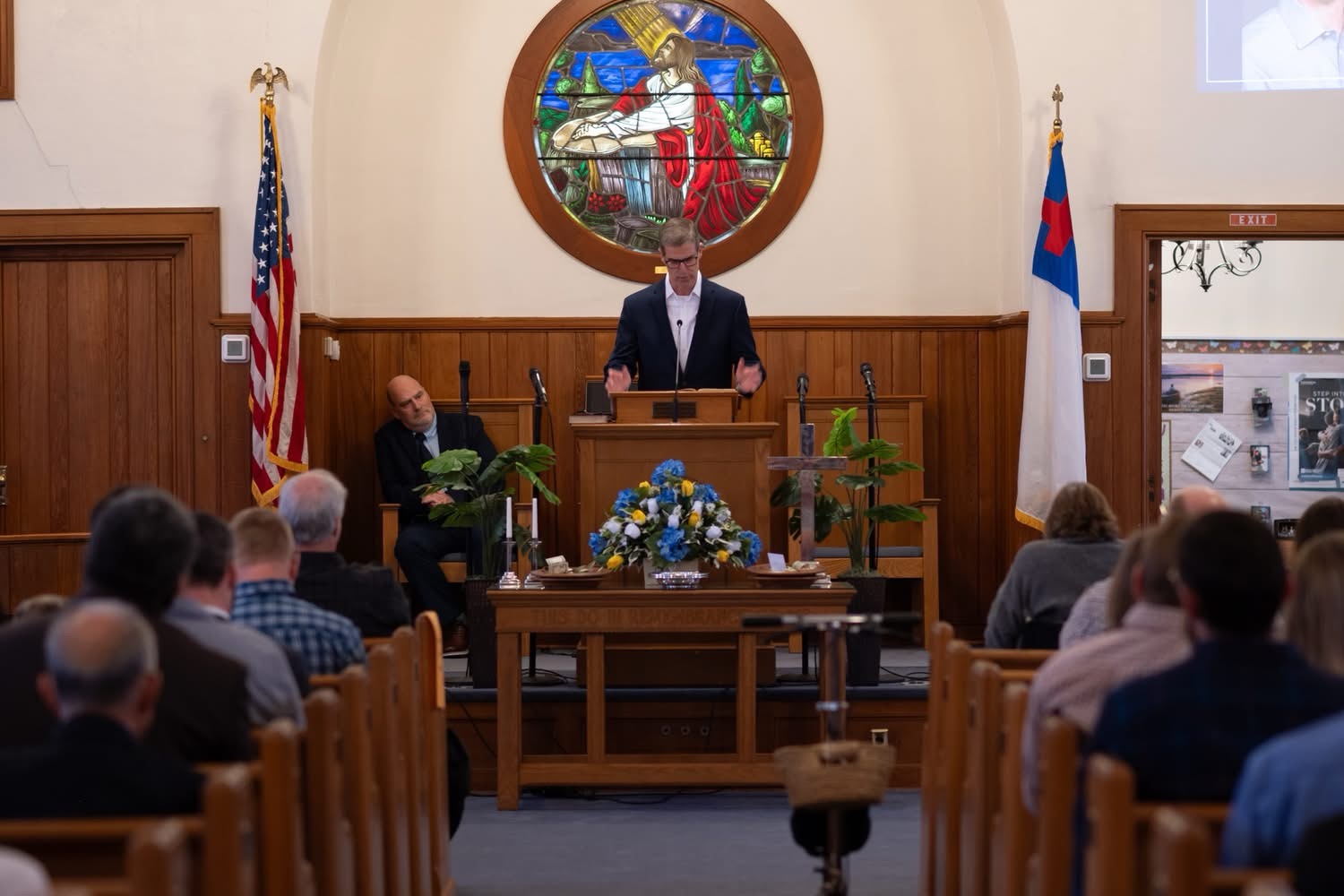
Tomorrow, I am excited to return to Littleton to celebrate the 150th anniversary of the Church that my grandmother, great-grandparents, and numerous other family, called their own.
Founding Church Families/Members
Nathaniel Wilson. Founding member, and donated the timber used for the Chapel.Andrew Jackson Wilson, founding member.Archer Wilson & family. Archer was five years old when Weaver’s Chapel was founded. His family would continue to worship here for the next hundred years and more. Eaton & Elvira Shearin Wilson, founding members. Elizabeth Shearin Wilson, founding member and wife of Nathaniel Wilson.Sterling Johnston, who provided and donated the windows for the Chapel. Thomas Morris, founding member.
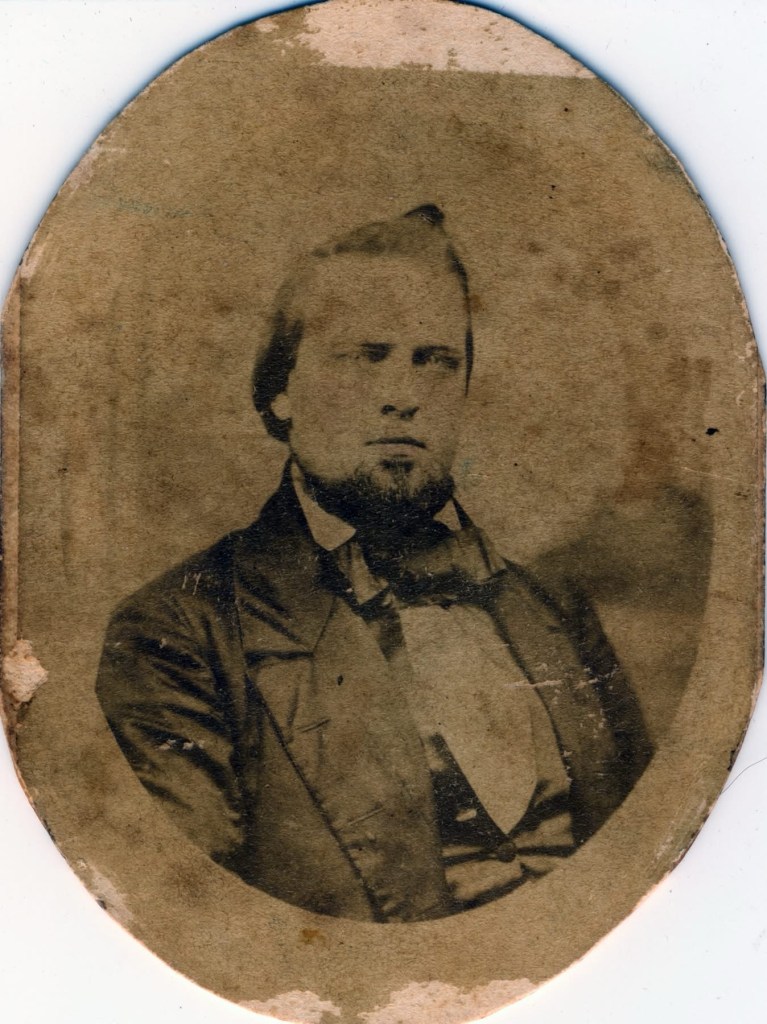
Today, we remember Yadkin County native Miles Melmouth Cowles, Adjutant of the 38th North Carolina Troops, who died on this date, 163 years ago.
Miles Melmouth Cowles, 1861
As Cowles’ full life story could fill numerous pages, this installment will focus only on his wounding and the subsequent days leading up to his death.
Arriving in Richmond in the late spring of 1862, the 38th North Carolina was a relatively “green” regiment. That soon changed, none more so when they marched off on June 26 into what would become the start of the Seven Days’ Battles around Richmond. For regimental Adjutant Miles M. Cowles though, this was not his first test. A seasoned veteran at the mere age of 27, Cowles had served previously as a First Lieutenant with the “Yadkin Grey Eagles,” comprising Company B of the 11th North Carolina Volunteers (later designated the 21st NC Troops) from its organization in April of 1861 well through the Manassas campaign.
Now, Cowles was on the field & staff of the regiment as its chief administrative officer, and spent the months leading prior to assisting with drill and training his young volunteers. Going into the fight though he knew his men were ready for their baptism by fire. Likewise, he and his fellow officers felt a certain security under the watchful eyes of Brigadier General and fellow Tar Heel, William Dorsey Pender, along with their division commander, Major General A.P. Hill.
Describing the start of the battle that would take on many names, to include “Mechanicsville,” “Beaver Dam Creek,” and “Ellerson’s Mill,” then Captain (later Lt. Colonel) George W. Flowers wrote:
“The division crossed Meadow Bridge on June 26th… As soon as the 38th NC Regiment had gotten a little beyond Mechanicsville it was saluted with heavy shelling. A line of battle was formed and the march continued until the order was given to charge the battery that was throwing the deadly missiles. The heat was intense and the double-quick march exhausting, but the charge was kept up over the open field until the regiment reached the summit of the last elevation when a farm house, yard, and garden broke the line somewhat. The Yankee batteries were upon the summit of the opposite hill with their supporting infantry in their entrenchments, and the old field pines in front cut down and piled across the stumps which were left about three (3) feet high, forming an almost impassable barrier. The 38th NC Regiment, alone and unsupported, charged down the hill, the long line of infantry playing upon it with a cross fire. On the soldiers charged, in the face of the fatal volleys, until the obstacles were reached, when the whole line stopped and began returning the fire under every disadvantage. The men were falling rapidly and it was soon seen that to take the works was impossible.”
Picking up from here on the account of Lt. Colonel Robert F. Armfield of the 38th:
“I was an eye witness of the noble gallantry of Adjutant Cowles during that dreadful charge; and as we rushed furiously down the hill-side fronting the enemy’s battery, only about two hundred yards distant, through a storm of bombs, solid shot, grape and canister, and Minie balls, never surpassed in fury on any battlefield, and whilst the wounded and the killed were falling on every side ‘thick as grain before the reapers sick,’ I could distinguish his manly form through the smoke of battle, far in front of everyone else, and I could hear his clarion voice amid the roar of artillery and musketry, cheering on the brave men who pressed after him. Still he was untouched, as if by a miracle; until a retreat was ordered, when, in utter disregard of his personal safety, he rushed to a small portion of our men who had taken shelter in a clump of trees on our extreme right, and who, it seems had not heard the command to retreat, and were remaining behind. He went from tree to tree, admonishing the men to retreat; and whilst thus nobly engaged in endeavoring to save the men from falling into the hands of the enemy as prisoners, he received a flesh wound in the thigh… I met him a few minutes afterwards at the place where the regiment was reformed, still in reach of the enemy’s incessant fire of artillery. He was assisting in rallying the men, apparently unconscious of his wound. I told him he must go to the rear, he replied he could not leave me; and when I repeated that he must go, he took me by the hand, and whilst the tears ran down his cheek, he said, ‘I want to stay with you until the battle is over.’ I never saw him afterwards.”
Adjutant Cowles remained with his men until they had reached safety, under cover of darkness. Though adamant in his refusal to have his wound dressed or leave the field until the battle was over, he finally heeded his commander’s call. Mounting his horse, Cowles rode the several miles back into Richmond, arriving early in the morning of the 27th. He was initially received and treated at the “Kent Hospital” (formerly warehouse of Kent, Paine & Co.), but transferred to a private residence on June 30th.
Sadly, it was said “he never rallied from the shock caused by the loss of blood.” Word was sent out immediately to his family in North Carolina warning of his grave condition. His older brother Andrew C. Cowles, a member of the North Carolina House of Representatives, arrived from Raleigh in just a few days. Another brother, William Henry Harrison Cowles, serving as Captain of Company A of the 1st North Carolina Cavalry, and a nephew Calvin Benham (also of the 1st NC Cavalry), were granted furloughs and joined him soon thereafter.
Adjutant Cowles lingered for days, with his family keeping watch around the clock, ever holding on hope of his survival. A letter to their father on July 8th reported, “Miles, poor Miles, has suffered ten thousand deaths, but today our kind and accomplished Surgeon Dr. Chambliss thinks his symptoms are slightly better,” though warning, “You must prepare yourself for the worst at any time.”
His life was not to be spared though, and at 6:50 PM on July 9th, 1862, Miles Melmouth Cowles breathed his last, his nephew noting, “Miles bore himself gallantly.”
The news of his passing spread quickly to his comrades, with an outpouring of condolences coming in the wake.
Brigadier General William Dorsey Pender stated in his report of the battle that Adjutant Cowles, “nobly maintained his position until after dark,” and in another account that, “he had never seen anyone behave with more distinguished bravery.”
Colonel William J. Hoke wrote: “The heroic gallantry of Adj. M.M. Cowles… in every duty he was called upon to fulfill on the battlefield. During the entire charge he was in front of the regiment nobly urging on the men, and when ordered to retreat, he was the last to leave the field.”
Lt. Colonel Robert F. Armfield: “A purer, nobler, braver spirit than his, never passed from this to the spirit world; and Liberty herself never made a more precious sacrifice, than when she gave his young heart to death for her cause.”
From his nephew Calvin Cowles Benham: “He was generous, kind & noble. And his life has been fully given in defense of his home… Like others he gives himself a martyr to his country. Oh may God bless him…”
After his passing, the body of Adjutant Cowles – accompanied by his brothers and nephew – took the final trip home to Hamptonville, Yadkin County, North Carolina. He was buried at the Flat Rock Baptist Church Cemetery.
A six month old daughter survived him.
Image: 1/6th plate melainotype (tintype) taken by photographer Esley Hunt in Raleigh, circa September 1861. This image composes part of the Cowles Family Collection, courtesy of Fred D. Taylor.
Private John Dolphin Harris, Company A, 50th North Carolina Troops
Some updates! A little over a year ago, I announced that we were transitioning and reviewing/revising much of the content from our Facebook page State Troops and Volunteers to a more permanent location. I am happy to report the progress at our website:
This site was created through Omeka, which is a web-publishing platform used for the display of library, museum, archives, and scholarly collections.
The site not only allows us to share images and stories, but also is much more user-friendly for research purposes. A full word/phrase search engine is included, and images can also be browsed by a topical tag. For example, if you want to find soldier images from a particular County or Regiment, we now have that capability. Additionally, you can directly submit your own images and stories for inclusion.
I could go on and on about all of the bells & whistles of the site, but I encourage you to take a look and find out for yourself! Likewise, let me know what you think, or any recommendations you may have for improvements.
Memorial table and portrait of South Quay’s longest-serving minister, Rev. James E. Jones.
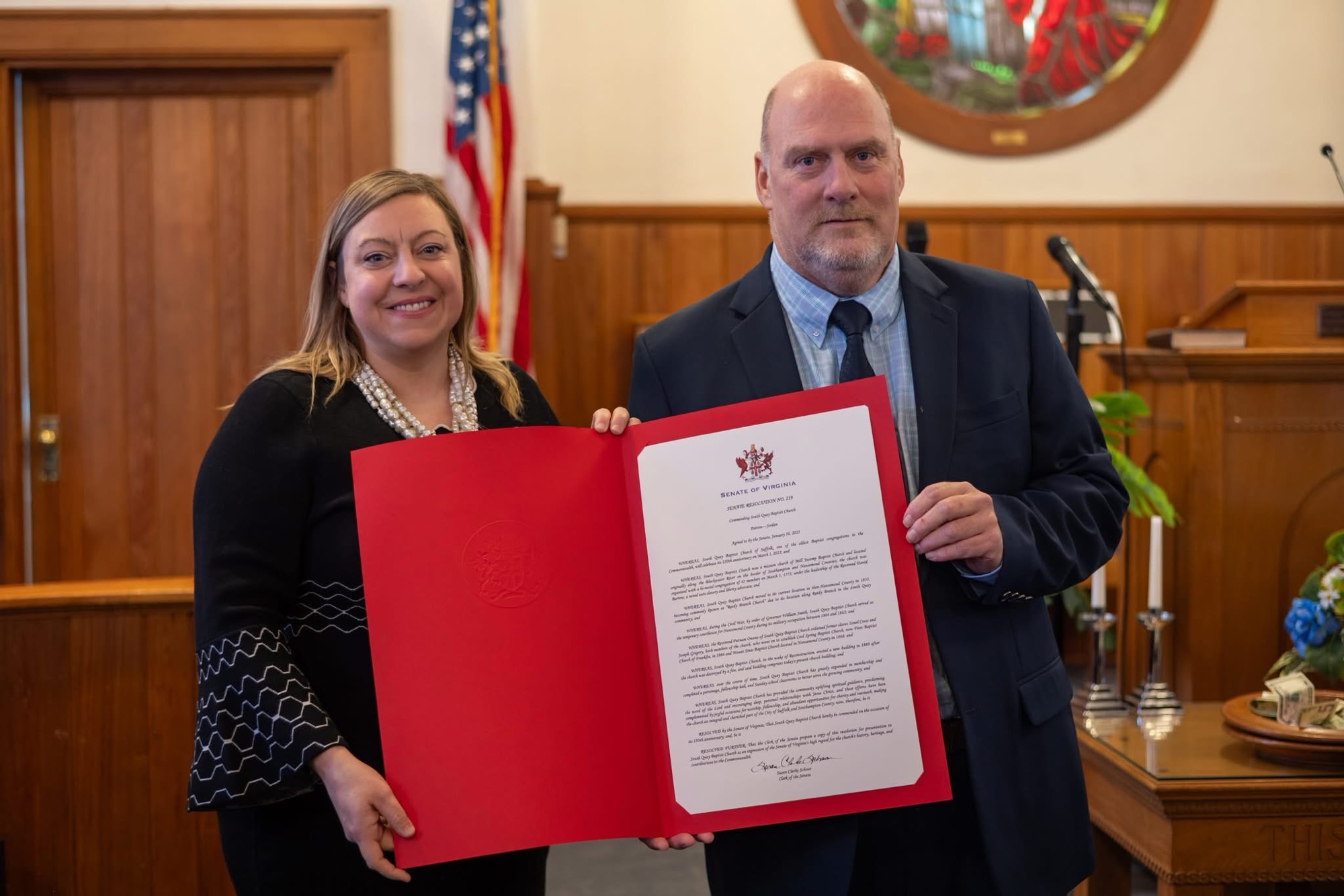
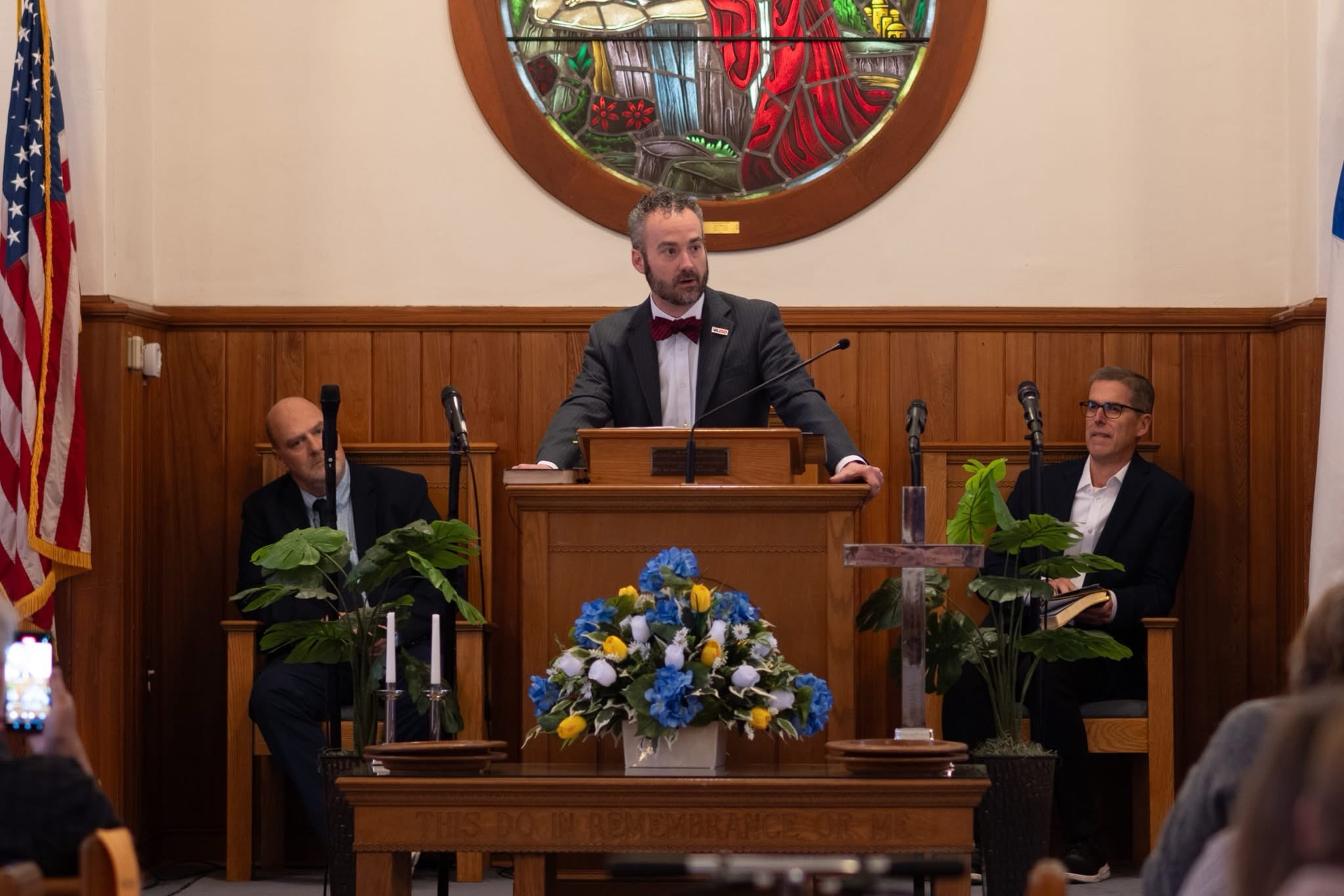
I had the distinct privilege of speaking at the homecoming celebration held on Sunday, March 16, recognizing South Quay Baptist Church for its 250th anniversary. It was a packed-house, with standing room only and just a wonderful day of sharing history, fellowship, and worship!
Additionally, the following resolution was passed by the Senate of Virginia as SR219 commending South Quay on this great honour and outlining the Church’s history:
WHEREAS, South Quay Baptist Church of Suffolk, one of the oldest Baptist congregations in the Commonwealth, will celebrate its 250th anniversary on March 1, 2025; and
WHEREAS, South Quay Baptist Church was a mission church of Mill Swamp Baptist Church and located originally along the Blackwater River on the border of Southampton and Nansemond Counties; the church was organized with a bi-racial congregation of42 members on March 1, 1775, under the leadership of the Reverend David Barrow, a noted anti-slavery and liberty advocate; and
WHEREAS, South Quay Baptist Church moved to its current location in then-Nansemond County in 1835, becoming commonly known as “Reedy Branch Church” due to its location along Reedy Branch in the South Quay community; and
WHEREAS, during the Civil War, by order of Governor William Smith, South Quay Baptist Church served as the temporary courthouse for Nansemond County during its military occupation between 1864 and 1865; and
WHEREAS, the Reverend Putnam Owens of South Quay Baptist Church ordained former slaves Israel Cross and Joseph Gregory, both members of the church, who went on to establish Cool Spring Baptist Church, now First Baptist Church of Franklin, in 1866 and Mount Sinai Baptist Church located in Nansemond County in 1868; and
WHEREAS, South Quay Baptist Church, in the wake of Reconstruction, erected a new building in 1889 after the church was destroyed by a fire, and said building comprises today’s present church building; and
WHEREAS, over the course of time, South Quay Baptist Church has greatly expanded in membership and completed a parsonage, fellowship hall, and Sunday school classrooms to better serve the growing community; and
WHEREAS, South Quay Baptist Church has provided the community uplifting spiritual guidance, proclaiming the word of the Lord and encouraging deep, personal relationships with Jesus Christ, and these efforts have been complemented by joyful occasions for worship, fellowship, and abundant opportunities for charity and outreach, making the church an integral and cherished part of the City of Suffolk and Southampton County; now, therefore, be it
RESOLVED by the Senate of Virginia, That South Quay Baptist Church hereby be commended on the occasion of its 250th anniversary; and, be it
RESOLVED FURTHER, That the Clerk of the Senate prepare a copy of this resolution for presentation to South Quay Baptist Church as an expression of the Senate of Virginia’s high regard for the church’s history, heritage, and contributions to the Commonwealth.
A couple of new additions to my “crew” of blockade runner images.
George Washington Davis of North Carolina (1832 – circa 1900)
G.W. Davis was born into a seafaring family near Shackleford banks, Carteret County, North Carolina, in 1832. Little is known of his early life until he appears as the 2nd Mate of the iron-hulled paddle steamer, Britannia, which had been launched from Scotland in the spring of 1862. The Britannia made six runs through the blockade before being captured off of the Bahamas on June 22, 1863, by the USS Santiago de Cuba. Davis, along with many of his fellow crew members, were sent to Fort Lafayette, NY; and later transferred to Fort Warren, Boston, Massachusetts, in September of 1863. Davis remained imprisoned at Fort Warren for the remainder of the War and after, until June 20, 1865.
This CDV of G.W. Davis was taken by photographer J.W. Black, Boston, Massachusetts, during his imprisonment at Fort Warren. Black also appears in several of the group images of Fort Warren prisoners that have been published.
After the War, Davis settled in Smithville (now Southport), North Carolina, where he married, raised a family, and continued in maritime pursuits as a sailor and pilot. He died prior to 1900.
George E. Lyell of Virginia (1837 – 1868)
A native of Norfolk, Virginia, George E. Lyell had been a member of the 54th Virginia Militia before he enlisted as a Private in Captain Nathan W. Small’s Signal Corps Company on March 5, 1862. This Company ultimately became a part of Major James F. Milligan’s Independent Signal Corps, operating as scouts and signal officers along the James and Appomattox rivers. Lyell was present with his company, and primarily stationed in Petersburg, until detailed in 1864 for signal duty to Wilmington, North Carolina, where he would serve on ships intended to run the blockade. Although the particulars of this service are unknown, he does appear on a list of Confederates in Havana, Cuba, in April of 1865, and later back in the Confederacy, where he was paroled at Charlotte, North Carolina, on May 4, 1865.
After the War, Lyell operated a restaurant and saloon in Norfolk, until an untimely death on July 23, 1868.
The CDV of George E. Lyell was photographed by A. Hobday & Co., Norfolk, Virginia, circa 1866-1868.
(These images are in the collection of and are courtesy of Fred D. Taylor.)
Since returning from some travels this week, I have had history “on the brain,” and I have simply wanted to research and write. So with this month honoring women, a recent addition to my “caretaking family” was immediately on my mind. Here’s the rest of the story…
When it comes to collecting old photographs, finding one that is identified is usually about a fifty-fifty shot (maybe less?) It seems to become even more difficult the older the image may be. When a photograph appears that checks the boxes for time period, identification, location, and even more, you have truly been fortunate.
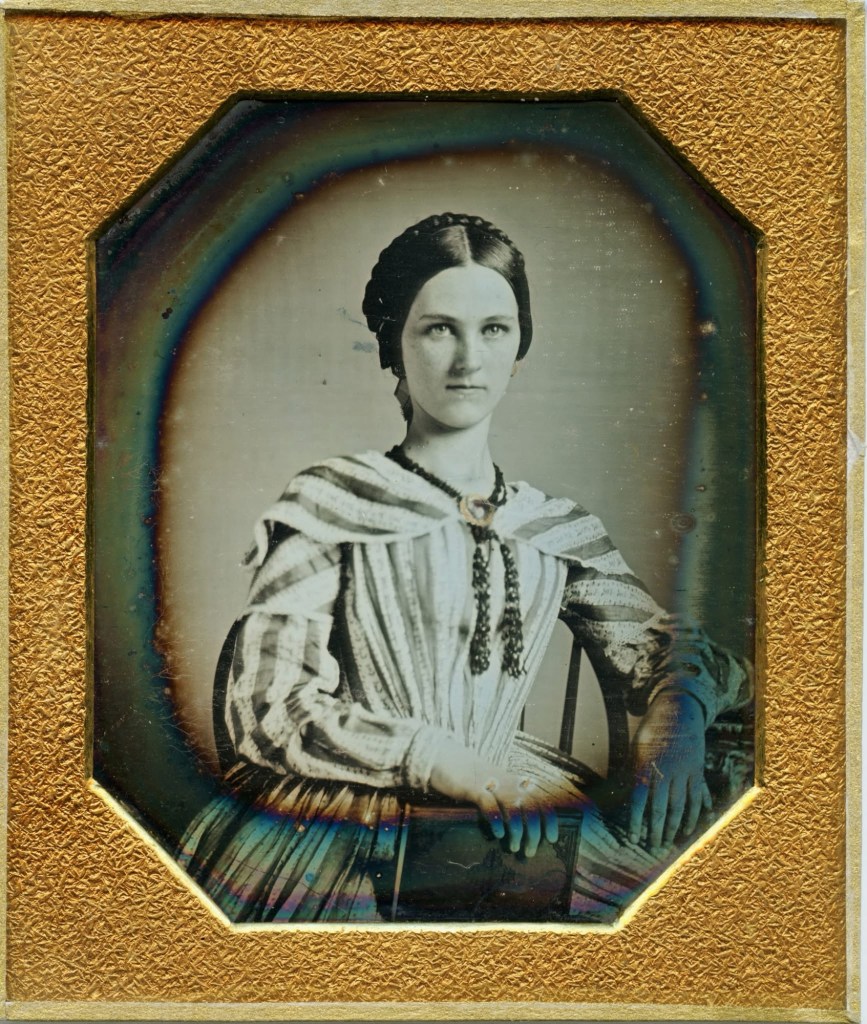
I first saw this daguerreotype a few months back. Candidly, her beauty is what initially struck me. Followed by the photographer’s artistry. I wanted to know more. It had come up for sale from an image dealer, but I missed the purchase by literal minutes to another. Opportunity came to me once again though, and whether serendipity or pure luck, I was able to acquire it – thanks to my friend Ben Rollins.
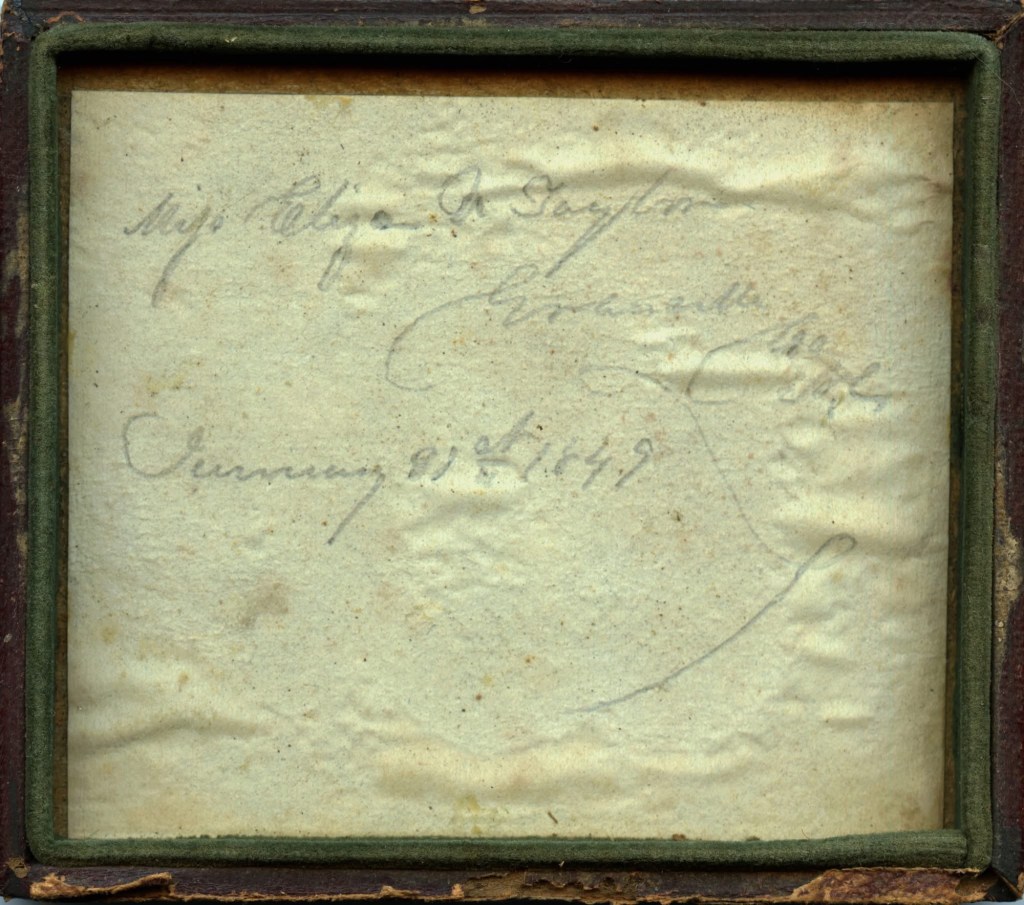
But the story of this image went much deeper. It was inscribed. It was identified. It had provided a location. It had a date. It was my unicorn.
Meet Eliza V. Taylor. Yes, Taylor.
Daguerreotype of Eliza V. Taylor
Eliza was born in 1830 near Oxford, in Granville County, North Carolina, the oldest child of John Camillus Taylor (1800-1873) and his wife Emily Elizabeth Tillinghast (1807-1841). Without a doubt, Eliza was born into a family of privilege. Her father, John C. Taylor, boasted lineage from the prominent colonial Taylor family that produced two Presidents and a signer of the Declaration of Independence; he was a graduate of the University of North Carolina, a prominent merchant, farmer, educator, active in the Whig party and as such, a member of the state legislature in both the House and Senate. Her mother, Emily Tillinghast, was similarly well-situated, being descended from a noted Rhode Island family. Tragically, she passed away when Eliza was just eleven years old, herself at the young age of 34. John C. Taylor remarried though, and Eliza was raised predominantly by her step-mother throughout her teenage years.
Along with her siblings, Eliza was given the foremost education and cultural opportunities. When her father served in the legislature or was otherwise on business travel, she would frequently accompany him to the capital at Raleigh. It was likely during one of these trips to the “big city” that this photograph was taken, and is possibly the work of daguerrean artist John C. Palmer. The image is dated January 31, 1849, when Eliza was 18 years old.
Inscription inside of image case.
Unfortunately, this story ends on a sad note just a few years later. Eliza passed away on April 3, 1852, from what was described as a “protracted illness.” Though in the prime of her life and taken at the young age of 22, I hope this brief tribute will help to carry on her memory and story. In so doing, I conclude with the following. Eliza (and her family) were active members of St. John’s Episcopal Church in Williamsboro, now in Vance County. It was the Rector of that Parish who penned her obituary. He described Eliza as:
“…dedicated in faith to God” from an early age, and “as a daughter, she was all that parents could ask, affectionate, tractable, cheerful, and ever ready to ‘do what she could’ for the happiness of all around her; as an elder sister her example was most salutary; as a friend she was constant and sincere. Admired and beloved she nevertheless preserved the simplicity, candor and guilelessness of her character unimpaired, she was kind and tender-hearted, yet firm, cheerful and buoyant in spirit, yet innocent and discreet; she had ever an ear for the tale of woe, a tear for scenes of distress, a heart to respond to the call of want… she had among those of her own youth, few peers, and no superiors.”
One could not have ever asked to have fulfilled such a complete life.
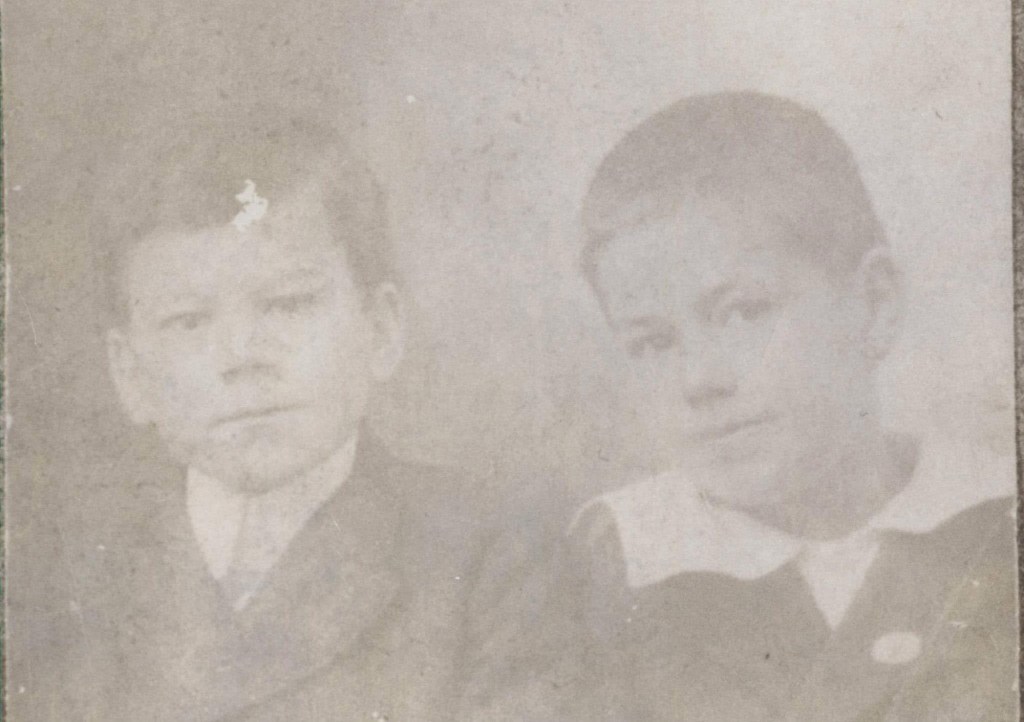
Among many others who I thank for their service today, I remember my grand-uncle, Burnie Robert Taylor (pictured here as a young man, on the right.)
Charles Hobson Taylor and Burnie Robert Taylor as boys, circa 1903.
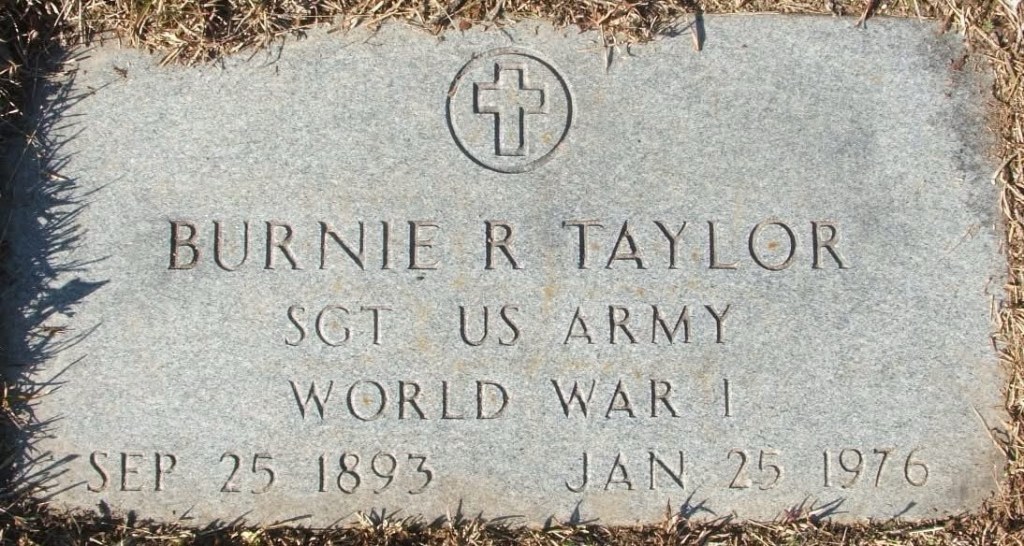
Uncle Burnie was born in Brunswick County, Virginia, in 1893, but raised primarily just across the state line in Roanoke Rapids, North Carolina. He enlisted at the age of 22 in Company F of the 3rd North Carolina Infantry (National Guard) on June 26, 1916, prior to the American entry into World War I, and spent his early training in El Paso, Texas, as a part of General Pershing’s expedition against Pancho Villa.
His unit was drafted and federalized in August 1917, becoming the 120th Infantry, a part of the 30th Division, under the Command of British General Henry Rawlinson during much of the War. Uncle Bernie rose to the rank of Sergeant, and during what was known as the Hundred Days Offensive, was wounded in action on October 9, 1918. According to the family history, he was was felled by machine gun fire to his left hip, and lay on the field wounded for close to a day somewhere near Cambrai, France. He was eventually rescued, and spent the coming months at the Red Cross Military Hospital (No. 21) at Paignton, Devon, England. In December 1918, Uncle Burnie was transported to Liverpool, enroute back to the United States. He arrived in January 1919, and was discharged from Camp Lee, Virginia.
After the War, he returned home to Roanoke Rapids, North Carolina, where he worked the rest of his life as a textile mill worker. He was married to Fannie Eula Collier, and he passed away on January 23, 1976.
As many of you know I am fascinated by early photography, and collect images primarily from the 1850s-60s period, comprising daguerreotypes, ambrotypes, and tintypes. Most of these are from North Carolina, where I have deep family roots. Although my focus for the last few years has been telling the history of soldiers, I am always interested in a good story, and that is where this one begins.
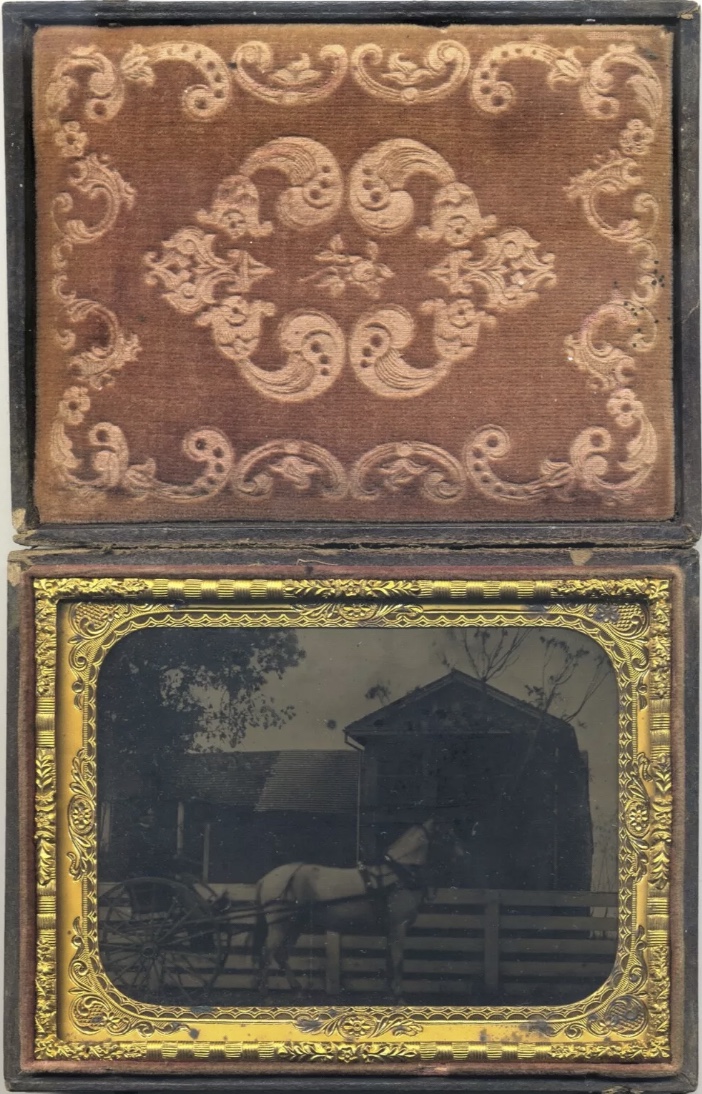
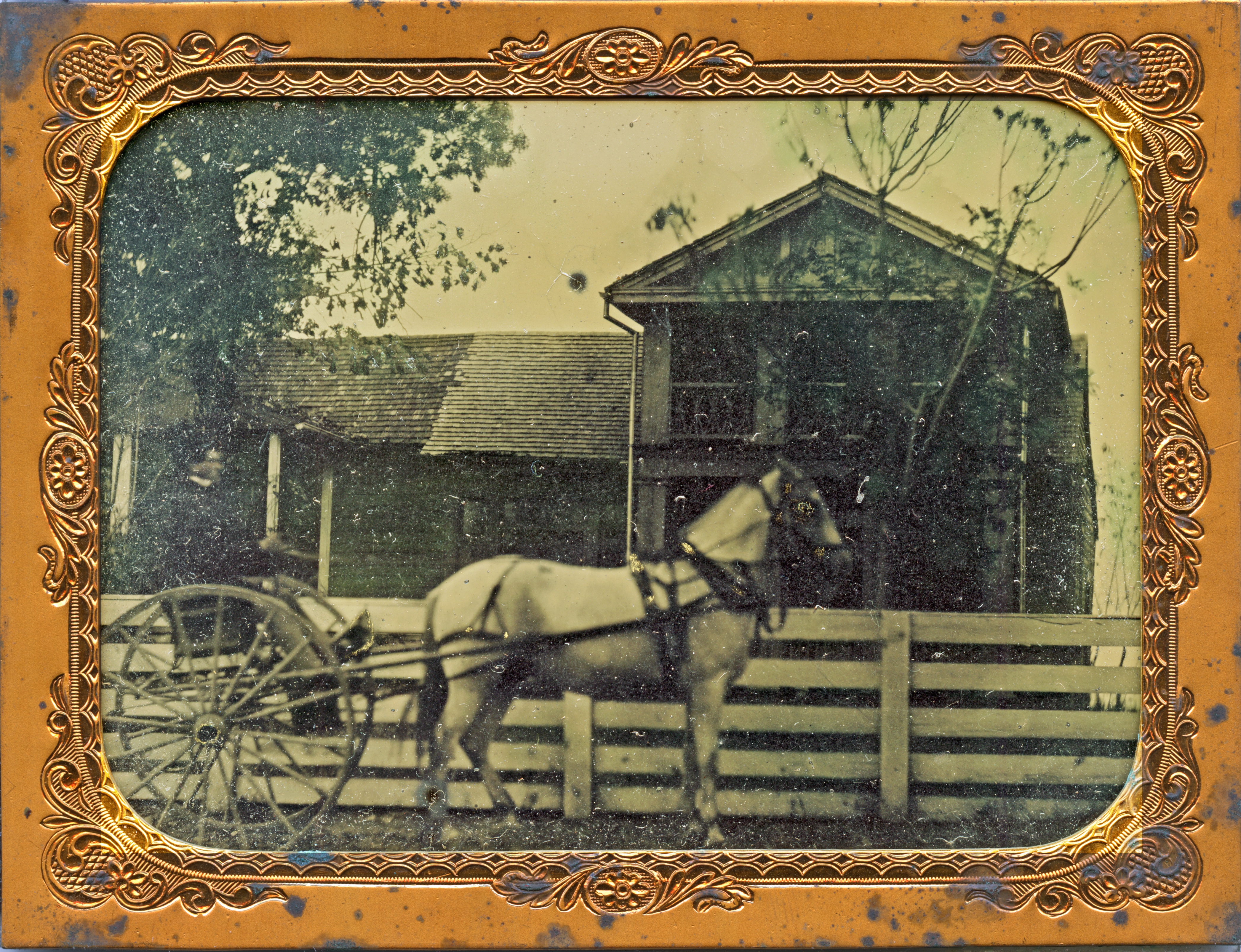
By way of background, finding an identified image from this period is always a challenge. You are lucky if someone wrote an inscription or left a note identifying the subject. Likewise, most images you see from the period are of individuals, usually taken in a photographer’s gallery or in a make-shift “studio” by an itinerant. Rarely do you see an outdoor image. So when I came across the image posted here, the rare outdoor scene, I was intrigued. But when I learned it was identified to North Carolina, I was in awe.
The image itself is a ¼ plate ambrotype taken on clear glass, and inside was the following writing on a piece of paper as follows:
“Picture of Dr. Saml Boyden at his home in Gold Hill.”
With these details, the research hunt began!
Samuel G. Boyden was not a native “Tar Heel,” but was actually born in Deerfield, Massachusetts, about 1815. He moved to North Carolina at the age of eighteen, likely following in the footsteps of another local kinsmen, Nathaniel Boyden (lawyer, member of Congress, and NC Supreme Court justice). After reaching the age of majority, Samuel began studying medicine, and is said to have graduated with honors. He ultimately settled in Salisbury as a Doctor. I find the first mention of him in 1841 under the practice of “Henderson & Boyden.” In 1847, he moved to the nearby Town of Gold Hill, where he formed “Drs. Rice & Boyden.”
I cannot lose the opportunity here to talk about Gold Hill. Organized as a Town in 1843, Gold Hill was a bustling gold mining town, years before the rush began in California. In fact, Gold Hill was the most significant mining area in the state of North Carolina, and one of the most prosperous in the South.
Dr. Boyden capitalized on this opportunity in Gold Hill, not only moving his medical practice there, but also investing in one of the local mines. Unfortunately, gold or should I say greed can bring out the worst in people, and Dr. Boyden found himself in the middle of a nasty dispute in 1851. After having been invited to join a friend at his local gold mining office, another principle in the business – Joseph A. Worth – ordered him out of the same building. Apparently Dr. Boyden and Worth had a running dispute, and this only brought it to a head. As their discussion turned heated, Worth called Dr. Boyden a liar, to which Dr. Boyden responded that he was a “damned liar” and drew his Colt revolver. Escalating the situation, Worth sprung toward Dr. Boyden, and fisticuffs ensued. Dr. Boyden fired off three shots, one grazing Worth’s finger. Once the dust settled, Dr. Boyden was criminally charged with assault and assault with intent to murder. Following a jury trial, Dr. Boyden was convicted on both counts, and given a fine and imprisonment. At the time, however, such a charge was only a misdemeanor, and it appears Dr. Boyden spent little time incarcerated. His case was ultimately appealed – and conviction upheld – by the North Carolina Supreme Court (if you want to read more about this, check out State v. Boyden, August Term 1852.)
The conviction apparently had little affect on his life or activities though, as Dr. Boyden continued to practice medicine and was very active in Whig politics throughout the 1850s. He also was married to Letitia Bruner, his bride fourteen years his junior.
But the bright times soon came to an end. On November 25, 1862, the local newspaper The Carolina Watchman, reported that Dr. Boyden had passed away from “hypertrophy” at his residence at Gold Hill in the 46th year of his age. The newspaper detailed:
“Having a practical knowledge of his own disease and its fatality – he was influenced, several months prior to his death, to view the vanity of earthly things and the necessity of making preparation for the realities of the future, leaving his friends to hope that he now reposes in the bosom of heavenly rest.”
In conclusion, shown here are several versions of the image, one of which I have edited to bring out some details. Taking outdoor images at this time was very difficult, and this image was underexposed which is why it is so dark. There are some interesting things to point out, however. For one, Dr. Boyden is shown on a gig or sulky – a carriage designed to be pulled by one horse, and usually made for one rider. Also, if you look at the details of the house, you will see that it has gutters/downspouts visible. There may be some other things you will see, I pick up some new detail each time I look at it. Enjoy!
It has been a while since I have made a history-related post, and I was reminded that today is the anniversary of the battle of Sharpsburg, Maryland. 159 years ago.
While many look at the battle of Gettysburg as the deadliest of the Civil War – and it was – it also lasted over a course of several days. Sharpsburg, on the other hand, was a one day battle and due to that, is recognized as the single deadliest day in American military history.
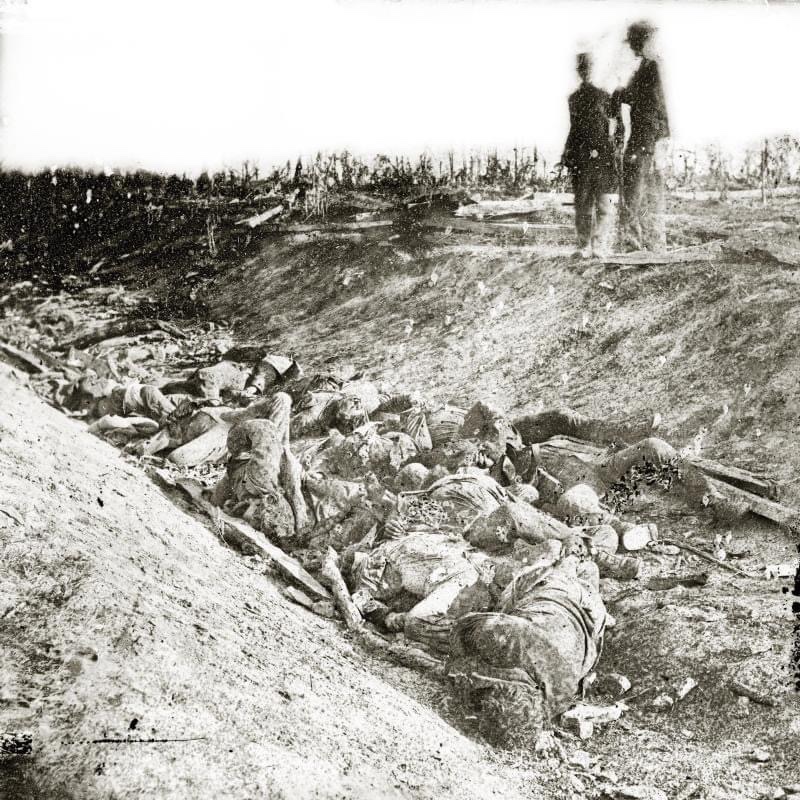
I have always been intrigued by this battle. And not just because I have walked the fields of conflict. My own family participated in the battle, and witnessed the carnage that day. In a 1905 letter to his daughter, one of my kinsmen – Sergeant Major Newsom Edward Jenkins of the 14th North Carolina – wrote of the battle. At the time, he was serving as an Orderly Sergeant and the acting Commissary. His old Company – A, the Roanoke Minute Men – on the eve of battle had no commissioned officers in the field. He recalled:
Newsom E. Jenkins
“The men had a premonition of an engagement, something you feel, but cannot explain, and my old company… wanted to know who would take them in if we had a fight. I promised I would stay and go with them – we were soon ordered to change our position. We were moved to a position in a lane known (now) as “Bloody Lane,” fronting up the creek. Our position was on the left center of the Brigade [Anderson’s Brigade, comprising the 2nd, 4th, 14th & 30th NC]… Soon after we had taken this position, we saw the columns of enemy moving towards us. Col. R.T. Bennett commanding the regiment… told me to take the Company out and deploy them as skirmishers, and go out to meet the enemy… we fired on them when they got in range. They then fired a volley into us. I ordered a retreat, we fell back to our position… but we had one of our best men killed [Bob Shearin] before we got back and several wounded. The lines of the enemy came up and charged our position a half dozen times or more, but we drove them back, and held our position for three hours under a terrific fire from the infantry line while shells were plowing the fields around us and clearing every thing in its sweep.”
Ultimately, the lines of Anderson’s Brigade were overwhelmed, flanked, and captured. What was left of the 14th Regiment in the Lane surrendered about 80 men. Of the twenty-eight from Company A who began the battle, nine were killed, and eighteen wounded and/or captured.
Amazingly, when Jenkins wrote this account some forty plus years later, he particularly recalled his capture by the command of Charles Augustus Fuller of the 61st New York Infantry, and asked his daughter to try to locate him. Fuller was also a Sergeant at the time of the battle, and ultimately rose to the rank of Lieutenant before his discharge due to wounds. His account, “Personal Recollections of the War of 1861,” is an excellent biography of his service and the history of his regiment.
Charles Augustus Fuller
To take the story a step further, I went on a tour of Sharpsburg in the late 1990s. As we walked the Bloody Lane, our tour guide began to recite the story of his own great-grandfather who had been on the field that day. Who was that man? Sgt. Charles A. Fuller. And there we all were, some one hundred and thirty years later the descendants of those same men, meeting under much different circumstances.
It doesn’t get much more close to history than that. “The past is never dead. It is not even the past.” – William Faulkner
Images: (1) Post war cabinet card of Newsom Edward Jenkins, donated by my family to Duke University; (2) the carnage of the Bloody Lane, photograph likely taken by Alexander Gardner, Library of Congress; (3) Charles Augustus Fuller of the 61st New York, image from Antietam on the Web (https://antietam.aotw.org/index.php)
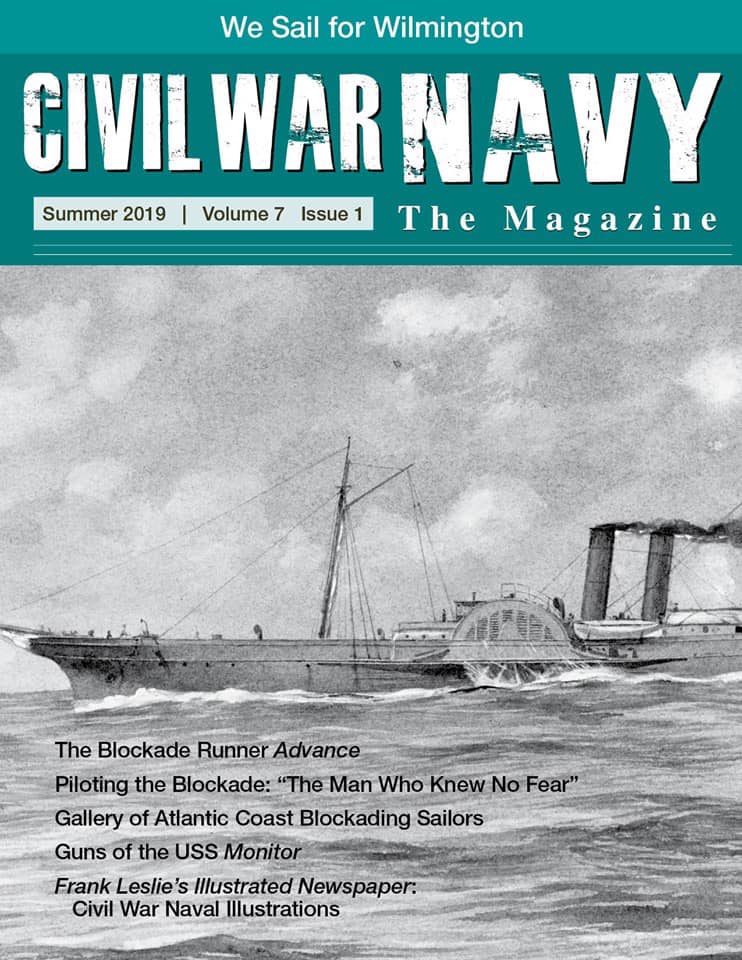
A sneak peak of my article in the Summer 2019 issue of Civil War Navy—The Magazine (civilwarnavy.com) profiles Thomas Mann Thompson, Jr., one of the Confederacy’s most successful blockade runner pilots, making over 30 runs through the blockade while escaping capture. Famed Confederate Captain Michael P. Usina called Thompson “an officer who knew no fear.”
(Thompson carte de visite courtesy of the Fred D. Taylor Collection. Image photographed by S.W. Gault, Hamilton, Bermuda, circa 1864.)














 Fred~on~History