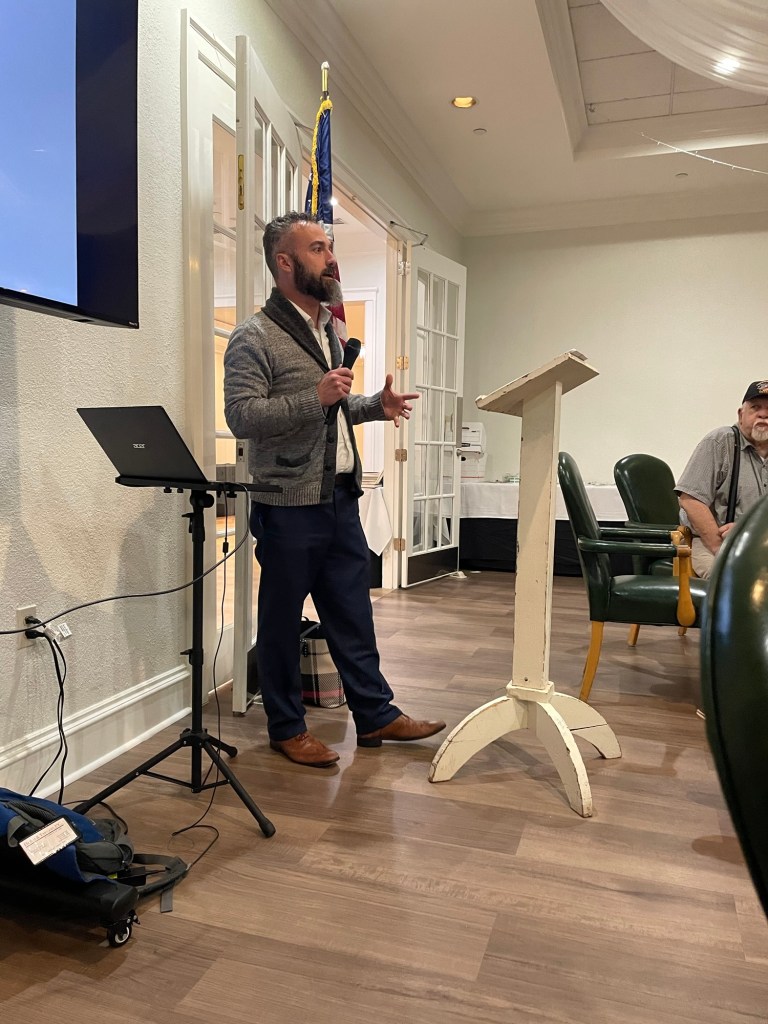
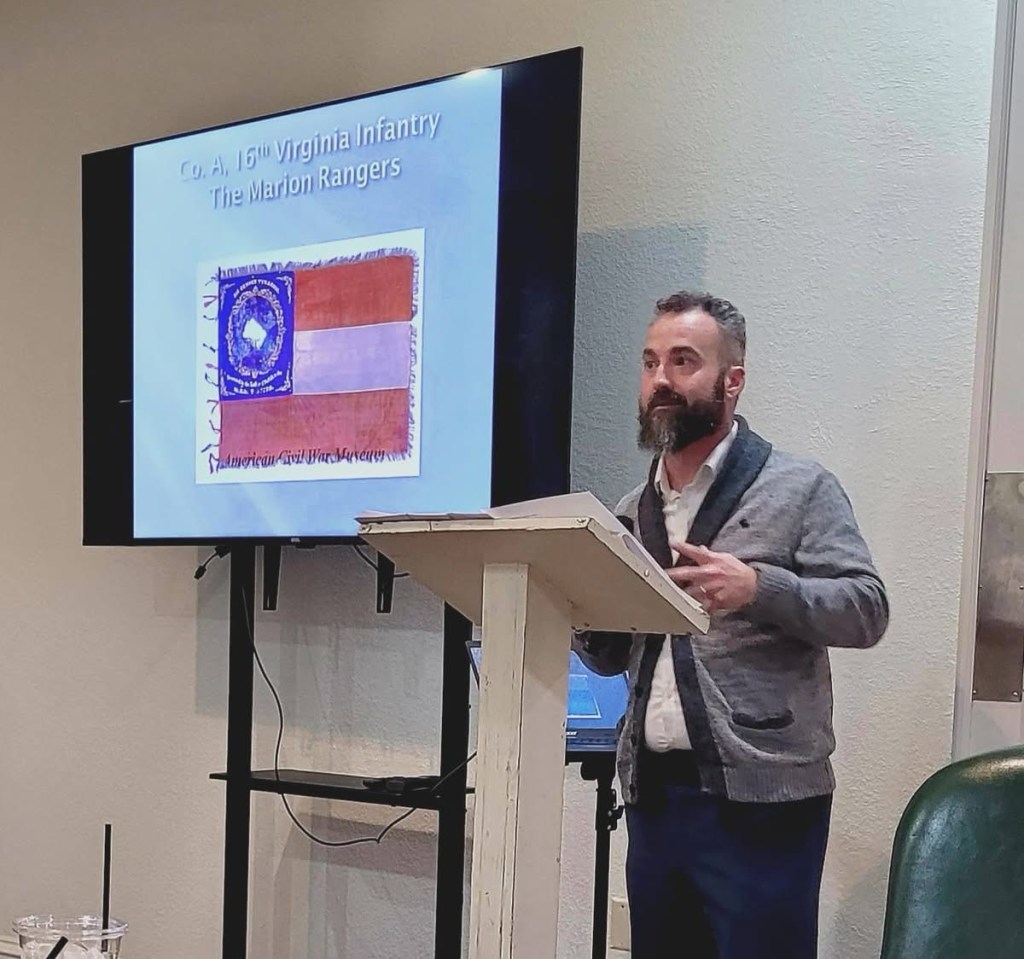
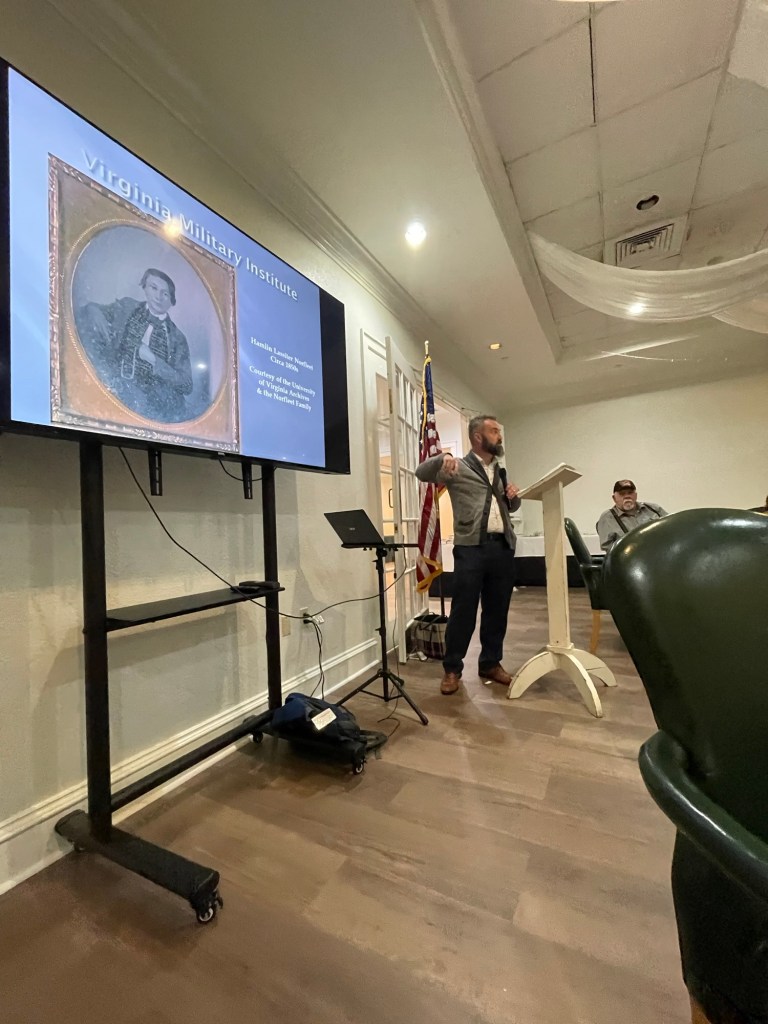
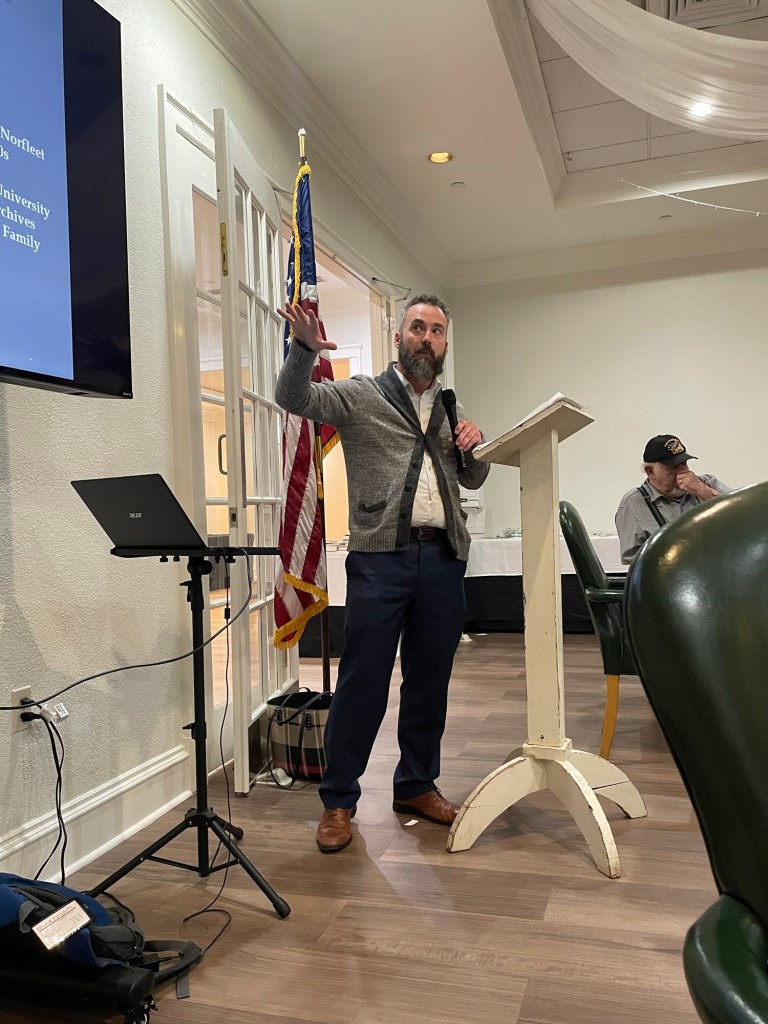
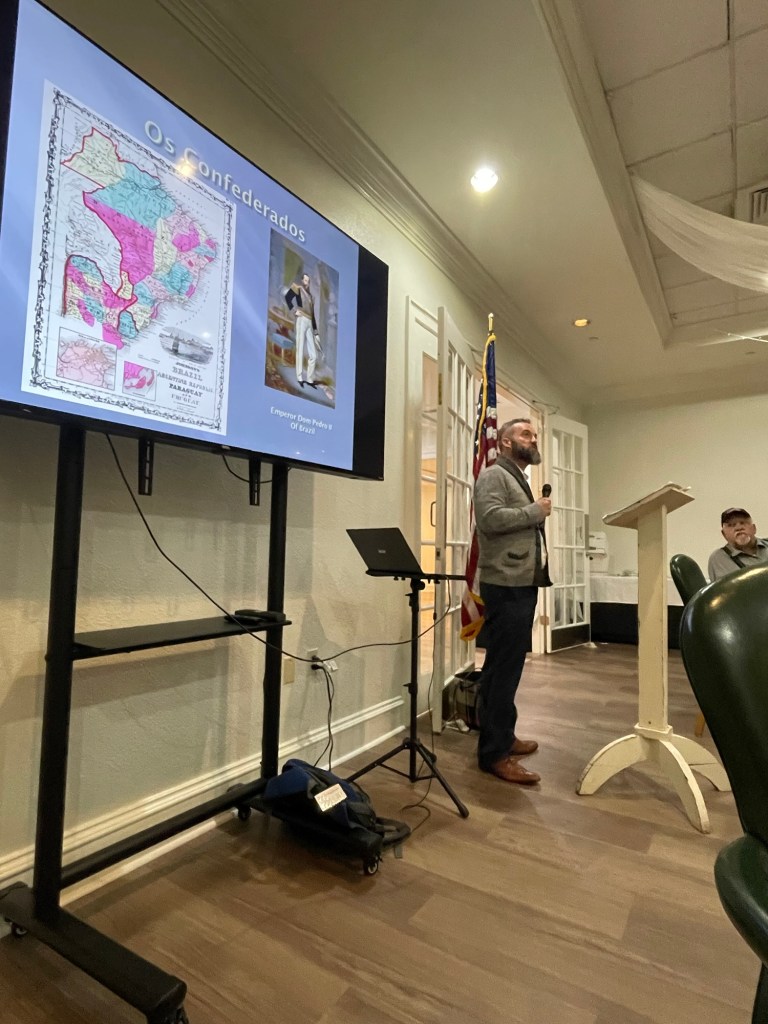
A night with the Hampton Roads Civil War Roundtable in Virginia Beach, speaking on the life of “renaissance man,” Hamlin Lassiter Norfleet of Suffolk.
A night with the Hampton Roads Civil War Roundtable in Virginia Beach, speaking on the life of “renaissance man,” Hamlin Lassiter Norfleet of Suffolk.

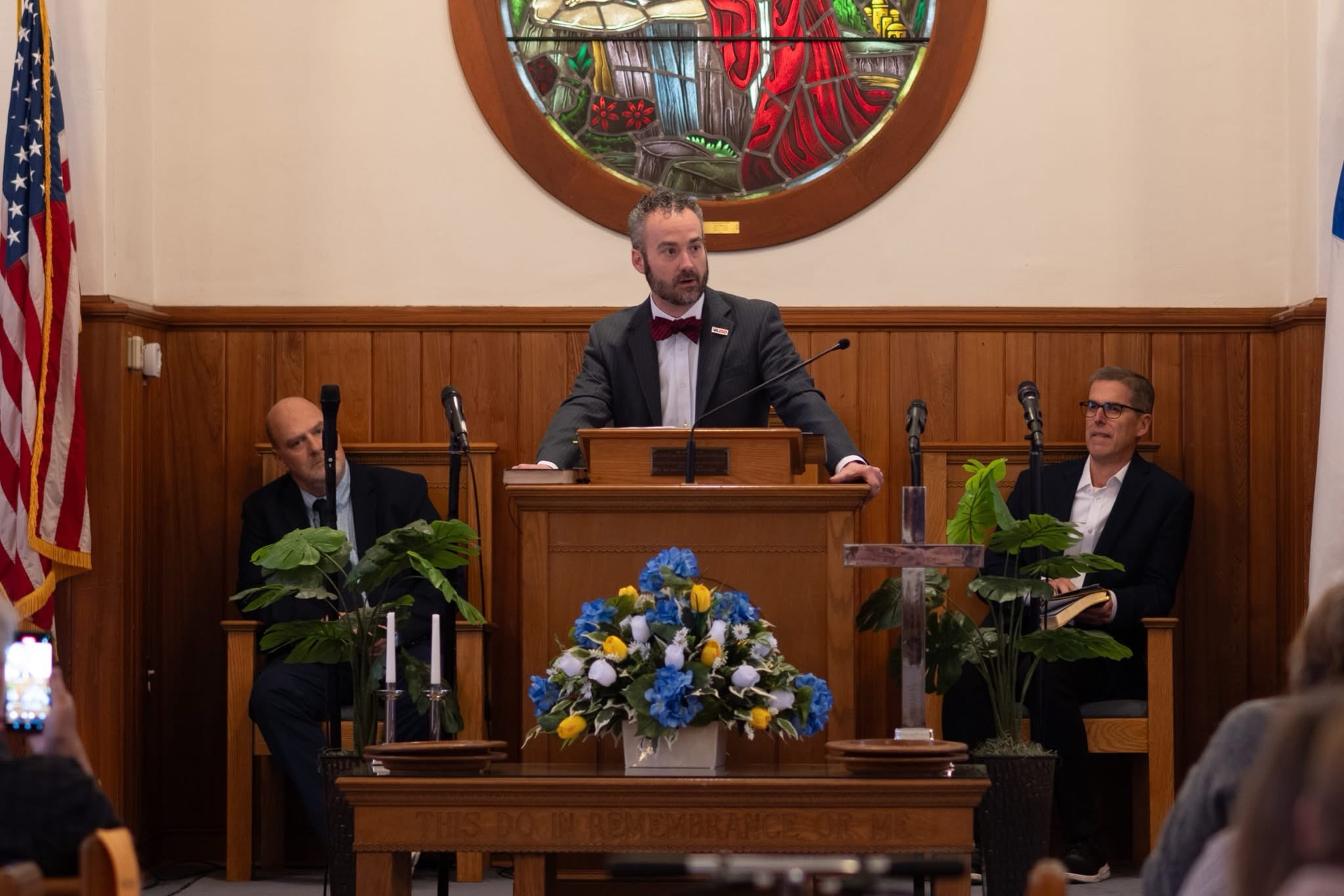
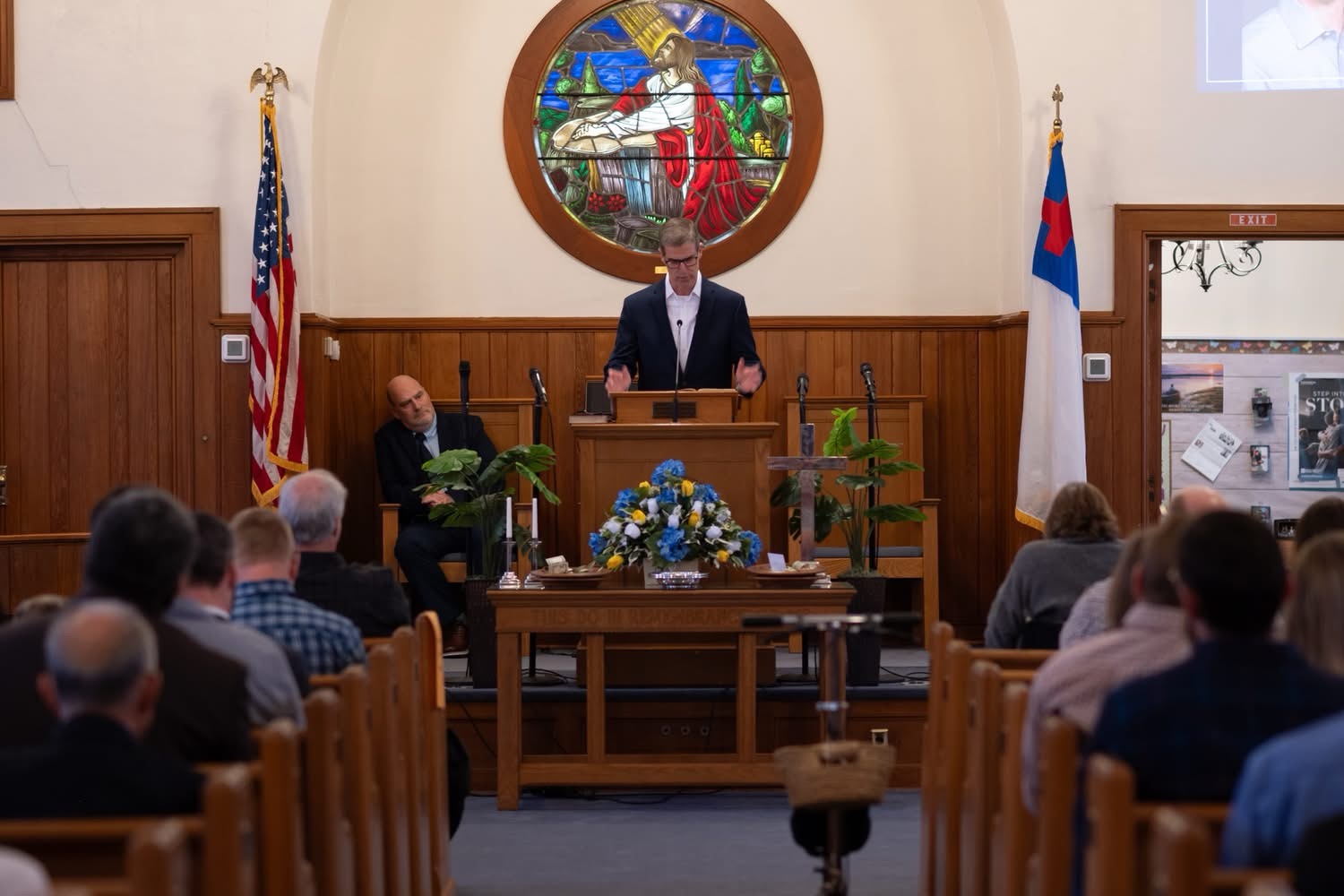
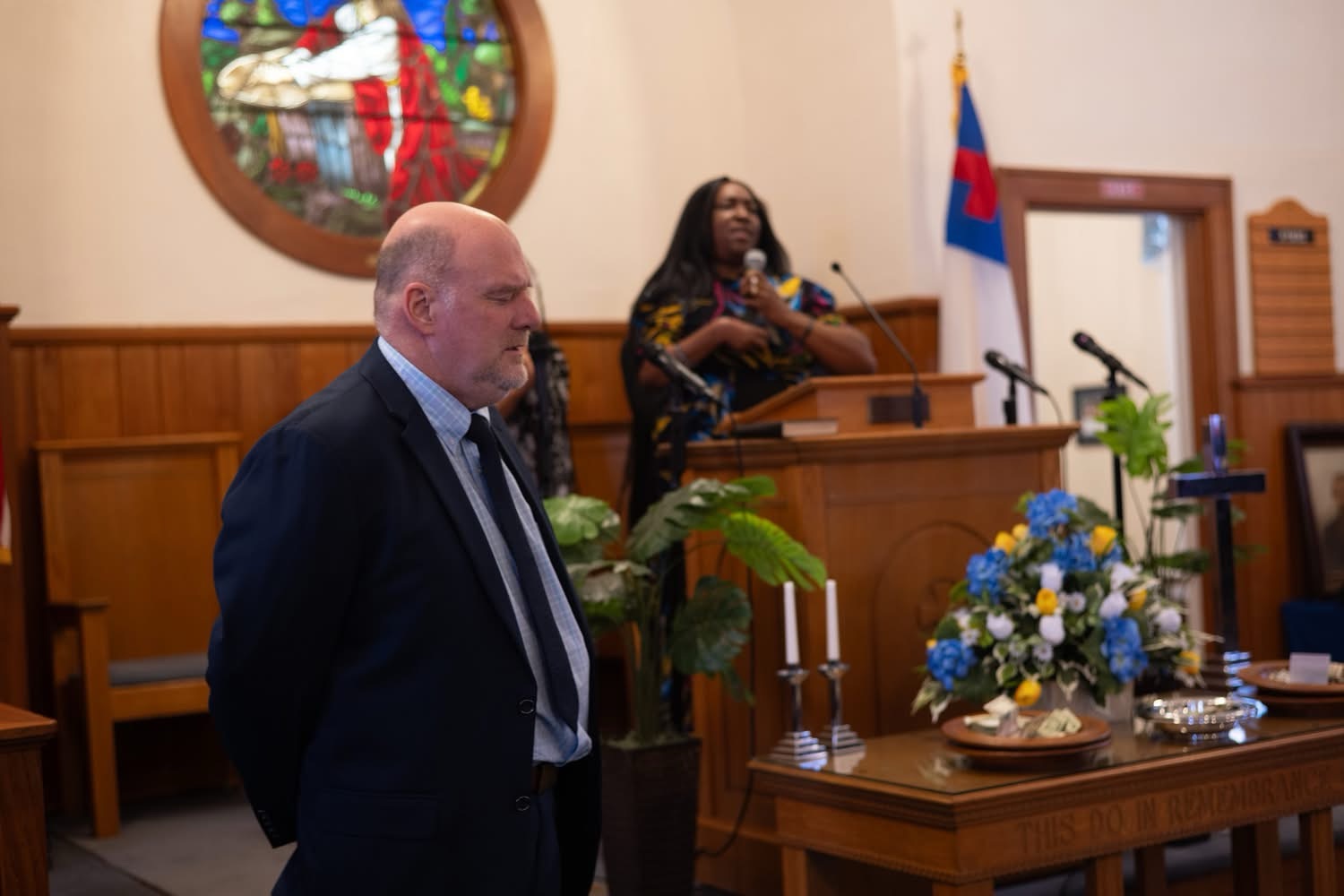
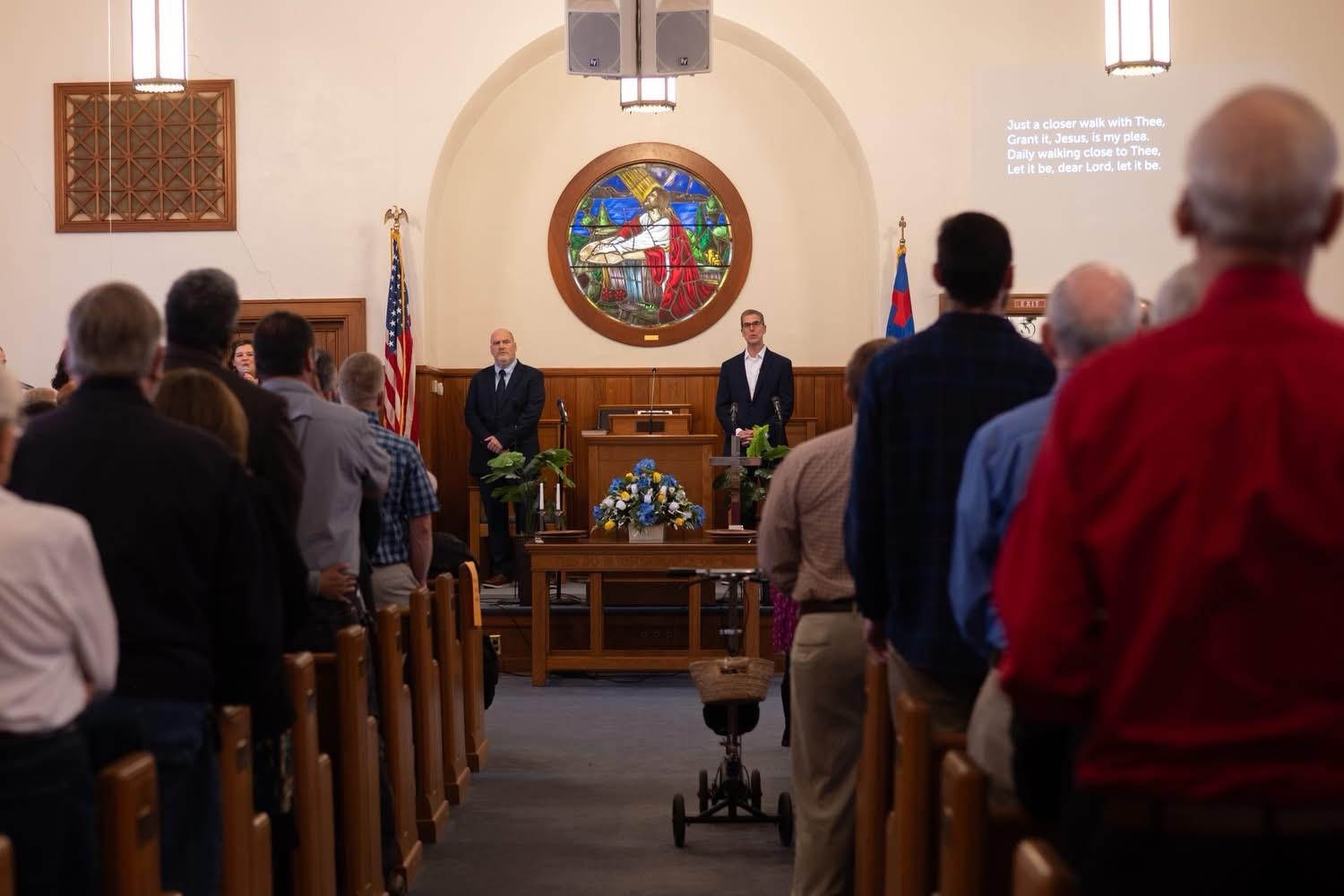
I had the distinct privilege of speaking at the homecoming celebration held on Sunday, March 16, recognizing South Quay Baptist Church for its 250th anniversary. It was a packed-house, with standing room only and just a wonderful day of sharing history, fellowship, and worship!
The pictures below are courtesy of South Quay’s Facebook page.


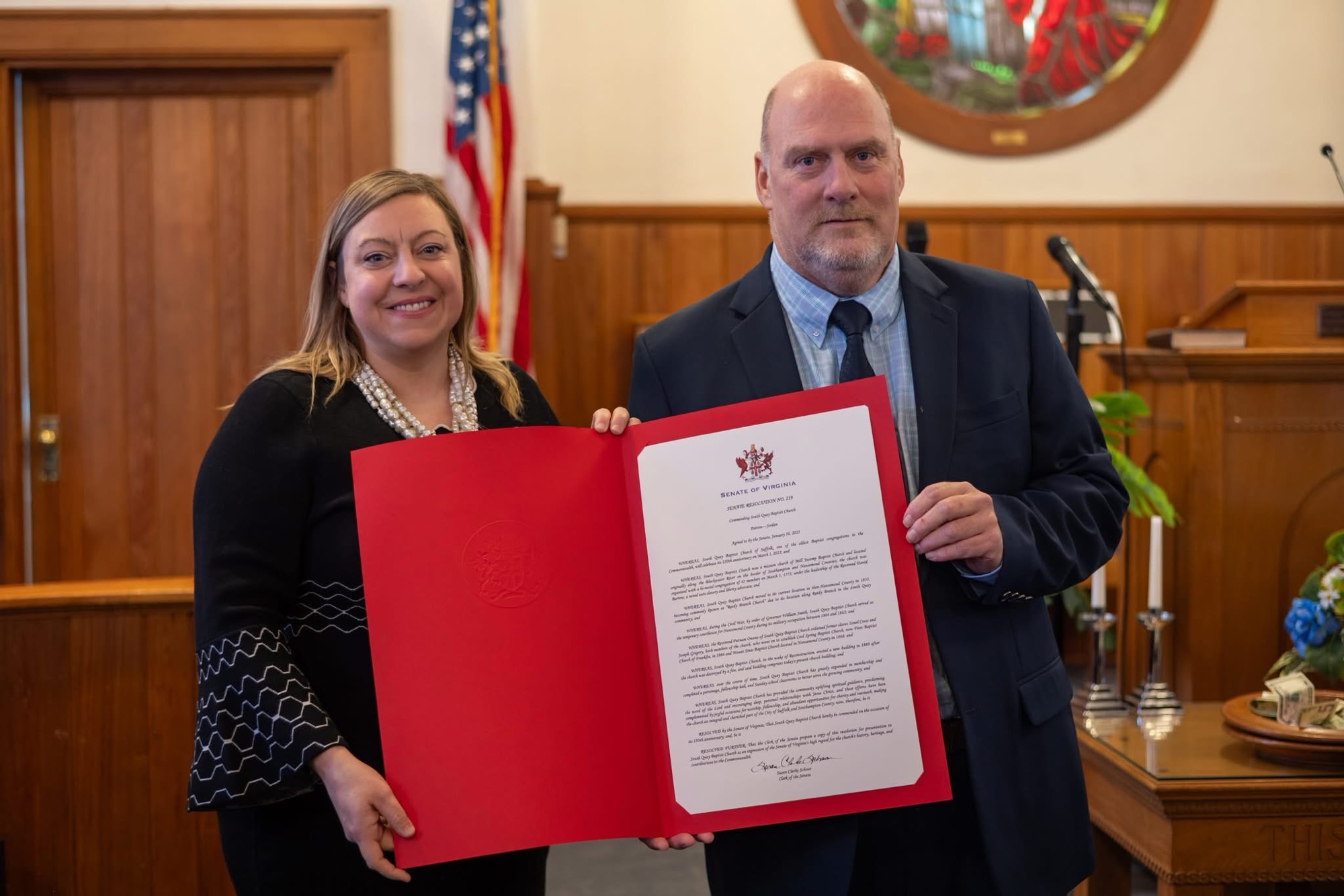





Additionally, the following resolution was passed by the Senate of Virginia as SR219 commending South Quay on this great honour and outlining the Church’s history:
Offered January 23, 2025
Commending South Quay Baptist Church.
—————
Patron—Jordan
—————
WHEREAS, South Quay Baptist Church of Suffolk, one of the oldest Baptist congregations in the Commonwealth, will celebrate its 250th anniversary on March 1, 2025; and
WHEREAS, South Quay Baptist Church was a mission church of Mill Swamp Baptist Church and located originally along the Blackwater River on the border of Southampton and Nansemond Counties; the church was organized with a bi-racial congregation of 42 members on March 1, 1775, under the leadership of the Reverend David Barrow, a noted anti-slavery and liberty advocate; and
WHEREAS, South Quay Baptist Church moved to its current location in then-Nansemond County in 1835, becoming commonly known as “Reedy Branch Church” due to its location along Reedy Branch in the South Quay community; and
WHEREAS, during the Civil War, by order of Governor William Smith, South Quay Baptist Church served as the temporary courthouse for Nansemond County during its military occupation between 1864 and 1865; and
WHEREAS, the Reverend Putnam Owens of South Quay Baptist Church ordained former slaves Israel Cross and Joseph Gregory, both members of the church, who went on to establish Cool Spring Baptist Church, now First Baptist Church of Franklin, in 1866 and Mount Sinai Baptist Church located in Nansemond County in 1868; and
WHEREAS, South Quay Baptist Church, in the wake of Reconstruction, erected a new building in 1889 after the church was destroyed by a fire, and said building comprises today’s present church building; and
WHEREAS, over the course of time, South Quay Baptist Church has greatly expanded in membership and completed a parsonage, fellowship hall, and Sunday school classrooms to better serve the growing community; and
WHEREAS, South Quay Baptist Church has provided the community uplifting spiritual guidance, proclaiming the word of the Lord and encouraging deep, personal relationships with Jesus Christ, and these efforts have been complemented by joyful occasions for worship, fellowship, and abundant opportunities for charity and outreach, making the church an integral and cherished part of the City of Suffolk and Southampton County; now, therefore, be it
RESOLVED by the Senate of Virginia, That South Quay Baptist Church hereby be commended on the occasion of its 250th anniversary; and, be it
RESOLVED FURTHER, That the Clerk of the Senate prepare a copy of this resolution for presentation to South Quay Baptist Church as an expression of the Senate of Virginia’s high regard for the church’s history, heritage, and contributions to the Commonwealth.
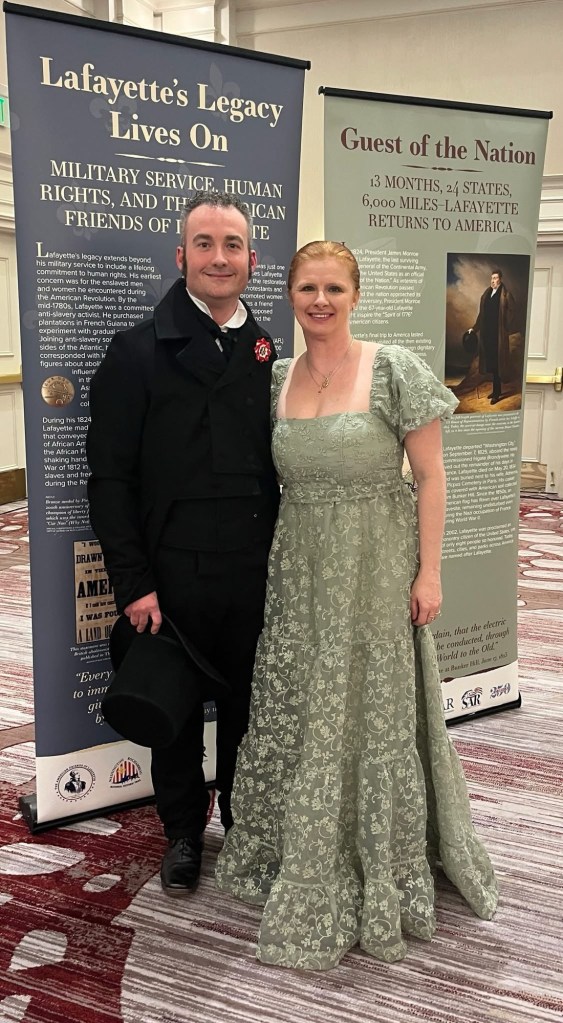
Today, I am still reveling in the excitement of the at-capacity, 250+ person banquet commemorating the February 25, 1825, visit of General Lafayette to Suffolk.

We were blessed to have the General himself – portrayed by the talented Mark Schneider, and numerous dignitaries locally and abroad, the Mayor and members of City Council, French military personnel, Virginia American Revolution 250, scholars of the The American Friends of Lafayette, Daughters of the American Revolution, and so many more!

Of course, it would take such a significant event to cause me to abandon my beard of years, in order to channel my inner 1820s gentleman! Not the least of which was the high honour of serving as the Master of Ceremonies for a wonderful evening of history, and the celebration of our timeless bond with France.
Viva la France & General Lafayette!

Tired of just another haunted hay ride or spooky house?
Join us at Suffolk’s oldest house museum – Riddick’s Folly – for an evening of history and readings of the famed macabre writer, Edgar Allen Poe.
The evening will begin with a social period with light hors d’oeuvres from 6:00 – 6:30 PM, followed by the program at 6:35 PM.
This event is free and open to the public, but due to limited seating, please RSVP to riddicksfolly@verizon.net or call 757-934-0822.
We love our “Folly” – thanks to Myles Henderson at WTKR News 3 for sharing our great story!
Here is the link:
The Daily HeraldThe Daily Herald (Roanoke Rapids, North Carolina)
January 19, 2016
by Jenny Gray
On the morning of April 9, 1865, men from the Roanoke Valley fought in the Battle of Appomattox Court House, the final engagement of the Army of North Virginia before surrendering — and thus ending — the Civil War.
The Confederate capital of Richmond, Va., was lost to the South. Retreat was cut off by Union forces. Losing that morning battle brought General Robert E. Lee to the courthouse that afternoon where he signed the documents of surrender and gave up his sword.
Standing there was the company that included members from Halifax, Warren and Northampton counties. Now an area historian wants to know what made them tick.
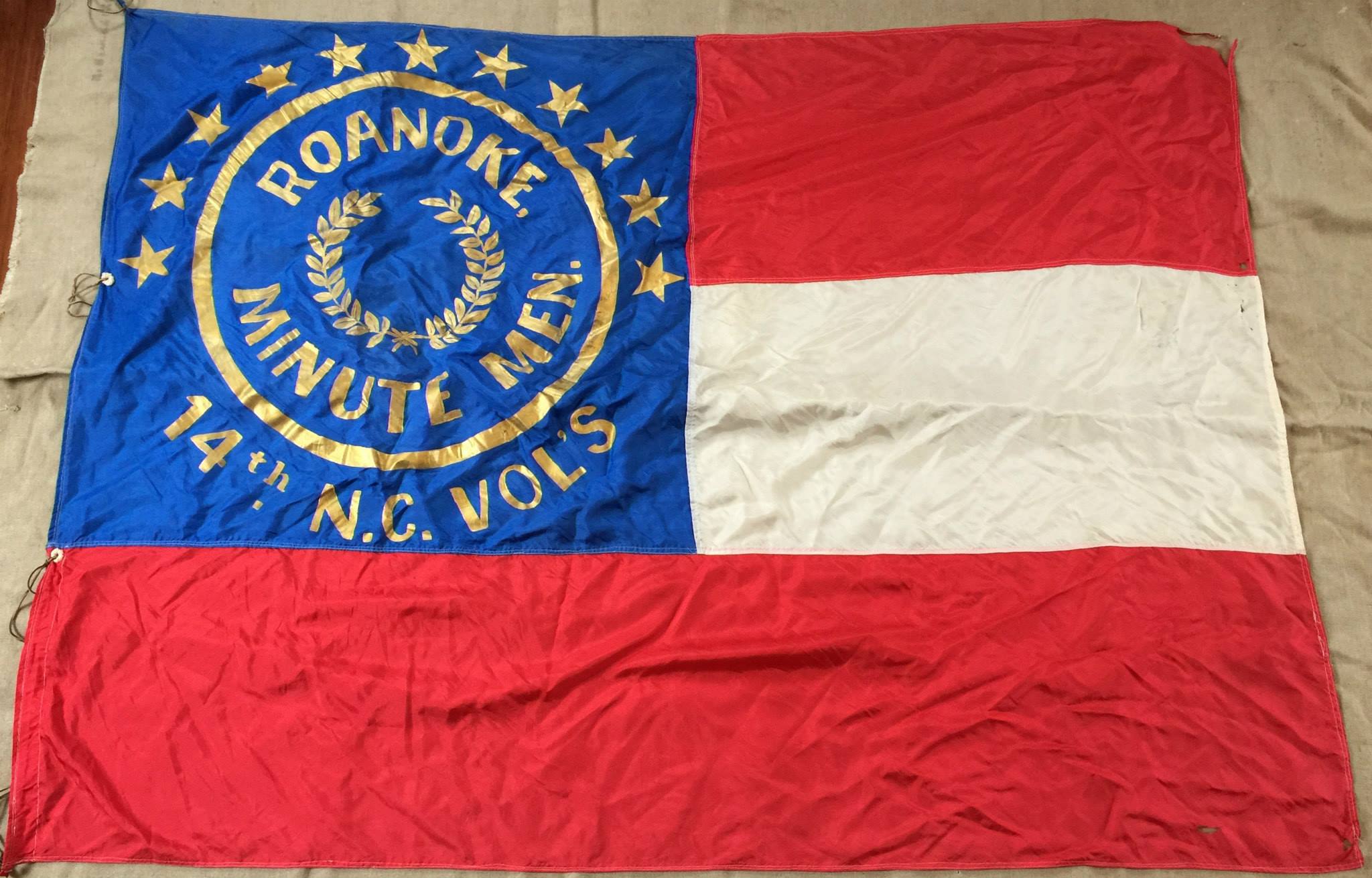
Attorney, historian and author, Fred Taylor grew up visiting his grandmother on the banks of the Roanoke River. His forefathers operated Eaton’s Ferry, and somewhere along the line he learned of the Roanoke Minute Men, a Littleton-area militia that formed before the Civil War, and fought in that war from the start to the finish.
“For me personally, I’ve always been a history buff,” Taylor said during a recent visit in which he gathered more research on this militia. “A lot of people think history’s boring. It’s abstract. It happened 100 years ago.”
But that’s not how Taylor said he feels. Following in the footsteps of a family member, he started building on the family genealogy about two decades ago and was hooked.
“All this history comes back to my own family,” he said. “My dad grew up on the Roanoke River, and later, Lake Gaston. My grandfather pulled Eaton’s Ferry.”
Then along came the story of the Roanoke Minute Men and Taylor’s hobby turned into something more serious.
“My first big find was the diary of a soldier during the Civil War, and I was related to him,” Taylor said. “I started reading that and seeing how these guys fit into a bigger story.”
His hunt began in earnest last spring as he read more and more accounts of this band of local soldiers. Taylor has assembled a detailed roster of the Company including individual service records and period letters and accounts from the early day of the company, formed in 1864. He has corresponded with and met Roanoke Minute Men descendants and visited state and local archives, gathering more information.
He learned that the Company was among the first to serve in the Civil War.
“They formed as a militia just before the Civil War and eventually went from Littleton to Weldon, and then over to Garysburg to train,” Taylor said. “One-hundred and forty men ended up serving in the unit.”
Taylor said while his book will include military information, that’s not the goal. Troop movements during the Civil War are well documented, but to get to the heart of his subject, Taylor said he wants to make it personal.
“My preference is not talking about battles or generals; I’d like to know more about these soldiers,” he said.
The initial diary, Taylor added, wasn’t about war, per se. It was about how the soldier felt.
“He talked about love and poetry and there were some religious overtones,” Taylor said of the diary. “I don’t think any soldier can be in battle without getting a little closer to their maker.”
Most of these soldiers had never gone more than a few miles from home, Taylor said, and must have been frightened at times.
“My focus has been trying to emphasize their story — that life of the enlisted soldier who left family and loved ones and marched off hundreds of miles away to face enormous odds,” he added. “I think this sort of veterans’ story strikes a chord with anyone, regardless of age or race or what war we are discussing, or even whether or not they like history.”
To gather information, Taylor travels as often as he can while still managing his law practice in Suffolk, Va. He also has used the Internet, creating a website at: fredonhistory.com/roanoke-minute-men
Taylor, whose roots go back to the Jamestown Colony, also has a Facebook presence at www.facebook.com/roanokeminutemen.
Anyone from the Littleton area will recognize many of the surnames on the list of soldiers: Allen, Bobbitt, Holt, Kearney and Newsom, among others.
“Their average age was about 25 years old; literally every 18 to 40 year old, able-bodied man went,” Taylor said. “I’m gong to tell the big picture but I want these people to speak for themselves. And I want to be able to tell what was going on at home.”
He spoke of one of the company’s members, a black soldier named Hilliard Goings. Taylor said he was close to his fellow soldiers, including Newsom Jenkins.
“He served as a pallbearer at his funeral, and went to all the veterans’ reunions,” Taylor said of Goings. “I want to cover it all, and find the motivation to what prompts a young man to leave home and stability to go fight for four years. And what was the effect of that on their families. … I want to get down into the heart of that.”
So Taylor is asking people to help him find these photographs, diaries and letters. For more information about the Roanoke Minute Men project, or to make submissions to this effort, contact Taylor at roanokeminutemen@gmail.com, telephone at 757-705-0950, or by mail to: 160 West Washington St., Suffolk, VA. 23434. All submissions will be properly credited to the owner, he said.
PRESS RELEASE
DATE: March 15, 2015
Re: Research for new book on veterans from Littleton, North Carolina
In December of 1860, a militia company known as the Roanoke Minute Men formed in Littleton, made up primarily of citizens from Halifax and Warren Counties. This Company enlisted into state service for North Carolina, and later into the Confederate cause, as Company A, 14th Regiment North Carolina State Troops (formerly the 4th North Carolina Volunteers.) Throughout four years of bloody conflict, this Company saw action from the early days of the War on the Virginia peninsula all the way to the last shots fired at Appomattox.
While recognized as one of the Tar Heel state’s greatest fighting units, no formal unit history has ever been compiled of the men who served in the Roanoke Minute Men – until now – and this work focuses on rare and previously unpublished letters, diaries, family histories, and service records to tell the story of these brave veterans and their families.
Although substantial progress on the history of the Roanoke Minute Men has already been made, historian Fred D. Taylor hopes to engage public support for his efforts and seeks submission of individual family histories, images of veterans both in uniform and as civilians, war-time accounts, and/or letters of the men who served in this unit.
Family surnames included in the research of this Company are: Adams, Ales, Allen, Allsbrook, Aycock, Barkley, Bobbitt, Bolton, Boon, Boswell, Brown, Burge, Burrows, Camp, Carlena, Carroll, Cherry, Clements, Day, Deaton, Eaton, Edmonds, Edwards, Felts or Feltz, Floore, Floyd, Forrest, Goodson, Hardister, Hardy, Harper, Harris, Herbert, Hicks, Holt, House, Hurley, Ingram, Jarrald, Jenkins, Johnston, Kearney, King, Lancaster, Latham, Lewis, Lynch, McCarson, McCaskill, Marlow, Mathews, Moore, Morris(s), Munn, Myrick, Nevill, Newsom, Parsons, Pendergrass, Peterson, Pittard, Pryor, Pugh, Riggan, Roberts, Rodgers, Rooker, Scarlett, Shearin, Tucker, Turner, Vick, Walker, Webb, Williams, Wilson, Wright, Yarbrough, and Yeourns.
For more information about the Roanoke Minute Men project, or to make submissions to this effort, please contact Fred D. Taylor at roanokeminutemen@gmail.com, telephone at 757-705-0950, or by mail to: 160 West Washington Street, Suffolk, Virginia 23434. All submissions will be properly credited to the owner.
Fred D. Taylor, whose family hails from the Littleton, North Carolina, area, is a native of Virginia, holds a Bachelor of Arts degree in history from Old Dominion University, a Juris Doctorate from the Mercer University School of Law, and is an attorney by profession in Suffolk, Virginia.
Press Release from the City of Suffolk Division of Tourism
VIRGINIA’S CIVIL WAR 150 HISTORY MOBILE
ROLLING INTO HISTORIC DOWNTOWN SUFFOLK

SUFFOLK, VA (March 3, 2015) History is on the move in Virginia as the Civil War 150 HistoryMobile rolls into Suffolk for a two day visit on Friday, March 13th, and Saturday, March 14th, from 10:00 a.m. until 5:00 p.m. both days. The exhibit, an initiative of the Virginia Sesquicentennial of the American Civil War Commission, will be located at the Suffolk Visitor Center, 524 North Main Street. Admission to the HistoryMobile is free and open to the public. These “history days” are presented by the Suffolk Division of Tourism partnering with the Suffolk Public Library, Riddick’s Folly House Museum and the Hilton Garden Inn Suffolk Riverfront.
In addition to the HistoryMobile exhibit, the event also includes tours and a living history reenactment at Riddick’s Folly House Museum; guided tours of historic Downtown Suffolk and the Great Dismal Swamp National Wildlife Refuge; and a genealogy workshop and a history presentation. Stop by the Historic Seaboard Station Railroad Museum to browse the large selection of Historical Society publications and learn about the importance and history of railroads in Suffolk while viewing the HO scale railroad model of 1907 Suffolk.
The HistoryMobile uses immersive spaces and interactive exhibits to draw together stories of the Civil War and emancipation from the viewpoints of those who experienced it across Virginia—young and old, enslaved and free, soldier and civilian. Visitors will encounter history in ways they may have never experienced before. The HistoryMobile exhibit is divided into four sections: Battlefront, Homefront, Journey to Freedom, and Loss-Gain-Legacy. From the bewildering sense of chaos experienced by soldiers, to the last letter written by a dying son to his father after sustaining a mortal wound, to a hushed conversation between a husband and wife considering the great risks and rewards of fleeing to freedom, the HistoryMobile presents the stories of real people in Virginia whose lives were shaped by the historic events of the 1860s, and invites visitors to imagine, “What Would You Do?”
The Civil War 150 HistoryMobile crosses the state visiting museums, schools, and special events. Its tour began in July 2011, and since then it has made over 120 stops and attracted visitors from every state and a number of other countries.
In addition to learning more about Virginia’s history, the HistoryMobile also provides visitors with information from Virginia Tourism about the many historic sites and destinations that they can explore today.
Admission to the Virginia Civil War 150 HistoryMobile is free and open to the public. For additional information on event happenings in conjunction with the HistoryMobile visit such as tour reservations, associated costs and times contact the Suffolk Visitor Center at 757-514-4130 or visitsuffolk@suffolkva.us. Space is limited on tours. Advance reservations are required.
Friday, March 13, 2015 Activities
10am-5pm HistoryMobile open to schools and public
10am-4pm Riddick’s Folly House Museum open for hourly tours ($5 per person)
10am Washington Ditch Boardwalk Guided Walk ($5 per person; reservations required)
11am-4pm Suffolk Seaboard Station Railroad Museum open to public for tours (donation)
12pm Great Dismal Swamp’s Underground Railroad Network to Freedom Pavilion Tour ($5 per person; reservations required)
3pm Historic Downtown Narrated Bus Tour ($5 per person, reservations required)
6pm Legends of Main Street: A Suffolk Ghost Walk ($10 per person; reservations required)
Saturday, March 14, 2015 Activities
10am-5pm HistoryMobile open to public
10am-4pm Riddick’s Folly House Museum open for hourly tours ($5 per person)
10am-4pm Period reenactments on the grounds of Riddick’s Folly (free)
10am-1pm Genealogy Workshop with the “Daughters of the American Revolution” at Morgan Memorial Library
10am Washington Ditch Boardwalk Guided Walk ($5 per person; reservations required)
10am-3pm Suffolk Seaboard Station Railroad Museum open to public for tours (donation)
12pm Great Dismal Swamp’s Underground Railroad Network to Freedom Pavilion Tour ($5 per person; reservations required)
2pm-3pm “The Battle of Suffolk: Through Soldier’s Letters,” a presentation by Kermit Hobbs at Morgan Memorial Library
3pm Historic Downtown Narrated Bus Tour ($5 per person, reservations required)
6pm Legends of Main Street: A Suffolk Ghost Walk ($10 per person; reservations required)
Originally published in the Suffolk News-Herald, August 2005
In my previous column, Charles Henry Causey had seen capture and parole, an assignment with the Confederate States Secret Service, and ultimately, an appointment to the command of Major General George Pickett. In this last and final column, I will relate Causey’s final days of the war, and how a young man born in Delaware ended up making Suffolk his home.
By 1864, Charles Henry Causey had clearly found his niche and spent the remainder of the war as a scout and member of the famed Confederate Secret Service, working both in Pickett’s command and also through the War Department. Not surprisingly, his entire record remains a bit of an enigma due such secret and dangerous operations. Though a scant number of military service records, official reports, and letters do exist, for the most part Causey’s activities from 1861 to 1865 remain obscure. When the National Archives compiled these records, they too noticed the irregularity of his “official” assignments. In a statement filed by one of the records compilers, it was noted that there was “a slight endeavor on the part of Confederate authorities to make it appear that this man was on Signal Duty.” However, there was “no indication that he knew anything of a signal code, or of any action except as a scout or spy.” It was also pointed out that his support by General Pickett in 1863 was clearly emphatic as to the importance of his services, but “makes no mention of what they are.”
The one thing that is known is that Charles Henry Causey’s role in the Tidewater area certainly had a lasting effect on his life. Apparently, during his time scouting in the Suffolk region he had the opportunity to meet the young Martha Josephine Prentis, daughter of Peter Bowdoin and Eliza Wrenn Prentis. Martha was eighteen when Causey met her in 1863, and their relationship blossomed from those occasions when he could avoid the roaming Union cavalry parties that passed through Suffolk in 1864. Despite the infrequency of their meetings in the midst of a raging war, they decided to take their courtship to the next level by the fall of that year. On September 26, 1864, Charles Henry Causey and Martha Josephine Prentis were married in Suffolk. But their time together was anything but a honeymoon, and was abruptly curtailed due to the dismal outlook of the Confederate army. By the winter of 1864, Union General Grant had placed a stranglehold on Lee’s army, and the Signal Corps’ operations were limited to Pickett’s thin defenses on the south side of Petersburg. Causey did manage to slip in and out of enemy lines and continue his reconnaissance work in the Tidewater region, but for the most part his previous services were no longer needed with the Confederate capital under siege. In April of 1865, when Petersburg and Richmond were evacuated, Causey was presumably in the Tidewater area and was not with the army during Lee’s retreat or subsequent surrender at Appomattox. Instead, he turned himself in to Federal authorities two weeks later on April 25, and was given a parole under the terms agreed upon by Lee and Grant.
Upon his parole, Charles Henry Causey returned for his bride in Suffolk, and started a family. Their first child, William Bowdoin Causey, was born on June 11, 1865, and named for Charles Henry’s brother and Martha’s father. Their second child was a daughter, Marianna Causey, born in 1866, and the Causey family continued to grow with the birth of Charles Henry Causey, Jr., born in 1868; Peter Prentis Causey, born in 1872; James Campbell Causey, born in 1874; Margaret Webb Causey, born in 1876; and Josephine Causey, born in 1878. Records indicate two more children who died in infancy, but their names are unknown.
Besides the growth of his family, Charles Henry Causey’s law practice also took a turn for the better following the end of Reconstruction in 1870 and the removal of Federal troops from Virginia. Among his clients included the Atlantic and Danville Railroad, as well as the Seaboard Airline Railroad, putting him in almost daily contact with his fellow Confederate comrade, General Laurence Simmons Baker who served as railroad agent in Suffolk. This also gave Causey the opportunity to befriend former Confederate General William Mahone, a prominent railroad builder and the president of several railroad lines. It was through Mahone that Causey became active in state politics.
In the late 1870s, Mahone became the leader of a somewhat unpopular group at the time known as the Readjuster party, which sought to lower Virginia’s prewar debt. This group was a coalition of Democrats, Republicans, and African-Americans opposed to the Conservative Democrat platform that most ex-Confederates aligned themselves with. In 1881 though, the Readjuster Party won control of the Governor’s Mansion with the election of William A. Cameron, and swept a number of seats in the Virginia General Assembly. Charles Henry Causey supported these reform policies of Mahone, and became an active member of the Readjuster Party as a result. In return for his support, Causey was named Clerk of the Virginia Senate in December of 1881, appointed to the Board of the Eastern Lunatic Asylum in 1882, and served as Commonwealth’s Attorney for Suffolk.
However, party politics would again change in the Old Dominion, and the Readjuster Party could not hold together its coalition of minority parties in order to stay in power. Sensing the change in the political climate, Mahone made the bold move of aligning himself and the Adjuster Party with the Republican Party in 1884. This created quite a storm in the state, as many considered then (and some still do today) the Republican Party as the “Party of Lincoln.” As a result, a number of citizens ostracized Mahone and other ex-Confederates like Causey as scalawags, but in reality the Virginia electorate remained split fifty-fifty.

Charles Henry Causey, circa 1880s.
Locally, a number of Nansemond County and Suffolk citizens voted Republican in the 1880s. It was through their support that Charles Henry Causey became the first Republican elected from Suffolk to the Virginia State Senate in 1884. Charles Henry Causey served in the Senate until his term expired in 1887, and also became a Republican elector for the 2nd Congressional District.
Besides his political activities, Charles Henry Causey was also a prominent Mason and Odd Fellow, and an active member of the Pickett-Buchanan Camp of the United Confederate Veterans based in Norfolk. At the time, the Tom Smith Camp in Suffolk had yet to be formed, and a number of Suffolk’s Confederate veterans held membership in the Norfolk camp.
In August of 1890, sickness struck Charles Henry Causey, and he was ill but for a few days when he suddenly passed away at 10:30 PM on Wednesday, August 27, at the young age of fifty-three years. His death was announced in both the Suffolk and Norfolk newspapers, and came as a great shock to the community and all that knew him. Prior to his passing, he had often remarked that he wished his funeral to be conducted by his comrades in the Pickett-Buchanan Camp, and per his wish, the old veterans of that group organized on the day of his funeral. Due to his position as attorney for the Atlantic and Danville Railroad, the railroad offered a special train car from Norfolk to carry the Confederate veterans to Suffolk as they paid the last honors to their fallen comrade.
Captain Charles Henry Causey was laid to rest in Cedar Hill Cemetery on Friday, August 29, 1890. He left a wife, and five children. Of those, all rose to some prominence in the community, with Charles Henry Causey, Jr., and James Campbell Causey serving with the 4th Virginia Infantry from Suffolk during the Spanish-American War, William Bowdoin Causey serving as a Lieutenant Colonel of Engineers in World War I, and Peter Prentis Causey becoming a noted local doctor. There is no doubt that a respect and reverence for military service was instilled in the hearts and minds of the Causey children, especially in Charles Henry Causey, Jr. He rose to the rank of Captain during the Spanish-American War, and it was through his efforts that following the war Suffolk Post No. 57 of the American Legion was organized in our city.
Clearly, the accomplishments of his children were a reflection on the character and example left by Charles Henry Causey. Yet, no greater testimony can be said of his life than the one given by the Norfolk Virginian newspaper (today’s Virginian-Pilot) at the time of his death:
“He was a prominent citizen of Suffolk, foremost in all enterprises, looking to the advancement of the section in which he lived, and his loss will be keenly felt…He was a good husband, an affectionate father and a devoted friend.”

Cedar Hill Cemetery, Suffolk, Virginia
Originally published in the Suffolk News-Herald, August 2005
At the close of the last column, Lieutenant Charles Henry Causey had received a rather favorable recommendation for promotion from Major General John Bankhead Magruder. This letter asked of the Secretary of War that Causey be given the rank of Major, and placed in command of a battalion of cavalry that was being mustered into Confederate service in North Carolina, where he was stationed at the time.
Yet, that was not to be the fate of Causey. Instead, he was promoted to the rank of Captain in November of 1862, and ordered once again to report to General Magruder, who was by then stationed in San Antonio, Texas. From the records available, it appears that Causey never made it to Texas as ordered, but managed to get his assignment once again changed. By the close of 1862, he was serving on the staff of Major General Arnold Elzey, Commander of the Department of Richmond, responsible for defending the Confederate capital. Causey’s scouting services were once again employed in his new position, but were quickly interrupted in January of 1863. Unfortunately, the records do not indicate how it occurred, but Causey was captured and sent to Old Capital Prison in Washington, D.C. He spent about three months in prison, but was quickly exchanged and returned to Confederate service by April.
Upon his return, Charles Henry Causey was assigned to duty under Major William Norris, Commander of the Confederate States Signal Corps, and also a former staff officer under Magruder. For the most part, the signal service was a team of signal “flagmen” who used flags during the day and torches by night to replicate the Morse code system of dots then used with the telegraph system. Most importantly, this signal system found great use on the battlefield between distant units, as well as across large rivers that made the use of couriers or water-passage impossible. However, while the Signal Corps operated out of a modest office in downtown Richmond, in reality its back room was the home of the Confederate Secret Service office, where a much greater degree of intelligence was relayed. Here, valuable information was disseminated, usually in secret code, from operatives as far away as New York City and Europe.
Though assigned to service with the “Signal Corps,” it is more likely that Charles Henry Causey was as an agent with the more covert Secret Service. Specifically, his assignment was for duty on the lower James River, which by that point in the war was completely under the occupation of the Union army. His headquarters and rendezvous point was located across the James River, near Burwell’s Bay and Fort Boykin in Smithfield, a relative safe-haven given the nearby 20,000 Confederate troops involved in the Siege of Suffolk at the time. Each night, or as often as possible, Causey would cross the James River to meet with other agents and friendly Southerners within the Federal lines. On his first crossing on April 11 of 1863, Causey returned to Smithfield with valuable information as to Union troop movements on the Peninsula, including information as to whether reinforcements were being sent to Suffolk to block Confederate attempts to regain the city. By April 20, less than two weeks later, Causey had successfully breeched the enemy lines as far in as Fortress Monroe, and reported back to the Confederate War Department with copies of Yankee newspapers, troop strengths on the Peninsula and Suffolk, the number of rations being issued, and reports on the number of naval vessels in the James River.
Charles Henry Causey maintained this system of nightly trips across the James River up through fall of 1863. At that point, Causey fell out of favor with his Commander, Major Norris, and was told that his services were “no longer important.” However, Causey’s operations during the year had put him in contact with another important branch of the Secret Service, a group known as the Independent Signal Corps. This group, stationed exclusively in the Tidewater area was not under the command of Major Norris. Rather, it was led by Major James F. Milligan, who had actually taught Norris the signal codes & operations, but was passed over for appointment to the regular Signal Corps. Rather than create a rift between two powerful and important leaders in Signal Corps operations, the Confederate government allowed Milligan to maintain his Independent Signal Corps without ever having to report to Major Norris.
In his defense, Causey sought the support of Major General George Pickett, who he had worked with during the Siege of Suffolk campaign. In an October letter from his headquarters in North Carolina, Pickett stated that since April, Causey “has, with five assistants, organized a line of communication with the enemy’s line in vicinity of Fortress Monroe, and has to the present time obtained daily intelligence, the latest New York papers, and kept open mail communication with all parts of the North.” Ironically, the same day that Pickett issued this letter, he also appointed to his command Major James F. Milligan as his department’s chief signal officer. Not surprisingly, all of this opened up another bitter dispute between Major Norris, Major Milligan & the role of the Independent Signal Corps, and Major General Pickett. A week following Pickett’s letters, Norris again wrote to the Confederate high command that Causey’s services were no longer needed. Yet, this attempt to discredit Causey by Major Norris was in vain, as General Pickett made it clear in his last and final letter on the subject, stating that Captain Causey be ordered to report to him, that he was not in the Signal Corps, and that he be ordered to report for duty, “at these Hdqrs., irrespective of the Signal Corps and Major Norris.”
This ended any questions on the subject, and on November 6, 1863, Captain Charles Henry Causey was ordered to report to the famed leader Major General George Pickett at Petersburg for assignment to duty.
In my next column, read about Captain Causey’s last two years in Confederate service, his marriage, and his new life in Suffolk following the war.
 Fred~on~History