Running the blockade…

A couple of new additions to my “crew” of blockade runner images.

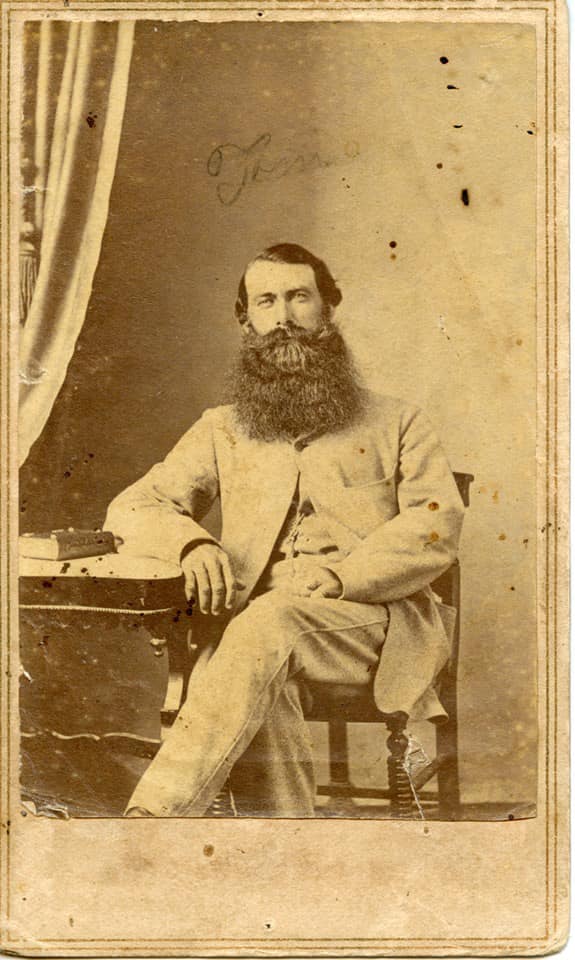
George Washington Davis of North Carolina (1832 – circa 1900)

G.W. Davis was born into a seafaring family near Shackleford banks, Carteret County, North Carolina, in 1832. Little is known of his early life until he appears as the 2nd Mate of the iron-hulled paddle steamer, Britannia, which had been launched from Scotland in the spring of 1862. The Britannia made six runs through the blockade before being captured off of the Bahamas on June 22, 1863, by the USS Santiago de Cuba. Davis, along with many of his fellow crew members, were sent to Fort Lafayette, NY; and later transferred to Fort Warren, Boston, Massachusetts, in September of 1863. Davis remained imprisoned at Fort Warren for the remainder of the War and after, until June 20, 1865.

This CDV of G.W. Davis was taken by photographer J.W. Black, Boston, Massachusetts, during his imprisonment at Fort Warren. Black also appears in several of the group images of Fort Warren prisoners that have been published.

After the War, Davis settled in Smithville (now Southport), North Carolina, where he married, raised a family, and continued in maritime pursuits as a sailor and pilot. He died prior to 1900.

George E. Lyell of Virginia (1837 – 1868)

A native of Norfolk, Virginia, George E. Lyell had been a member of the 54th Virginia Militia before he enlisted as a Private in Captain Nathan W. Small’s Signal Corps Company on March 5, 1862. This Company ultimately became a part of Major James F. Milligan’s Independent Signal Corps, operating as scouts and signal officers along the James and Appomattox rivers. Lyell was present with his company, and primarily stationed in Petersburg, until detailed in 1864 for signal duty to Wilmington, North Carolina, where he would serve on ships intended to run the blockade. Although the particulars of this service are unknown, he does appear on a list of Confederates in Havana, Cuba, in April of 1865, and later back in the Confederacy, where he was paroled at Charlotte, North Carolina, on May 4, 1865.

After the War, Lyell operated a restaurant and saloon in Norfolk, until an untimely death on July 23, 1868.

The CDV of George E. Lyell was photographed by A. Hobday & Co., Norfolk, Virginia, circa 1866-1868.

(These images are in the collection of and are courtesy of Fred D. Taylor.)
The Battle of Hampton Roads

Here’s to some Friday evening local #fredonhistory in honor of the 162nd anniversary of the battle of Hampton Roads, March 8-9, 1862.

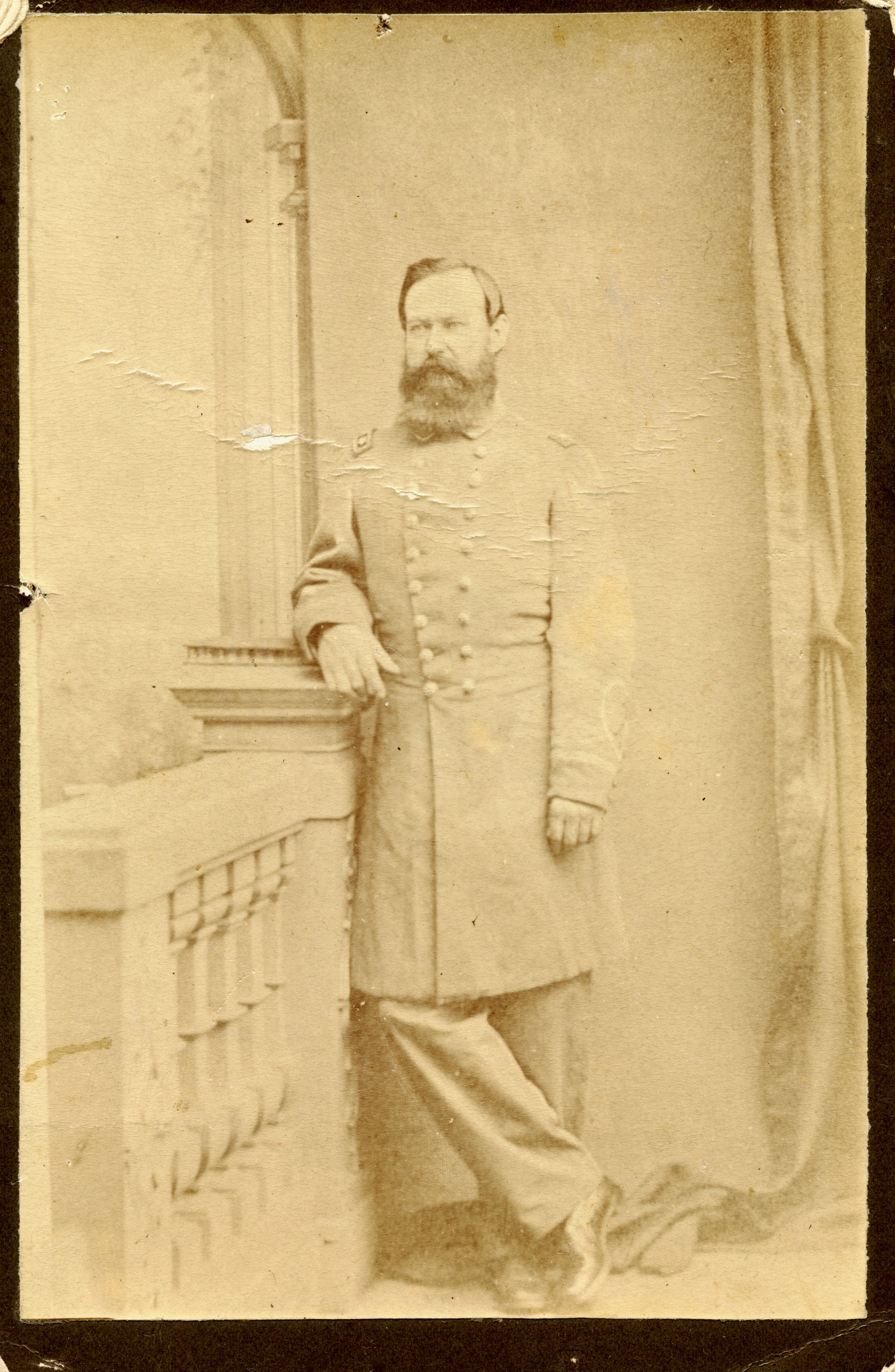
From my collection of images is this cabinet card of Confederate States Navy Commander William Augustin Webb.

Born in 1824 in Virginia, William A. Webb hailed from a strong maritime family – his father Thomas Tarleton Webb serving several decades in the U.S. Navy and reached the distinguished rank of Captain. Following in his father’s footsteps, the younger Webb entered the Navy at an early age, and also quickly demonstrated his capabilities. By 1854 he had been promoted to Lieutenant.

Upon the outbreak of the War Between the States, Webb resigned and offered his services to Virginia and ultimately the Confederacy. He was commissioned a 1st Lieutenant and initially assigned to duty in Florida, but returned to Virginia for service with the James River Squadron by the spring of 1862. Here, Webb was placed in command of the Teaser, a converted eighty-foot tugboat armed with only two guns – 32 lb and 12 lb cannon.

It was in this service in March of 1862, the Teaser (and Webb) would distinguish itself in its supporting role alongside the CSS Virginia (Merrimack) as it clashed with unprepared wooden gunboats and ultimately the U.S.S Monitor. In the after-action report of Captain Franklin Buchanan, he noted that the Squadron and “W. A. Webb, of the Teaser, deserves great praise for their gallant conduct throughout the engagement. Their judgment in selecting their positions for attacking the enemy was good; their constant fire was destructive, and contributed much to the success of the day. The general order under which the squadron went into action required that, in the absence of all signals, each commanding officer was to exercise his own judgment and discretion in doing all the damage he could to the enemy, and to sink before surrendering.”

After the battle, Webb went on to serve in a variety of roles with the CS Navy and was promoted to Commander by 1863. There is much more I can add about his time from this point until War’s end, but I will save that story for another day!

More importantly, if you want to learn more about the Battle of Hampton Roads, I invite you out to The Mariners’ Museum and Park this weekend as they commemorate this historic event with opportunities to view artifacts, as well as enjoy a number of lectures and programs for all ages.

Fearless on the Cape Fear River

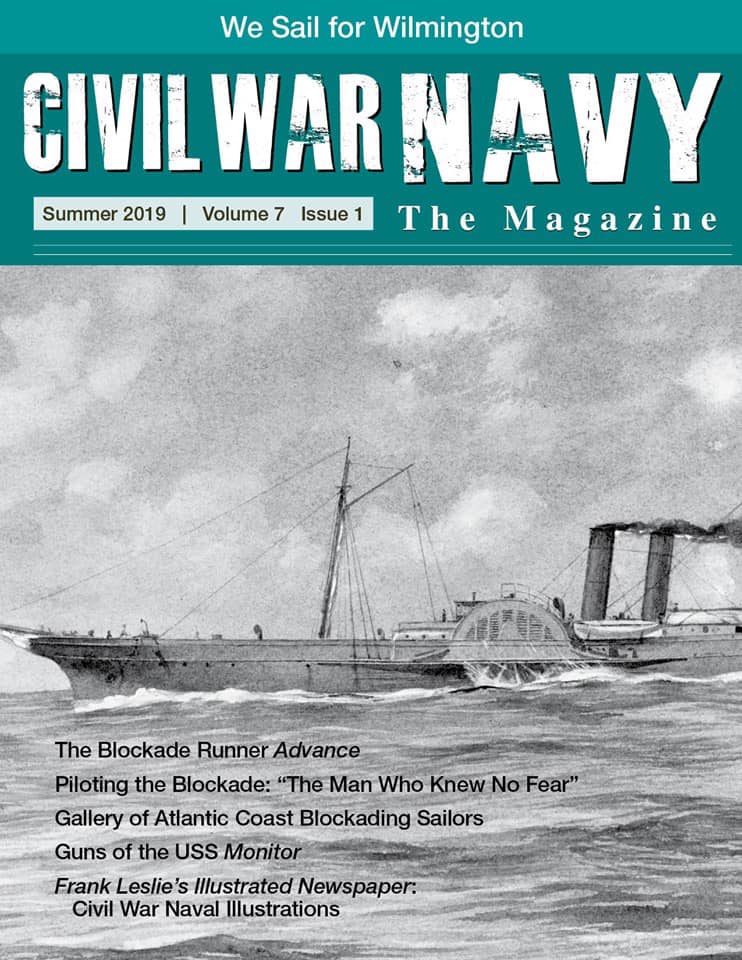
A sneak peak of my article in the Summer 2019 issue of Civil War Navy—The Magazine (civilwarnavy.com) profiles Thomas Mann Thompson, Jr., one of the Confederacy’s most successful blockade runner pilots, making over 30 runs through the blockade while escaping capture. Famed Confederate Captain Michael P. Usina called Thompson “an officer who knew no fear.”

(Thompson carte de visite courtesy of the Fred D. Taylor Collection. Image photographed by S.W. Gault, Hamilton, Bermuda, circa 1864.)