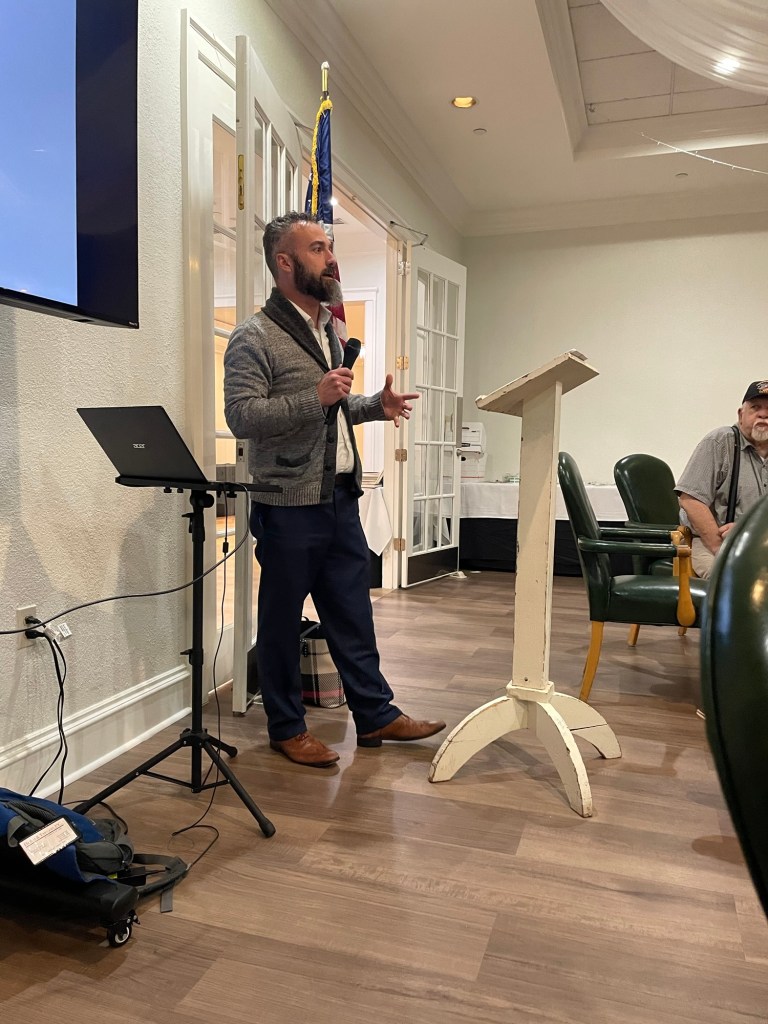
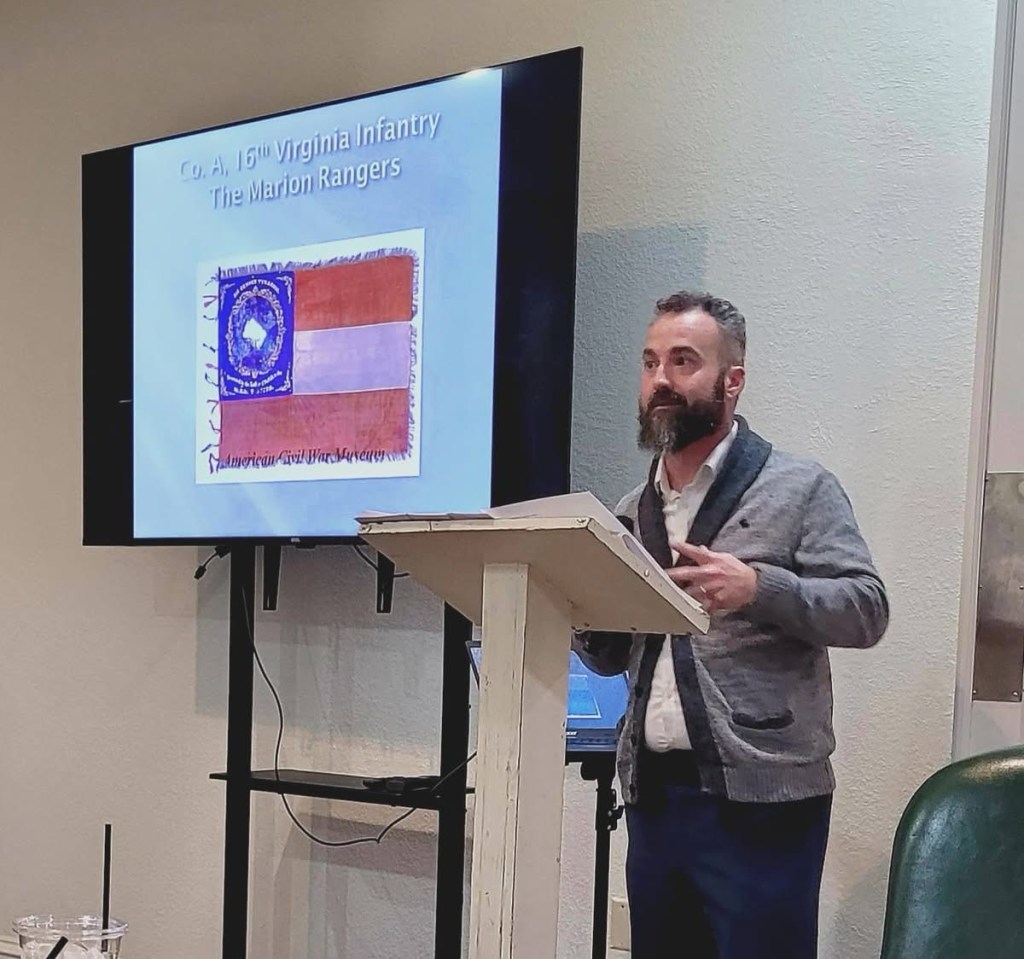
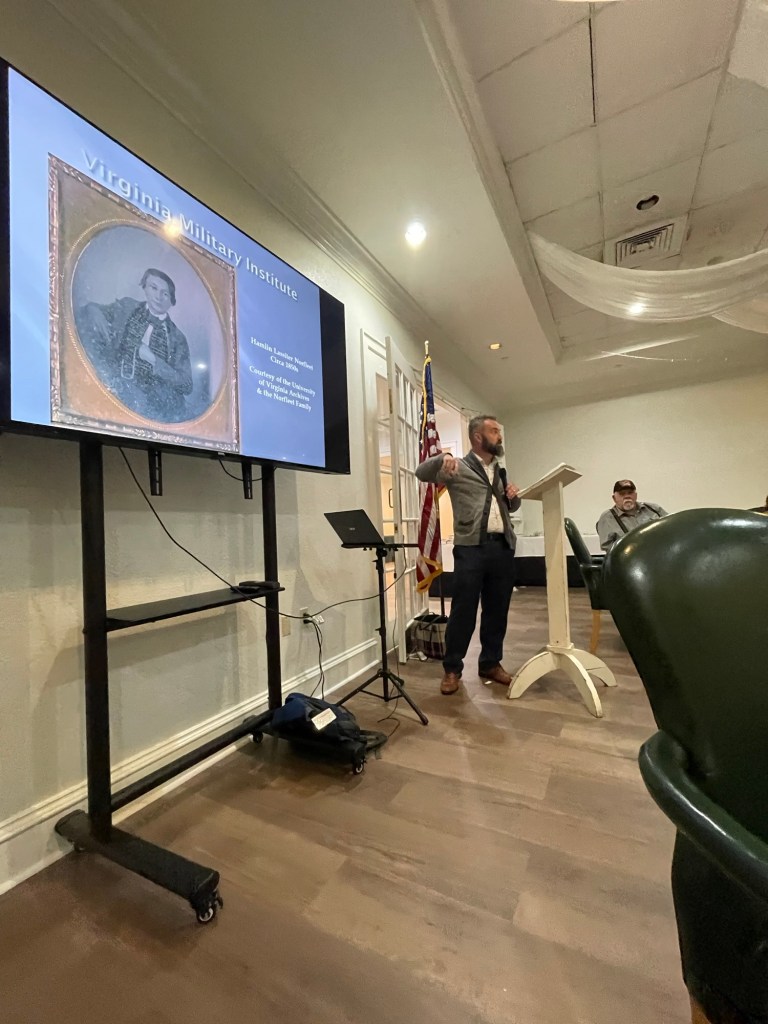
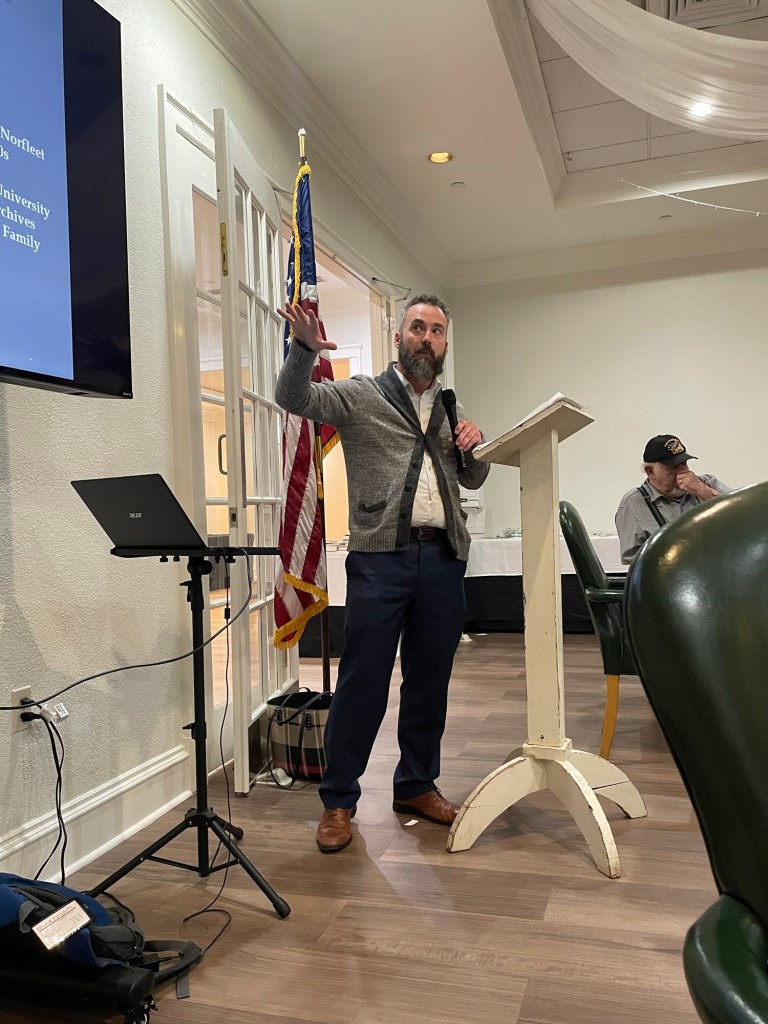
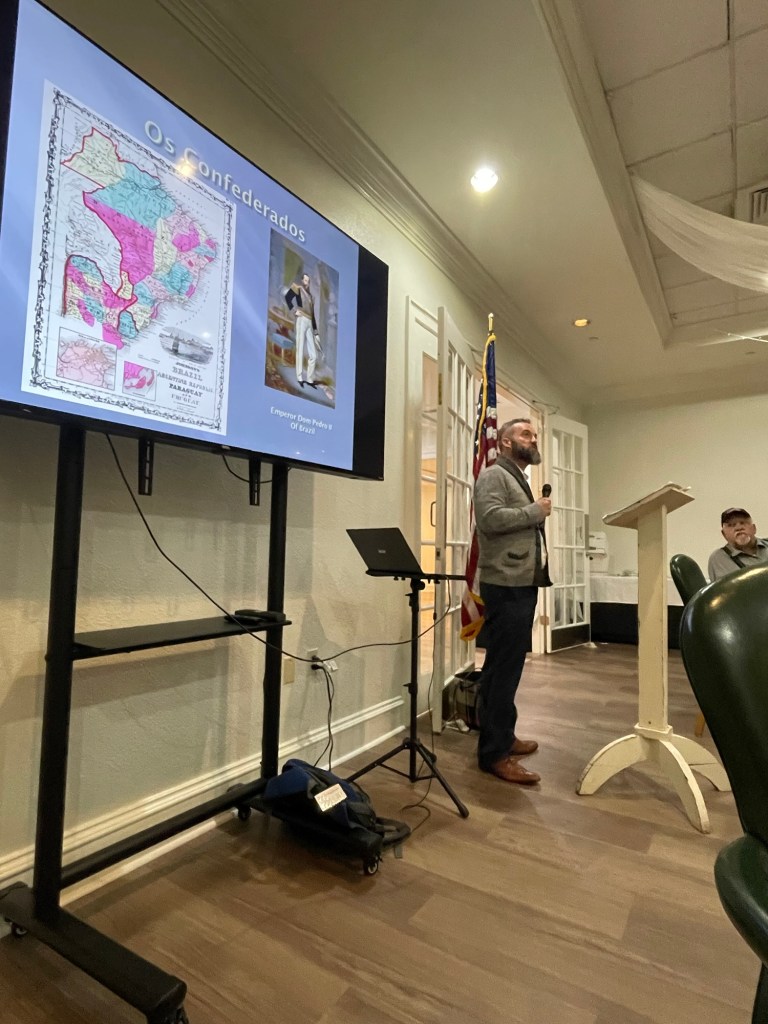
A night with the Hampton Roads Civil War Roundtable in Virginia Beach, speaking on the life of “renaissance man,” Hamlin Lassiter Norfleet of Suffolk.
A night with the Hampton Roads Civil War Roundtable in Virginia Beach, speaking on the life of “renaissance man,” Hamlin Lassiter Norfleet of Suffolk.
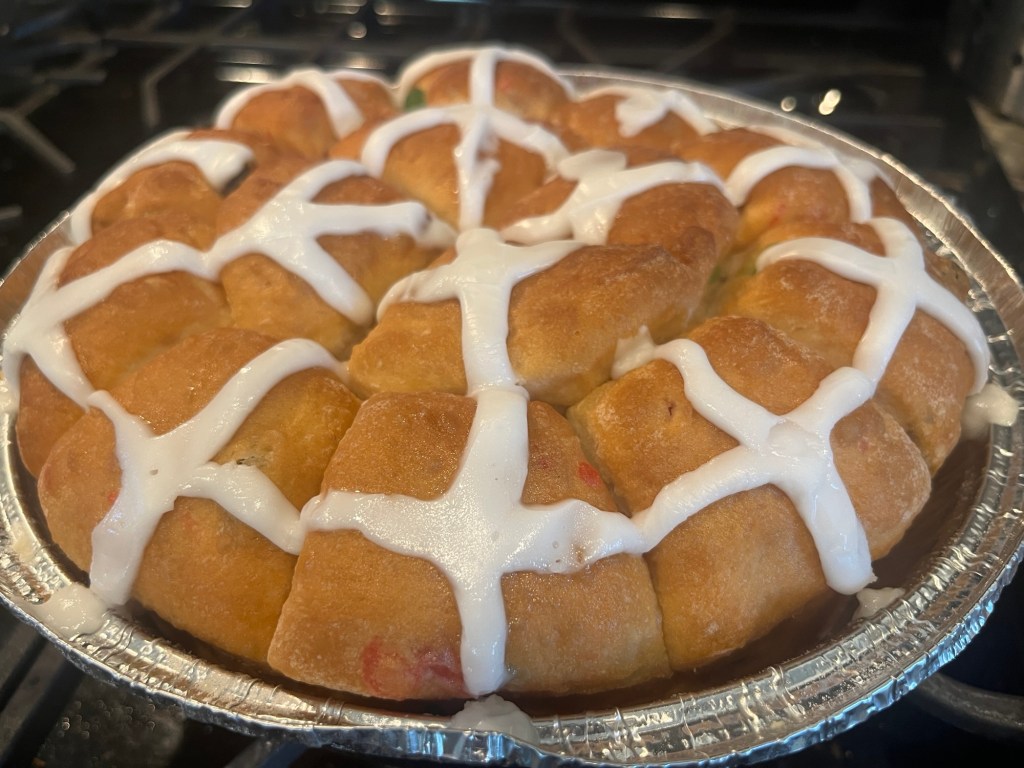
Wishing all a blessed Good Friday, and a double dose of #fredonhistory
I had never seen or heard of a “Hot Cross Bun” – spiced buns with mixed fruit and topped with an icing cross – until my travels and research took me to Bermuda 🇧🇲 . One bit of folklore attributes these to have originated in 16th/17th England, due to a ban on the sale of spiced baked goods during Easter and Christmas. Apparently a resourceful baker decided if such buns were “blessed” with a cross it would get around such prohibitions by making their sale one with a religious connotation.
Whatever the origins though, generally after Lent all I have on my mind is the taste of these spicy, fruity, and sweet delectable treats. And in recent years, I am thankful they have made their way to the States.
Today, I was fortunate to find a pan of fresh Hot Cross Buns at Yummaries Bakery in Smithfield.
Which brings me to another bit of history.
The Town of Smithfield also has multiple Bermuda connections. Those who know a little something of Smithfield history will recognize the name Captain Mallory Todd and the stately “Todd House” (aka Nicholas Parker house, built in 1750s) located on Main Street.

Mallory Todd, a noted seaman and merchant, was in fact a native of Bermuda and is believed to have come to Smithfield in the 1760s (likely joining another branch of his family, also Bermudian – the Mallorys) to pursue a variety of financial opportunities in the colonies. In the midst of the Revolutionary War, Todd expanded his business, and is credited as being the father of our famed “Smithfield ham” – curing them so that they would be preserved during their export across the Atlantic to England, Bermuda, the Caribbean, and abroad.
So today, while I enjoy my hot cross buns and reflect on the solemnity of Good Friday, I am also mindful of the great irony that these same Smithfield-made cross buns were likely being enjoyed by the Mallory and Todd families some 250+ years ago as well.
And that little idea of Captain Todd’s – curing and shipping local hams 🐖 – well it seemed to take off pretty well, too!
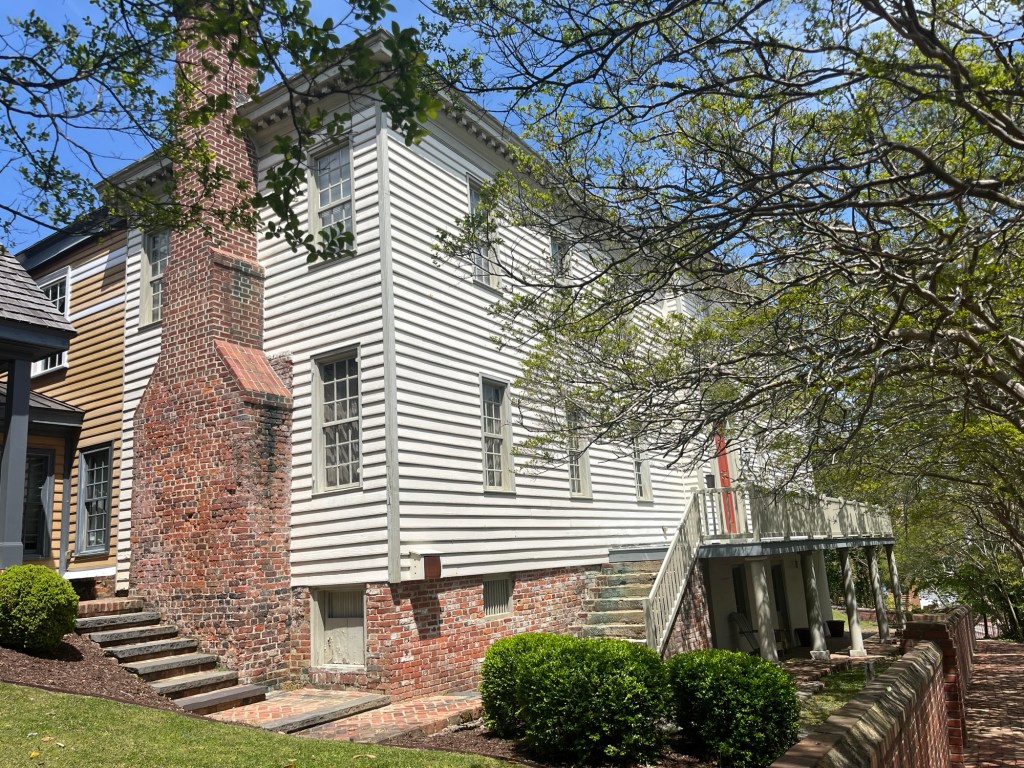


The Parker/Todd House, along Main Street, Smithfield, Virginia

I had the distinct privilege of speaking at the homecoming celebration held on Sunday, March 16, recognizing South Quay Baptist Church for its 250th anniversary. It was a packed-house, with standing room only and just a wonderful day of sharing history, fellowship, and worship!
The pictures below are courtesy of South Quay’s Facebook page.


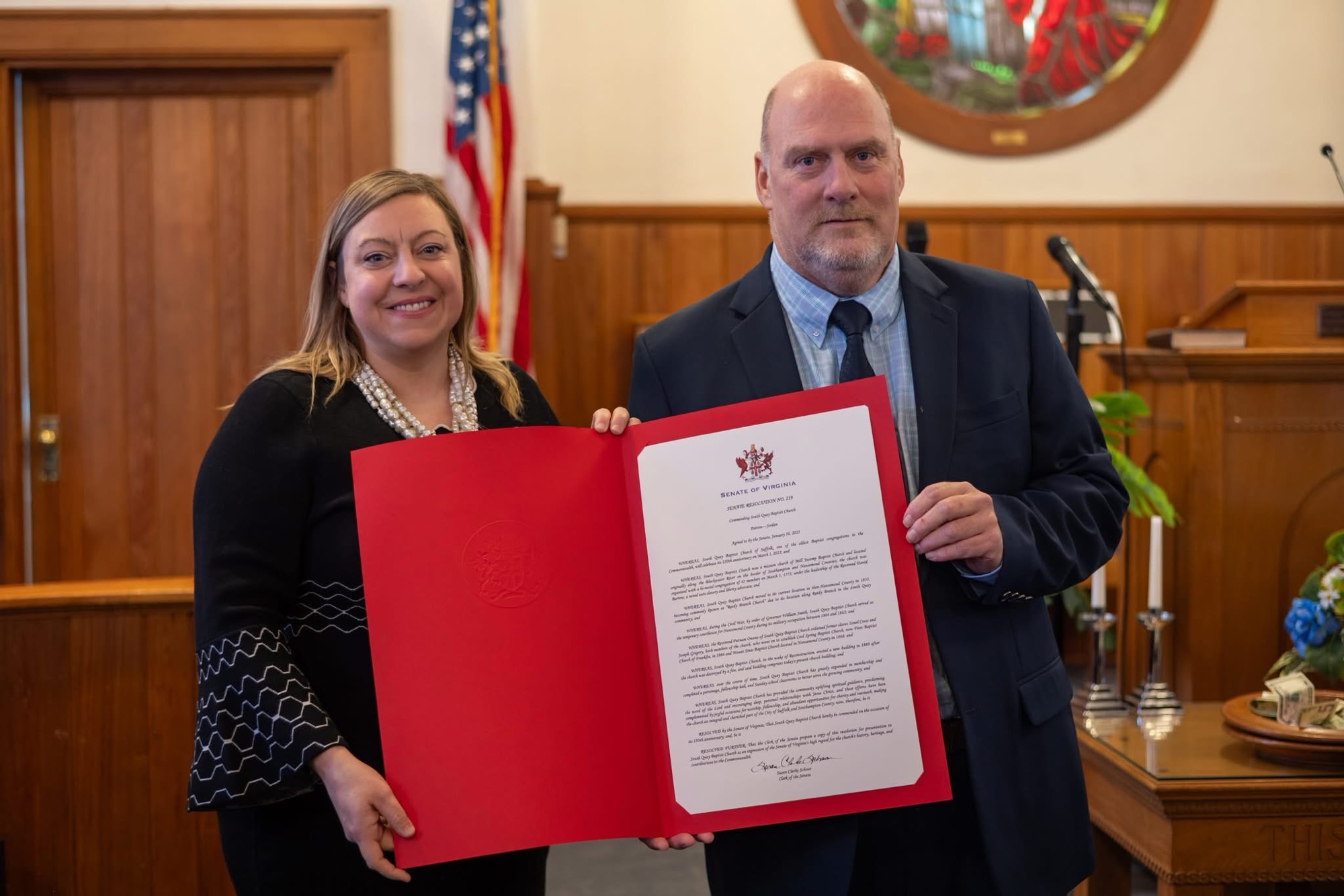

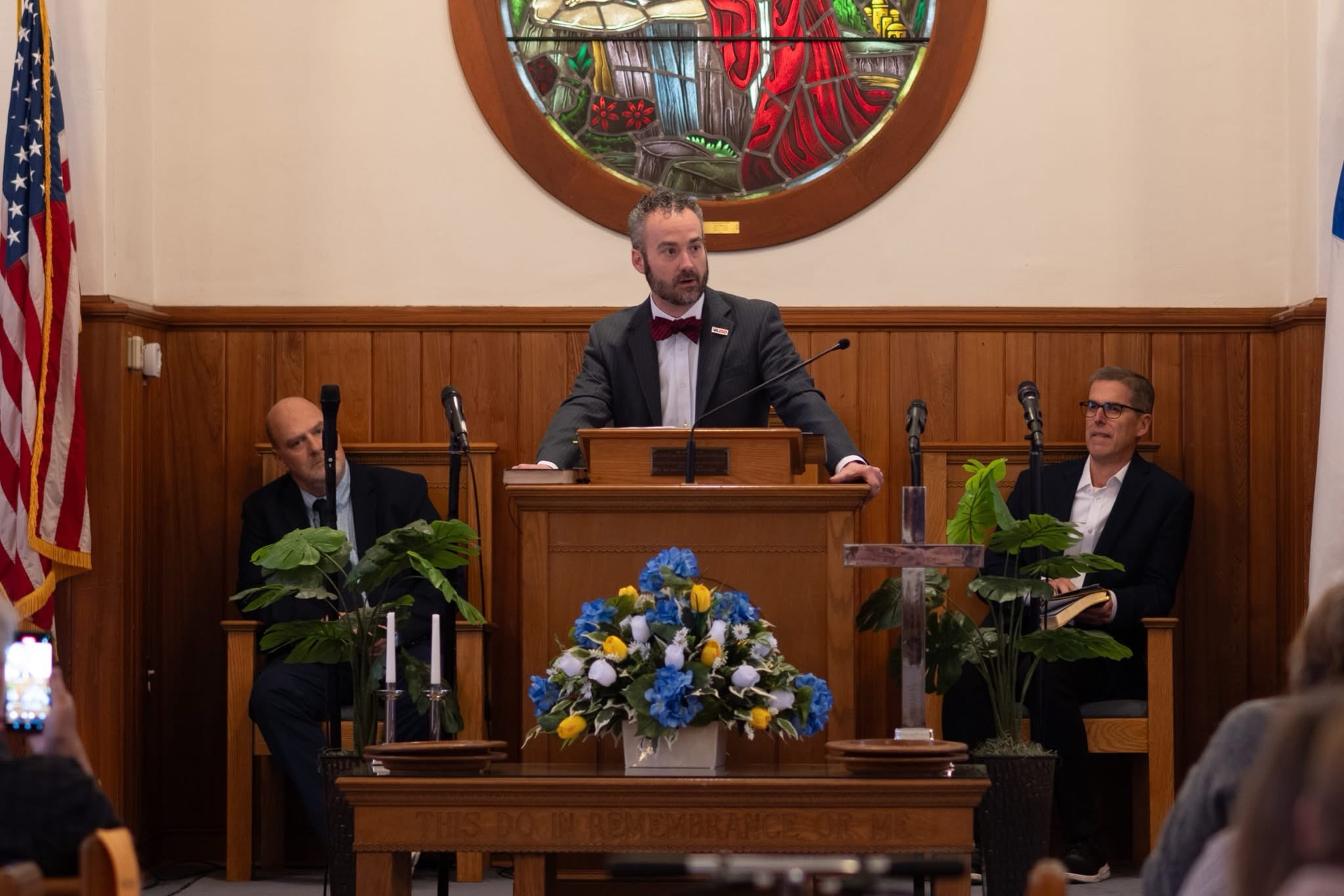


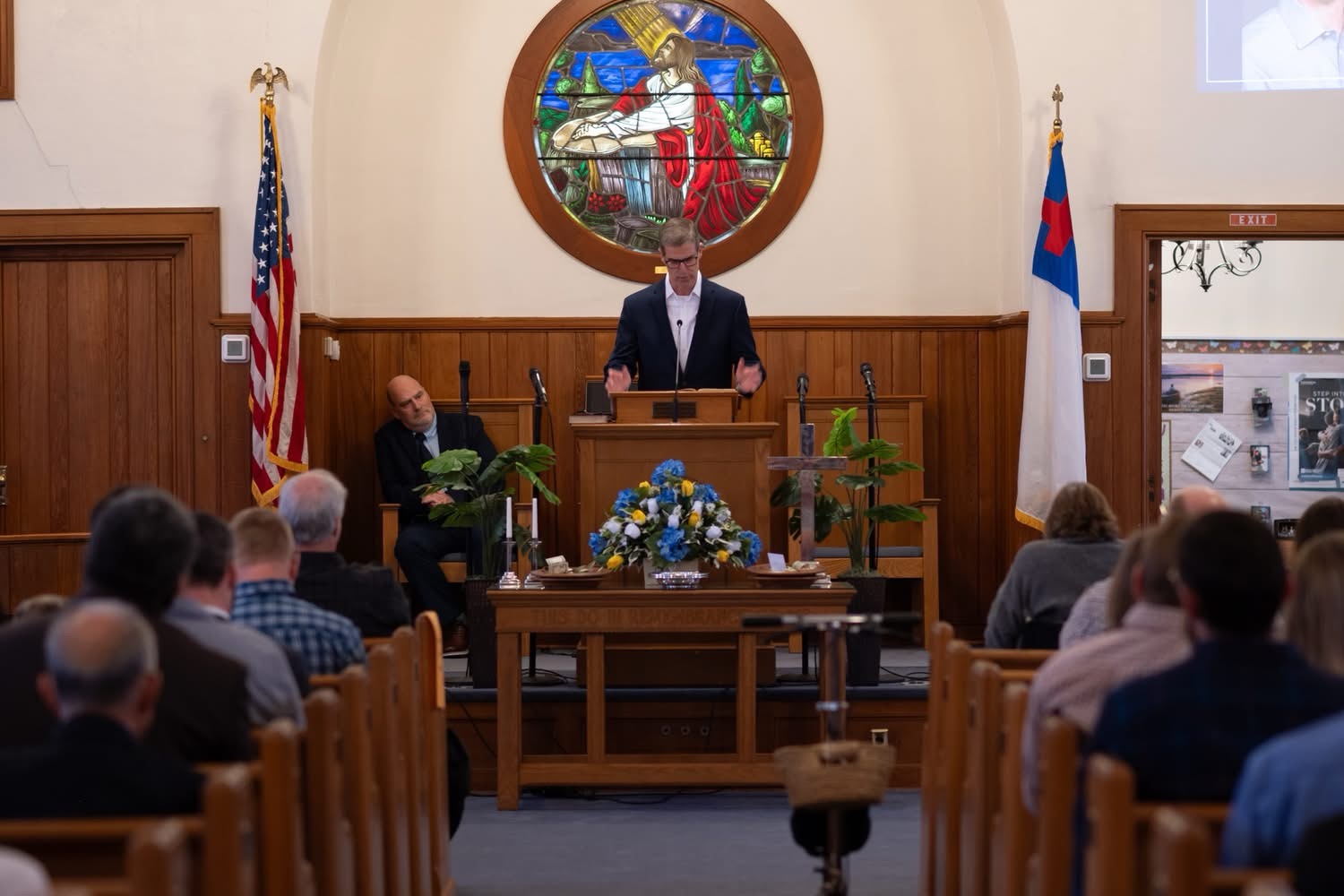


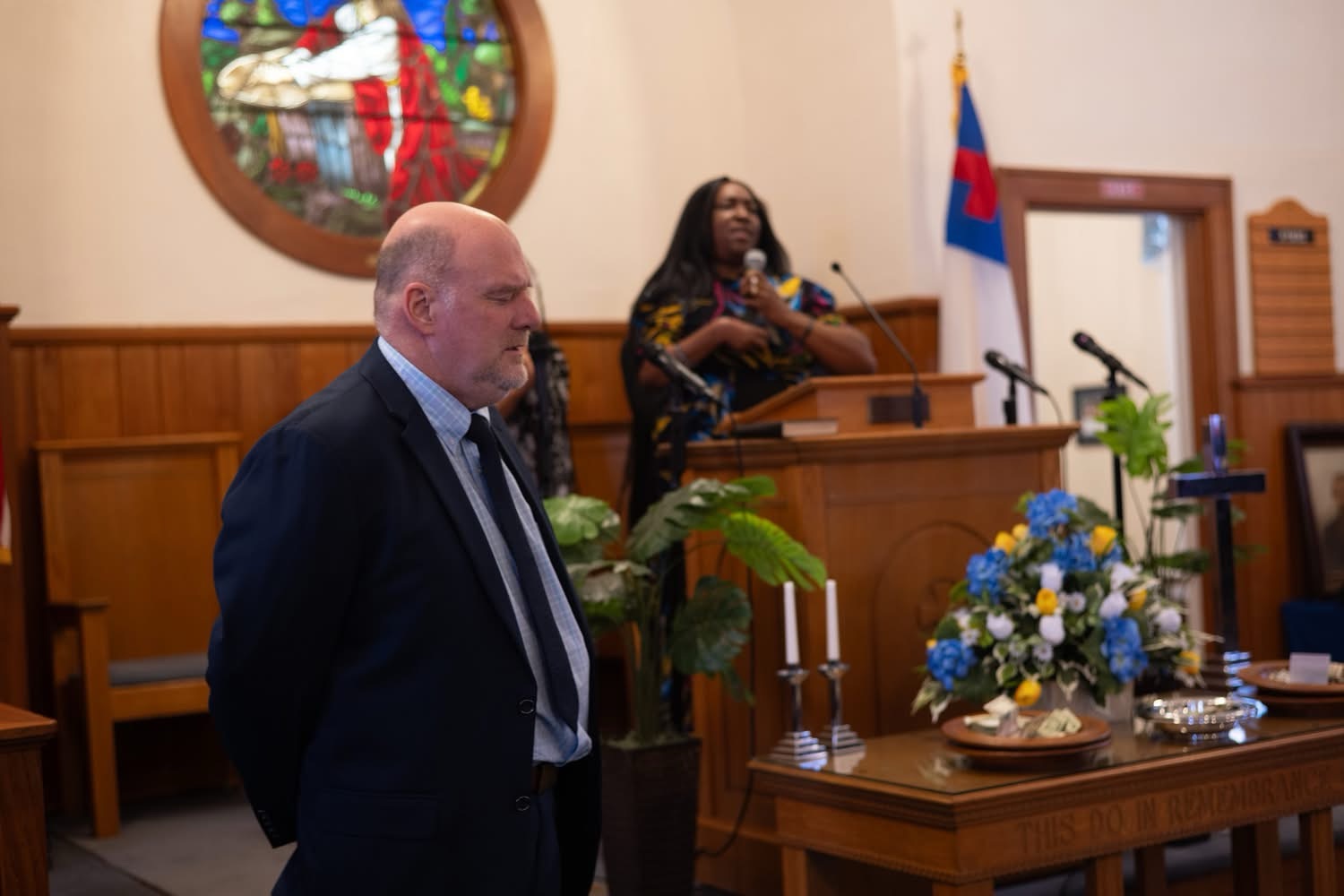
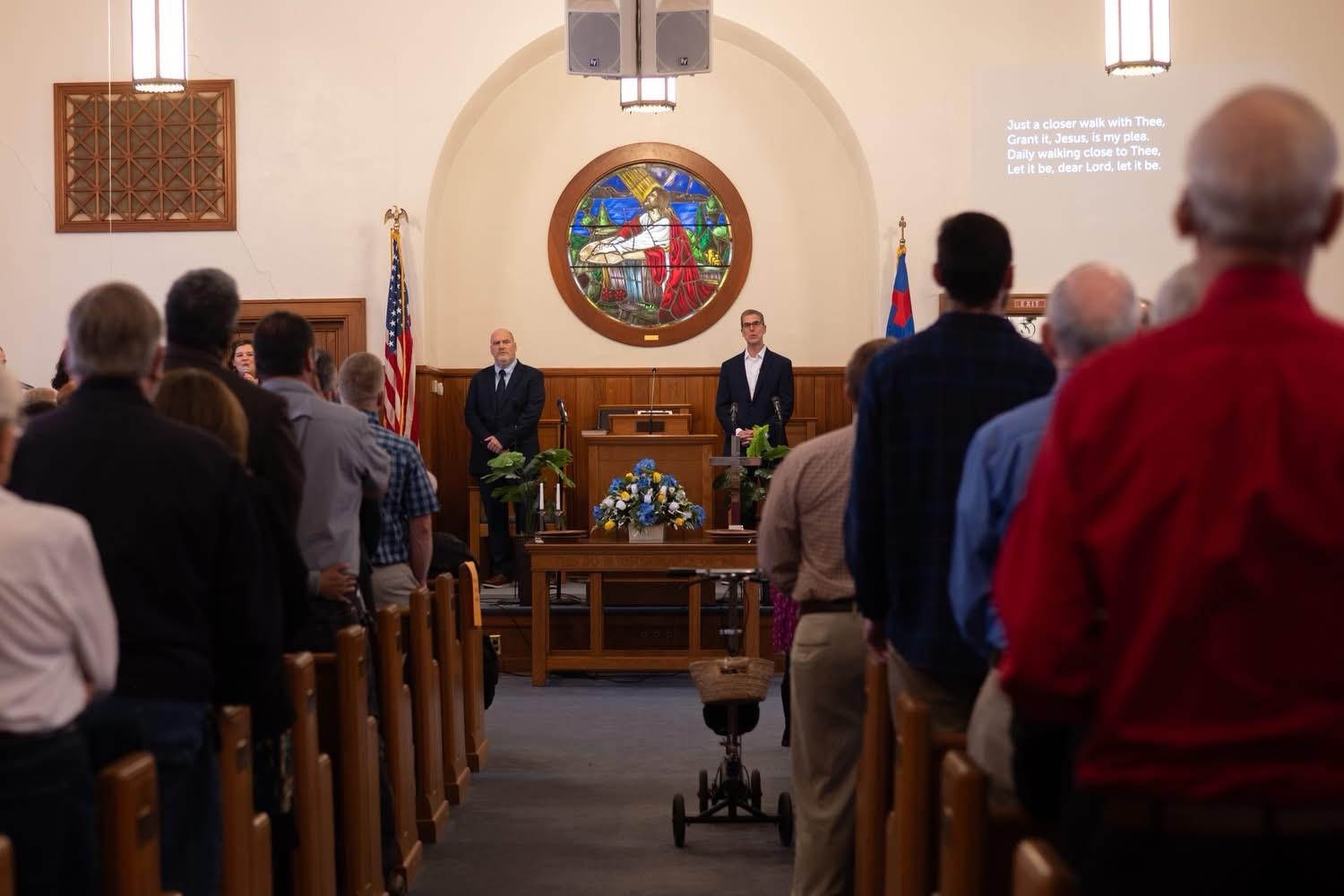
Additionally, the following resolution was passed by the Senate of Virginia as SR219 commending South Quay on this great honour and outlining the Church’s history:
Offered January 23, 2025
Commending South Quay Baptist Church.
—————
Patron—Jordan
—————
WHEREAS, South Quay Baptist Church of Suffolk, one of the oldest Baptist congregations in the Commonwealth, will celebrate its 250th anniversary on March 1, 2025; and
WHEREAS, South Quay Baptist Church was a mission church of Mill Swamp Baptist Church and located originally along the Blackwater River on the border of Southampton and Nansemond Counties; the church was organized with a bi-racial congregation of 42 members on March 1, 1775, under the leadership of the Reverend David Barrow, a noted anti-slavery and liberty advocate; and
WHEREAS, South Quay Baptist Church moved to its current location in then-Nansemond County in 1835, becoming commonly known as “Reedy Branch Church” due to its location along Reedy Branch in the South Quay community; and
WHEREAS, during the Civil War, by order of Governor William Smith, South Quay Baptist Church served as the temporary courthouse for Nansemond County during its military occupation between 1864 and 1865; and
WHEREAS, the Reverend Putnam Owens of South Quay Baptist Church ordained former slaves Israel Cross and Joseph Gregory, both members of the church, who went on to establish Cool Spring Baptist Church, now First Baptist Church of Franklin, in 1866 and Mount Sinai Baptist Church located in Nansemond County in 1868; and
WHEREAS, South Quay Baptist Church, in the wake of Reconstruction, erected a new building in 1889 after the church was destroyed by a fire, and said building comprises today’s present church building; and
WHEREAS, over the course of time, South Quay Baptist Church has greatly expanded in membership and completed a parsonage, fellowship hall, and Sunday school classrooms to better serve the growing community; and
WHEREAS, South Quay Baptist Church has provided the community uplifting spiritual guidance, proclaiming the word of the Lord and encouraging deep, personal relationships with Jesus Christ, and these efforts have been complemented by joyful occasions for worship, fellowship, and abundant opportunities for charity and outreach, making the church an integral and cherished part of the City of Suffolk and Southampton County; now, therefore, be it
RESOLVED by the Senate of Virginia, That South Quay Baptist Church hereby be commended on the occasion of its 250th anniversary; and, be it
RESOLVED FURTHER, That the Clerk of the Senate prepare a copy of this resolution for presentation to South Quay Baptist Church as an expression of the Senate of Virginia’s high regard for the church’s history, heritage, and contributions to the Commonwealth.
A couple of new additions to my “crew” of blockade runner images.
George Washington Davis of North Carolina (1832 – circa 1900)

G.W. Davis was born into a seafaring family near Shackleford banks, Carteret County, North Carolina, in 1832. Little is known of his early life until he appears as the 2nd Mate of the iron-hulled paddle steamer, Britannia, which had been launched from Scotland in the spring of 1862. The Britannia made six runs through the blockade before being captured off of the Bahamas on June 22, 1863, by the USS Santiago de Cuba. Davis, along with many of his fellow crew members, were sent to Fort Lafayette, NY; and later transferred to Fort Warren, Boston, Massachusetts, in September of 1863. Davis remained imprisoned at Fort Warren for the remainder of the War and after, until June 20, 1865.
This CDV of G.W. Davis was taken by photographer J.W. Black, Boston, Massachusetts, during his imprisonment at Fort Warren. Black also appears in several of the group images of Fort Warren prisoners that have been published.
After the War, Davis settled in Smithville (now Southport), North Carolina, where he married, raised a family, and continued in maritime pursuits as a sailor and pilot. He died prior to 1900.
George E. Lyell of Virginia (1837 – 1868)

A native of Norfolk, Virginia, George E. Lyell had been a member of the 54th Virginia Militia before he enlisted as a Private in Captain Nathan W. Small’s Signal Corps Company on March 5, 1862. This Company ultimately became a part of Major James F. Milligan’s Independent Signal Corps, operating as scouts and signal officers along the James and Appomattox rivers. Lyell was present with his company, and primarily stationed in Petersburg, until detailed in 1864 for signal duty to Wilmington, North Carolina, where he would serve on ships intended to run the blockade. Although the particulars of this service are unknown, he does appear on a list of Confederates in Havana, Cuba, in April of 1865, and later back in the Confederacy, where he was paroled at Charlotte, North Carolina, on May 4, 1865.
After the War, Lyell operated a restaurant and saloon in Norfolk, until an untimely death on July 23, 1868.
The CDV of George E. Lyell was photographed by A. Hobday & Co., Norfolk, Virginia, circa 1866-1868.
(These images are in the collection of and are courtesy of Fred D. Taylor.)
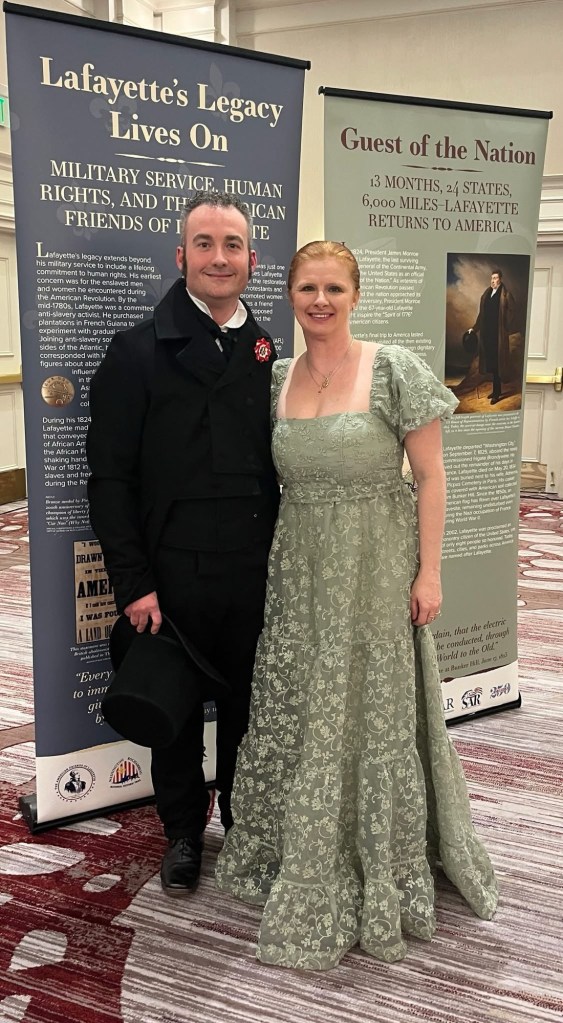
Today, I am still reveling in the excitement of the at-capacity, 250+ person banquet commemorating the February 25, 1825, visit of General Lafayette to Suffolk.

We were blessed to have the General himself – portrayed by the talented Mark Schneider, and numerous dignitaries locally and abroad, the Mayor and members of City Council, French military personnel, Virginia American Revolution 250, scholars of the The American Friends of Lafayette, Daughters of the American Revolution, and so many more!

Of course, it would take such a significant event to cause me to abandon my beard of years, in order to channel my inner 1820s gentleman! Not the least of which was the high honour of serving as the Master of Ceremonies for a wonderful evening of history, and the celebration of our timeless bond with France.
Viva la France & General Lafayette!

Tired of just another haunted hay ride or spooky house?
Join us at Suffolk’s oldest house museum – Riddick’s Folly – for an evening of history and readings of the famed macabre writer, Edgar Allen Poe.
The evening will begin with a social period with light hors d’oeuvres from 6:00 – 6:30 PM, followed by the program at 6:35 PM.
This event is free and open to the public, but due to limited seating, please RSVP to riddicksfolly@verizon.net or call 757-934-0822.
We love our “Folly” – thanks to Myles Henderson at WTKR News 3 for sharing our great story!
Here is the link:


Many of you who know me are aware of my passion for history, and my interest and collection of Civil War-related items. For several years, that has included a focus on identified items in which I can bring the stories of the men and women from that period “to life.” Particularly, period images. Nothing brings history to life more than a photograph, where one can see a face and look into the eyes of an individual…. and the period just prior to and during the Civil War was truly the awakening of photography, such that these images tell a story as significant as battle reports, letters, or books.
I explain all of this to proudly debut my first (of many, I hope) article to appear in Military Images magazine. MI is one of the foremost historical publications in existence today, and the only one whose exclusive focus is the study of photographs of Civil War soldiers. I began my journey here when I discovered (rediscovered?) an albumen print of Lieutenant Otway Berryman of the United States Navy. Prior to obtaining this image, I had never heard his name mentioned. But he was a Virginian, and that interested me, and I quickly learned he died at the outbreak of hostilities. That also piqued my curiosity. Armed with this information, I began a quest some eight months ago researching this “unknown” naval officer. What I learned from that research moved me so much that I knew his story needed to be told. So this article is the culmination of that research, and from my perspective, a tribute to Lt. Berryman and his service. For those of you who already subscribe to Military Images, I hope you enjoy the article. If you do not, but are interested in such history, please check out their website, and consider a subscription. The current issue can be purchased, as well as subscriptions from the following link.
I cannot conclude without also thanking my family and my dear wife who tolerated my many hours locked away in research, and ultimately for her critique of this article. I also knew that if I was going to write for a scholarly publication, I needed to run this article by historians and image collectors who not only had previously contributed to MI, but whose advice (and criticism) I knew would make this a better read. Those gentlemen include my dear friends Rusty Hicks, William Stier, and Doug York. Finally, I cannot say enough about the courtesy and professionalism extended to me by MI Editor and Publisher Ron Coddington who truly helped bring this story to life with his recommendations as we drafted our way through to the final version.
The Daily HeraldThe Daily Herald (Roanoke Rapids, North Carolina)
January 19, 2016
by Jenny Gray
On the morning of April 9, 1865, men from the Roanoke Valley fought in the Battle of Appomattox Court House, the final engagement of the Army of North Virginia before surrendering — and thus ending — the Civil War.
The Confederate capital of Richmond, Va., was lost to the South. Retreat was cut off by Union forces. Losing that morning battle brought General Robert E. Lee to the courthouse that afternoon where he signed the documents of surrender and gave up his sword.
Standing there was the company that included members from Halifax, Warren and Northampton counties. Now an area historian wants to know what made them tick.
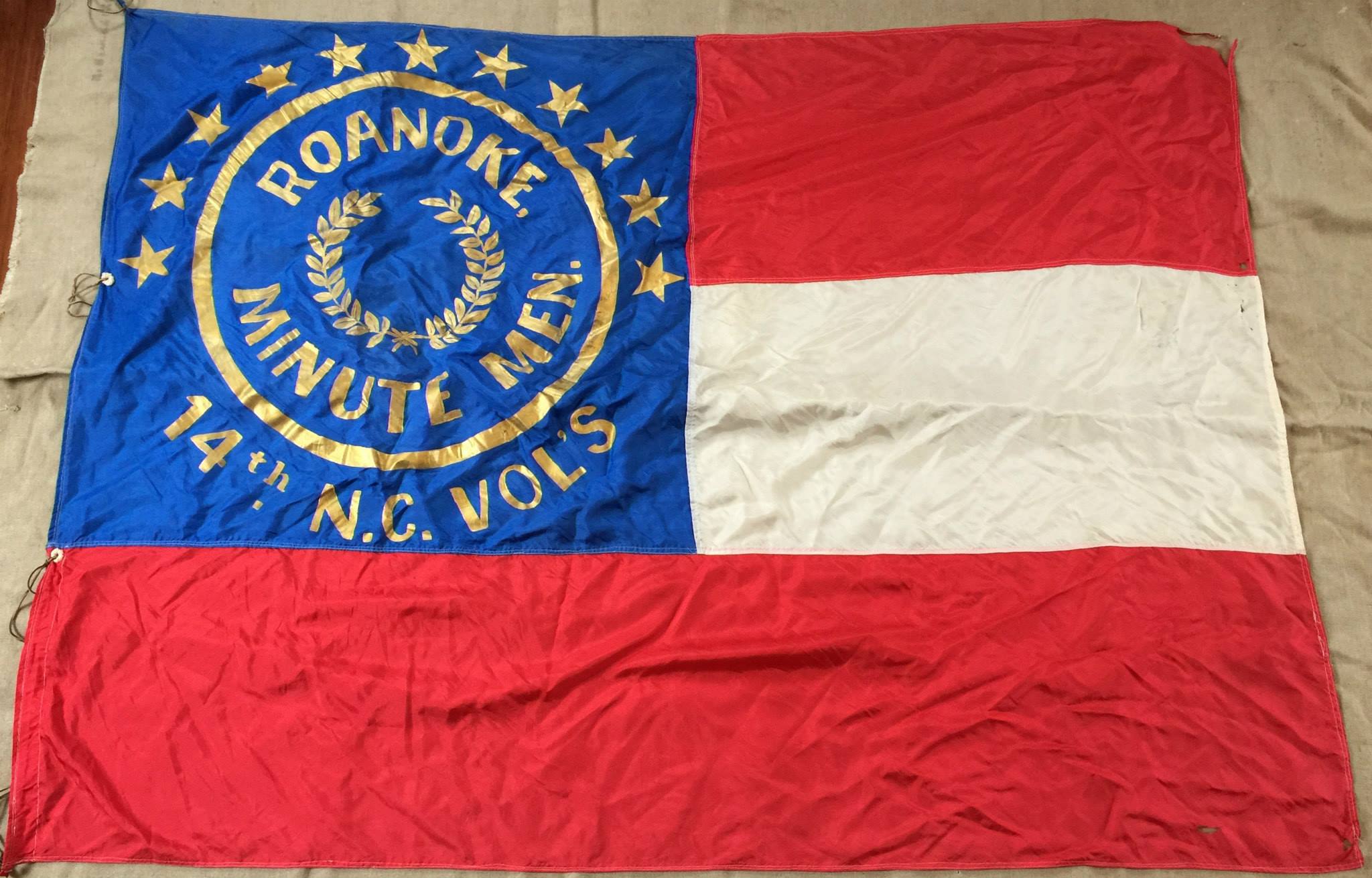
Attorney, historian and author, Fred Taylor grew up visiting his grandmother on the banks of the Roanoke River. His forefathers operated Eaton’s Ferry, and somewhere along the line he learned of the Roanoke Minute Men, a Littleton-area militia that formed before the Civil War, and fought in that war from the start to the finish.
“For me personally, I’ve always been a history buff,” Taylor said during a recent visit in which he gathered more research on this militia. “A lot of people think history’s boring. It’s abstract. It happened 100 years ago.”
But that’s not how Taylor said he feels. Following in the footsteps of a family member, he started building on the family genealogy about two decades ago and was hooked.
“All this history comes back to my own family,” he said. “My dad grew up on the Roanoke River, and later, Lake Gaston. My grandfather pulled Eaton’s Ferry.”
Then along came the story of the Roanoke Minute Men and Taylor’s hobby turned into something more serious.
“My first big find was the diary of a soldier during the Civil War, and I was related to him,” Taylor said. “I started reading that and seeing how these guys fit into a bigger story.”
His hunt began in earnest last spring as he read more and more accounts of this band of local soldiers. Taylor has assembled a detailed roster of the Company including individual service records and period letters and accounts from the early day of the company, formed in 1864. He has corresponded with and met Roanoke Minute Men descendants and visited state and local archives, gathering more information.
He learned that the Company was among the first to serve in the Civil War.
“They formed as a militia just before the Civil War and eventually went from Littleton to Weldon, and then over to Garysburg to train,” Taylor said. “One-hundred and forty men ended up serving in the unit.”
Taylor said while his book will include military information, that’s not the goal. Troop movements during the Civil War are well documented, but to get to the heart of his subject, Taylor said he wants to make it personal.
“My preference is not talking about battles or generals; I’d like to know more about these soldiers,” he said.
The initial diary, Taylor added, wasn’t about war, per se. It was about how the soldier felt.
“He talked about love and poetry and there were some religious overtones,” Taylor said of the diary. “I don’t think any soldier can be in battle without getting a little closer to their maker.”
Most of these soldiers had never gone more than a few miles from home, Taylor said, and must have been frightened at times.
“My focus has been trying to emphasize their story — that life of the enlisted soldier who left family and loved ones and marched off hundreds of miles away to face enormous odds,” he added. “I think this sort of veterans’ story strikes a chord with anyone, regardless of age or race or what war we are discussing, or even whether or not they like history.”
To gather information, Taylor travels as often as he can while still managing his law practice in Suffolk, Va. He also has used the Internet, creating a website at: fredonhistory.com/roanoke-minute-men
Taylor, whose roots go back to the Jamestown Colony, also has a Facebook presence at www.facebook.com/roanokeminutemen.
Anyone from the Littleton area will recognize many of the surnames on the list of soldiers: Allen, Bobbitt, Holt, Kearney and Newsom, among others.
“Their average age was about 25 years old; literally every 18 to 40 year old, able-bodied man went,” Taylor said. “I’m gong to tell the big picture but I want these people to speak for themselves. And I want to be able to tell what was going on at home.”
He spoke of one of the company’s members, a black soldier named Hilliard Goings. Taylor said he was close to his fellow soldiers, including Newsom Jenkins.
“He served as a pallbearer at his funeral, and went to all the veterans’ reunions,” Taylor said of Goings. “I want to cover it all, and find the motivation to what prompts a young man to leave home and stability to go fight for four years. And what was the effect of that on their families. … I want to get down into the heart of that.”
So Taylor is asking people to help him find these photographs, diaries and letters. For more information about the Roanoke Minute Men project, or to make submissions to this effort, contact Taylor at roanokeminutemen@gmail.com, telephone at 757-705-0950, or by mail to: 160 West Washington St., Suffolk, VA. 23434. All submissions will be properly credited to the owner, he said.
by Fred D. Taylor, originally published November 2005 in the Suffolk News-Herald; updated November 2015.

As Thanksgiving is just days away, I decided to change the pace away from simply discussing someone of local significance or an historic battle, and talk a little about the history of the first English Thanksgiving in America.
While most school children in the last few weeks have been performing plays celebrating that spectacular gathering between the Pilgrims and the Indians, the truth of the matter is they got it all wrong. Gasp! Yes, I’m here popping the bubble of all the little kids who dressed up in their pilgrim hats and buckled shoes, or Indian headdresses, to tell the story the history books didn’t want them to know…
Despite popular American nostalgia that the first Thanksgiving was held by the Pilgrims after the arrival of the Mayflower at Plymouth Rock, it actually had its beginnings just a few miles from us along the James River at present-day Berkeley (pronounced Bark-lee) Plantation in Charles City County.
The year was 1619, twelve years after the establishment of Jamestown, when a group of thirty-eight settlers aboard the ship Margaret arrived after having made a ten-week journey across the Atlantic. Upon their landing, they knelt and prayed on the rich Tidewater soil, with their Captain John Woodlief proclaiming:
“Wee ordaine that the day of our ships arrivall at the place assigned for plantacion in the land of Virginia shall be yearly and perpetually keept holy as a day of thanksgiving to Almighty God.”
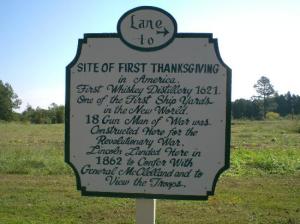
As historically recorded, this event was the first English Thanksgiving in the New World. So why the big deal about the Pilgrims and the first Thanksgiving being at Plymouth Rock? Good question. Some historians follow the trail to northern-written textbooks (after the War Between the States, of course), but even then anything more than a cursory study of colonial history will lead one to the discrepancy between the dates of the first Thanksgiving. Yet, we continue today to recognize the Plymouth Thanksgiving as the first, despite the clear evidence to the contrary. In fact, the irony of all ironies is that not only did Virginia’s Thanksgiving celebration occur before the one in Massachusetts, the Pilgrims had not even landed in America yet! The Pilgrims arrival would come one year and seventeen days later in 1620, and their Thanksgiving celebration nearly two years later in 1621.
Celebrations of “thanksgiving” would become a deeply rooted American tradition though, usually brought on by periods of great hardship. During the American Revolution, the Continental Congress proclaimed days of Thanksgiving every year from 1778 to 1784. Likewise, George Washington issued the first Presidential proclamation of Thanksgiving in 1789, and a few of his successors followed suit. Interestingly, Thanksgiving was not a specific day or even month, and apparently was issued on the whim of whoever was in office. Sporadically between the years 1789 and 1815, days of Thanksgiving were recognized in January, March, April, October, and November. This recognition of Thanksgiving ended in 1815 following the term of President James Madison, and a President would not issue such a proclamation for another forty-six years.
That President was Jefferson F. Davis, who recognized a day of thanks, humiliation, and prayer for the young Confederate States of America for October 31st, 1861. Not to be outdone, President Abraham Lincoln resurrected the forgotten day in the United States as well, and issued a similar proclamation in April of 1862. In 1863, Thanksgiving was made a national holiday, and in 1866, the tradition of recognizing Thanksgiving on the fourth Thursday of November was started by President Andrew Johnson.
From that time on, every sitting President has recognized Thanksgiving as a national holiday. Nonetheless, the twists in the story continue. While the recognition of the holiday has been uninterrupted since 1861, the explanations of the origins of Thanksgiving have been numerous. For years, the residents of the Oval Office ignored Virginia’s claim to the first Thanksgiving, but that all changed in 1963. It took a Massachusetts Yankee by the name of John F. Kennedy to take the risk of alienating his constituency back home to tell the rest of the story. President Kennedy honored Massachusetts’s and Virginia’s claim in his proclamations of 1963 at the urgency of his Special Assistant Arthur M. Schlesinger, Jr., a noted historian and political scientist. After Kennedy’s death, President Johnson mentioned Virginia twice, President Jimmy Carter recognized it in 1979, and the last to recognize Virginia’s claim was President Ronald Reagan in 1985.
Today, the struggle to tell the true story of Thanksgiving continues in classrooms across America, and even more so here at home in Virginia where it all started. For several years now, a group of concerned citizens have organized an annual event to celebrate the First Thanksgiving at Berkeley, and each year they recreate that historic event on the shores of the James River.
In the wake of America’s 400th Anniversary in 2007, the necessity to tell the real Thanksgiving story is all the more important. So as you prepare for Thanksgiving this year, take a few minutes to reflect on this story, and to pass this tidbit of history along to others. Every little bit helps in getting the truth out. As for me this year, I’ve certainly got plenty to be thankful for, but in honour of those courageous thirty-eight who arrived on the shores of Virginia in 1619, I’ll be substituting my turkey and stuffing for Smithfield Ham and Chesapeake Bay Oysters.

