Everyday Should be a Cheesecake Day

Happy National Cheesecake Day! 🍰

Around here, we’re always looking for a reason to gather around the table, and cheesecake has a way of turning an ordinary evening into something worth remembering. Whether it’s shared after Sunday dinner, brought to a backyard cookout, or enjoyed on the porch with a cup of coffee, it’s one of those timeless desserts that never goes out of style.

Our Favorite Classic Cheesecake

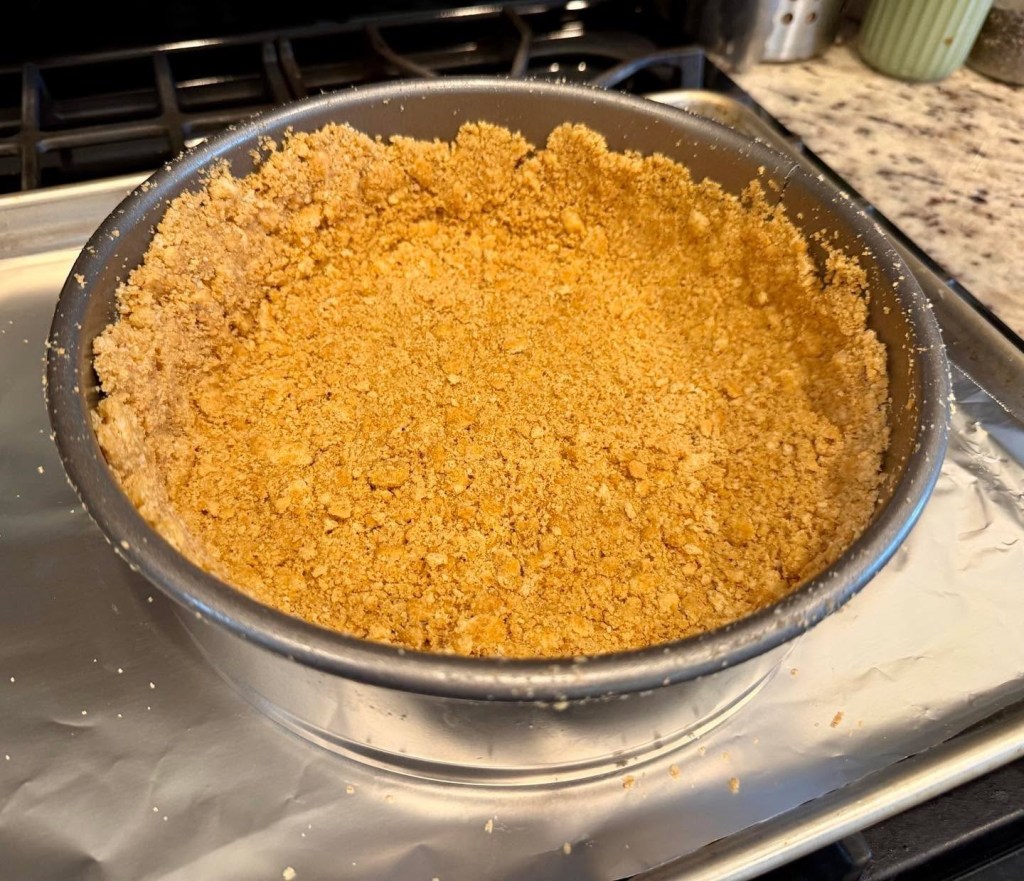
Graham Cracker Crust

Ingredients

  • 12–15 graham cracker sheets, crushed
  • 1 stick unsalted butter, melted

Directions

  1. Preheat oven to 325°F.
  2. Crush the graham crackers into coarse crumbs and combine with the melted butter using a fork until evenly moistened.
  3. Press the mixture firmly into the bottom and up the sides of a 9-inch springform pan. (Use a few extra graham crackers if you prefer a thicker crust.)

Cheesecake Filling

Ingredients

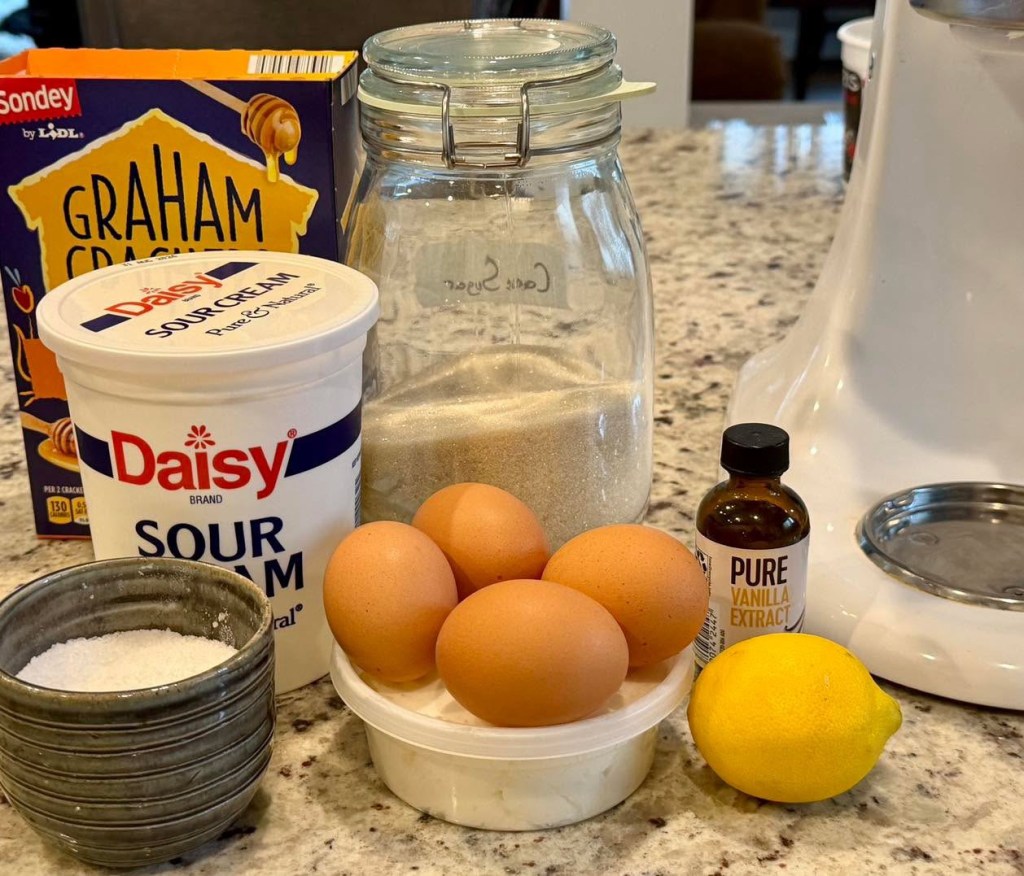
  • 32 oz cream cheese (4 blocks), softened to room temperature
  • 1 cup sugar
  • ⅔ cup sour cream, room temperature
  • 1½ teaspoons vanilla extract
  • Pinch of salt
  • 4 large eggs, room temperature and lightly beaten

Directions

  1. Beat the cream cheese on low speed until smooth and creamy.
  2. Slowly add the sugar and continue mixing until incorporated.
  3. Mix in the sour cream.
  4. Add the vanilla extract and a pinch of salt.
  5. Add the eggs one at a time, mixing on low until each is fully incorporated before adding the next.
  6. Scrape down the sides of the bowl occasionally to ensure everything is evenly mixed.
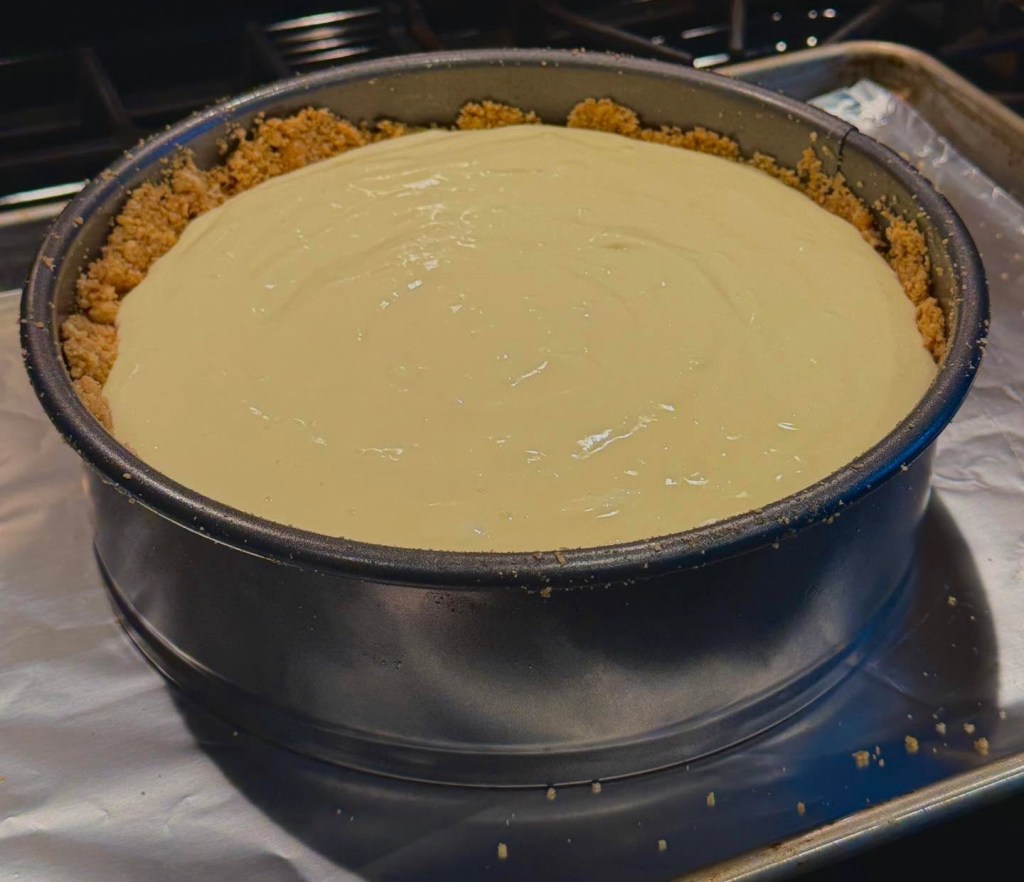
  7. Pour the filling into the prepared crust. Place the springform pan on a baking sheet (optionally lined with foil) to catch any drips.
  8. Bake at 325°F for about 60 minutes. Begin checking around the 50-minute mark. The cheesecake should be puffed, lightly browned around the edges, and the center should still have a slight jiggle. Depending on your oven, it may take anywhere from 50–75 minutes.
  9. Let the cheesecake cool for about 30 minutes. If needed, carefully run a butter knife around the edge to loosen the crust from the pan. Continue cooling until it’s close to room temperature.
  10. Refrigerate for at least 8 hours (overnight is even better) before serving.

Top with fresh Chuckatuck blueberries, strawberries, peaches, or whatever’s in season—or enjoy it just as it is.

Now it’s your turn… What’s your favorite way to top a cheesecake? 🍓🫐🍑 We’d love to hear your family traditions and favorite recipes in the comments!
A Chuckatuck Connection to Pickett’s Charge

Most folks have heard of Pickett’s Charge and the battle of Gettysburg. Fewer know that one of the family stories connected to that famous moment in American history runs right through Chuckatuck.

Meet James Jasper Phillips.

Born in Nansemond County in 1832, Phillips came from a local family tied to the Chuckatuck area. After graduating from the Virginia Military Institute in 1853 — ranked near the top of his class — he returned home and became an educator.

In 1854, he helped establish what became known as the Chuckatuck Military Academy, also remembered as the Chuckatuck Male and Female Institute. Imagine that for a moment: before public schools as we know them today, Chuckatuck had its own school, led by a young VMI-trained teacher, with boys and girls receiving an education right here in the community.

But history soon came calling.

When the War Between the States began, Phillips helped organize the Chuckatuck Light Artillery, a local company of men from this area. Despite the name though, the unit became Company F of the 9th Virginia Infantry. Phillips was elected captain, later rose to colonel, and served through some of the hardest fighting of the war. He was wounded at Gettysburg during Pickett’s Charge, and was later captured at Sailor’s Creek just days before the surrender at Appomattox.

And here is where the family story becomes even more interesting…

James Jasper Phillips was actually the uncle of LaSalle “Sallie” Corbell Pickett, the Chuckatuck-born wife of General George E. Pickett! (… their story will definitely be a future post!) Through the Phillips and Corbell families, our little corner of Nansemond County had a direct family connection to one of the most famous names and moments of the Civil War.

That is what makes local history so powerful.

The great events of history may be remembered in capitals, battlefields, and textbooks — but they were lived by real people from real places. Sometimes, those places are closer than we realize.

Chuckatuck has always been more than a spot on the map. It has been a crossroads of families, faith, education, service, hardship, memory, and story.

And James Jasper Phillips is one of those stories worth remembering.

From the Orchard

Summer in Chuckatuck has a way of showing up in the sweetest places.

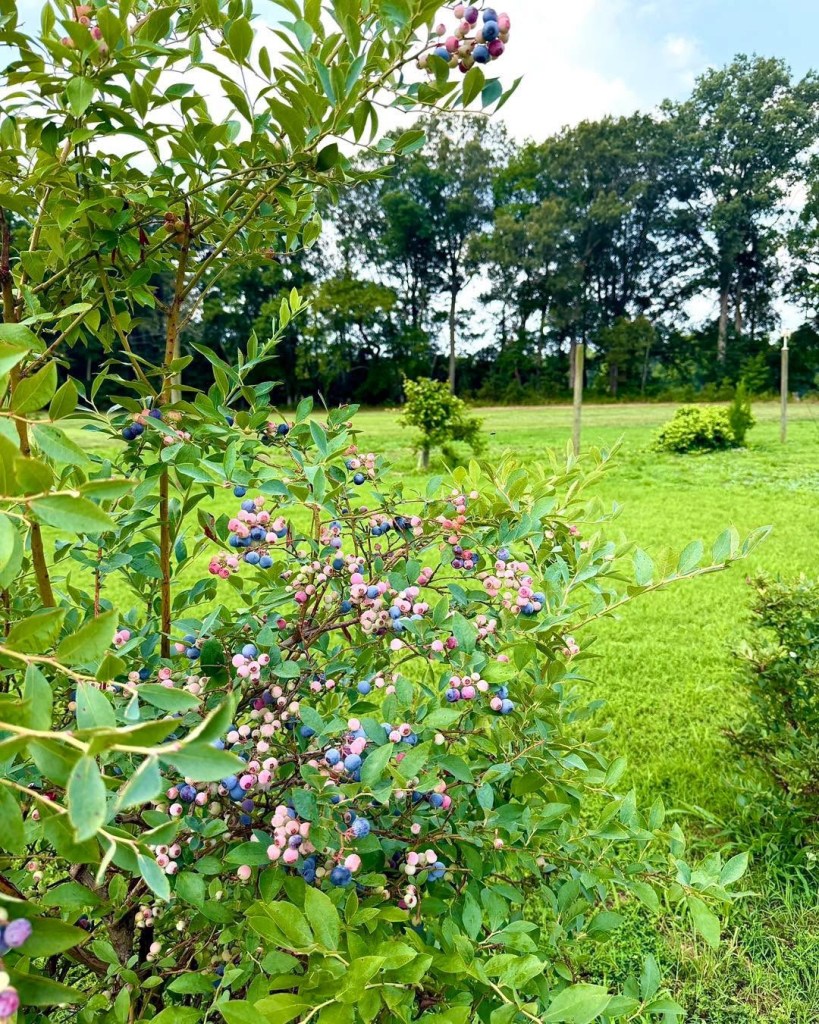
Around here, the orchard knows its own timing, and there’s no sense in hurrying it. The blueberries are already putting on a show — some dressed up in their best of deep, dusty blue, while the rest are still wearing a rosy blush, taking their own sweet time. The figs are hanging heavy on the branches, not quite ready to be picked, but if you listen close, they seem to whisper, “Just a little longer.”

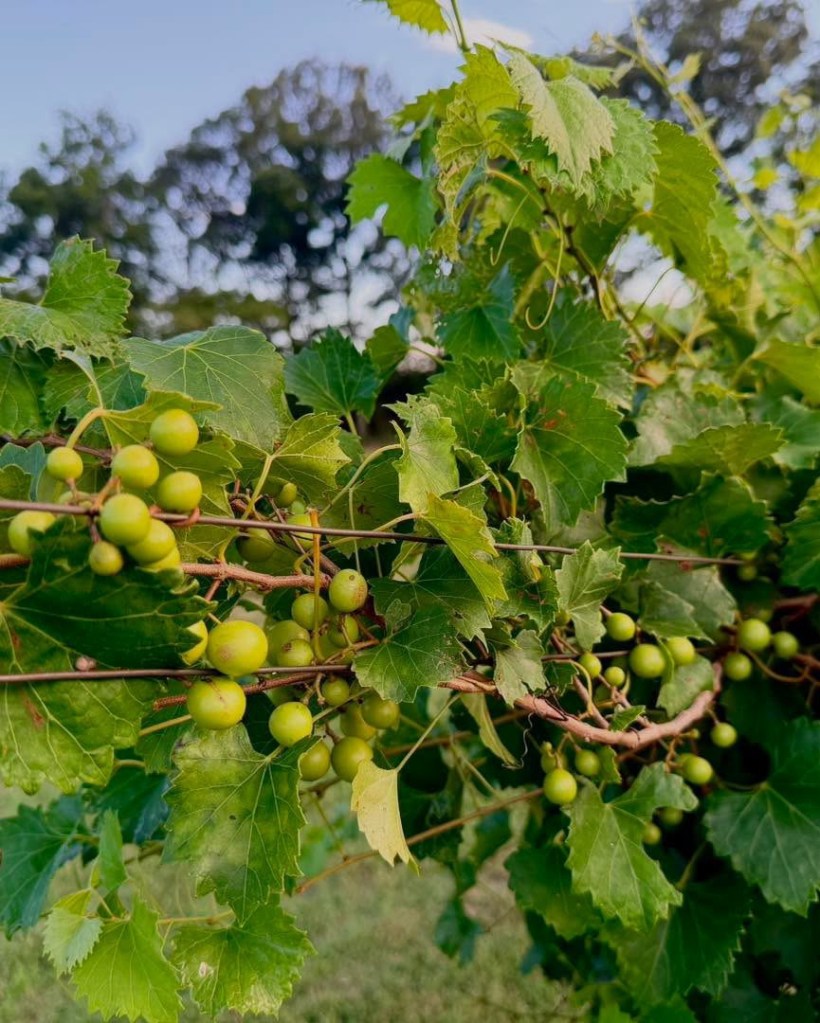
Out back, the muscadine vines are climbing and rambling like they’ve got all the time in the world. Come September, they’ll be heavy with sweet, thick-skinned grapes that carry the taste of the South itself — sun-warmed afternoons, mason jars full of sweet tea, and the kind of childhood memories that never really leave you. That’s the funny thing about a Southern orchard — it doesn’t just grow fruit; it grows stories.

We even have a couple of olive trees. Now, those are more of an act of faith than a sure thing, but that’s part of the joy of gardening here. Sometimes you plant for the harvest, and sometimes you plant just to see what kind of story the good Lord and Mother Nature decide to write.

There’s just something about summertime fruit that feels like home. Blueberries tucked into a warm cobbler with a scoop of vanilla ice cream melting on top. Fresh figs paired with a slice of cheese, stirred into preserves, or eaten right off the tree before anyone else notices. Muscadines picked straight from the vine, turned into jars of jelly, baked into pies, or maybe made into something that warms you from the inside on a cool evening. And if those olive trees ever decide to bless us with a real crop, well… we’ll call that a Chuckatuck miracle.

Now I have to ask…

What’s your favorite summertime fruit, and what do you do with it? Do you bake it into a pie, stir it into jam, freeze it for later, can it for the pantry, or eat it standing in the yard with the juice running down your chin?

Tell us in the comments. And if you have an old family recipe, or a story about something your grandmother used to make that nobody else could quite get right, we’d sure love to hear it. Those are the kinds of stories worth passing down right alongside the recipes.

Render Under Caesar

It’s Fred on History Friday!

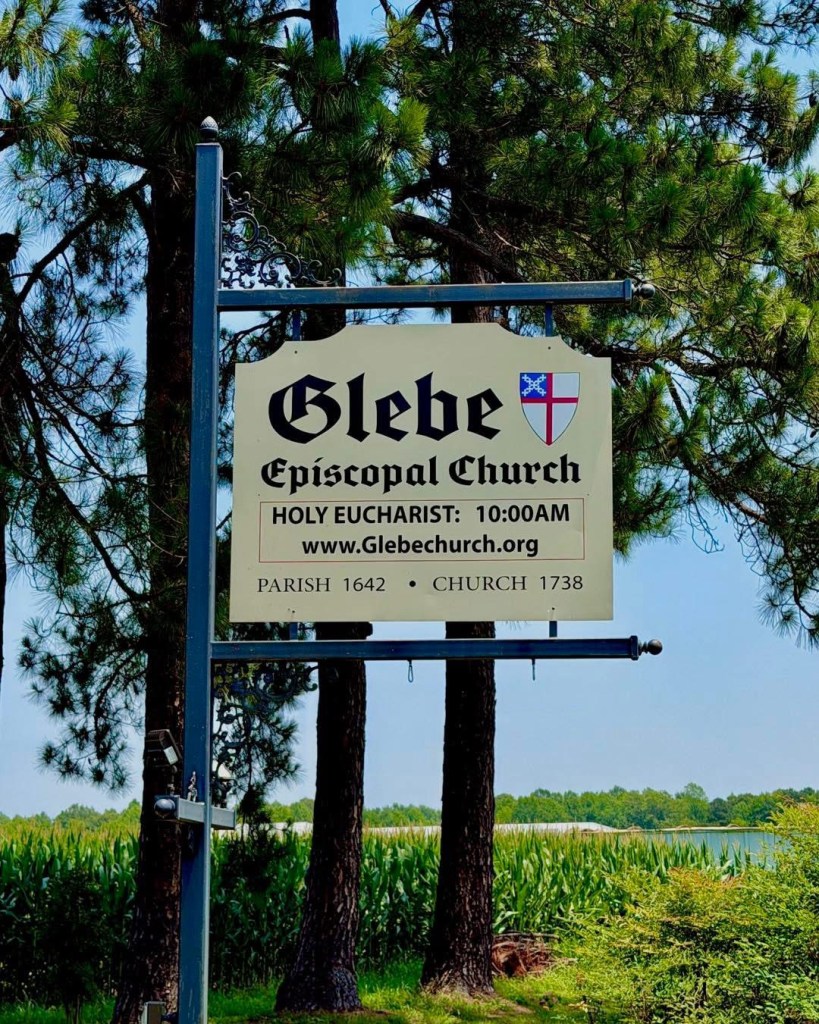
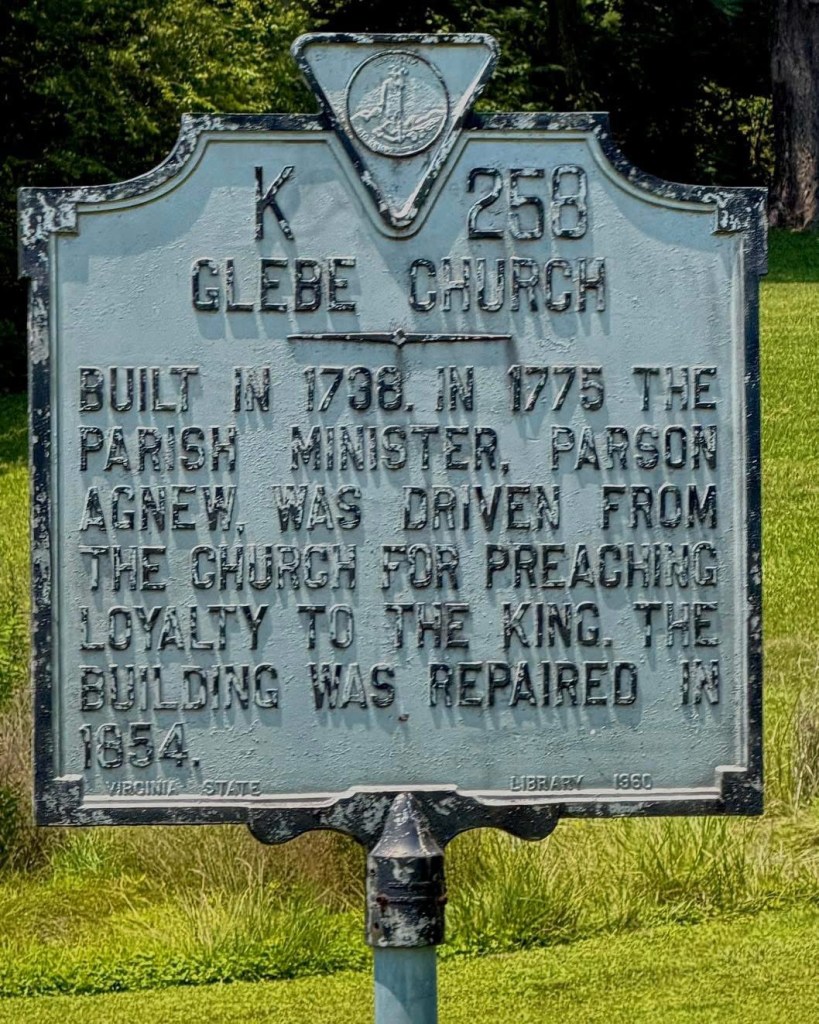
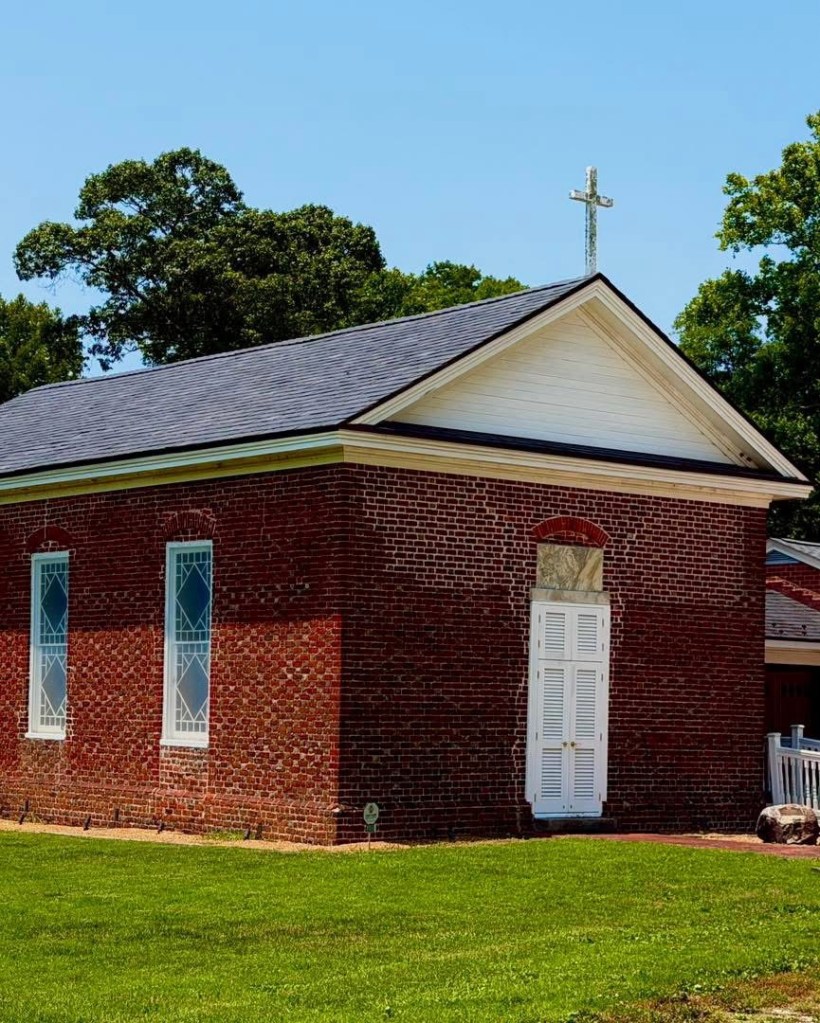
Last week, we talked about the “original” King’s Highway. And along that same old road, in what is now the Driver community, stands Glebe Church originally known as the Bennett’s Creek or “Lower Parish” Church, a historic place where local life and revolutionary feeling collided.

Interestingly, Glebe Church has a direct connection to Chuckatuck. Because of the lack of clergy, particularly in rural areas during colonial times, the minister at Glebe Church – the Rev. John Agnew – also served as minister at St. John’s Church in the Chuckatuck Parish. So, this isn’t the story of some distant colonial minister. It’s the story of a man whose ministry reached into Chuckatuck and whose choices reflected the divisions of the Revolution.

In 1775, with revolutionary feeling rising across Virginia, Agnew stepped into the pulpit at Glebe Church to influence his flock. As an Anglican clergyman, he was loyal to the Crown, and on this particular Sunday he took as his text the words of Jesus: “Render unto Caesar the things that are Caesar’s.” But the congregation knew where he was headed.

Agnew began his preaching, warning against disloyalty to lawful government — and in his view, disloyalty to the King. But before he could finish, William Cowper, a local vestryman and magistrate, stood and ordered him down from the pulpit.

Agnew reportedly replied, “I am doing my Master’s business.”

Cowper answered with the question that captured the Revolution: “Which master? Your Master in heaven, or your master over the seas?”

That question would mark the conclusion of the sermon. Agnew walked out of the Church that day, never returning.

During the War, Rev. Agnew left Virginia, casting his lot fully with the Loyalist cause. He served as a Chaplain with the “Queen’s Rangers,” a regiment in which his son was serving as an officer. In 1781, both father and son were captured by a French squadron while aboard the British frigate Romulus. They would be imprisoned for the remainder of the war in Rhode Island, Saint-Domingue — present-day Haiti.

Of course, because of the Colonies’ success, the Agnews found that the old world they had known was gone. They were unwelcome to return to Virginia and the new American republic, so they returned to England. But Rev. Agnew eventually immigrated to New Brunswick, Canada, among other loyalist exiles. He lived and prospered there – serving for at least one term in their House of Parliament – until his death in 1812.

This is why local history matters. The Revolution wasn’t simply America versus Great Britain. It divided families, neighbors, congregations — even pulpits.

Along the old King’s Highway in Chuckatuck and Nansemond County, people faced the same question that echoed across the colonies: When Caesar and conscience collide, who gets the final word?

As we remember America’s 250th Anniversary, stories like this remind us that independence wasn’t only declared in Philadelphia on July 4th — it was lived, debated, and defended here at home, along the roads, in the churches, and among the people who would help shape a new nation.

And that, too, is part of the Chuckatuck Life.

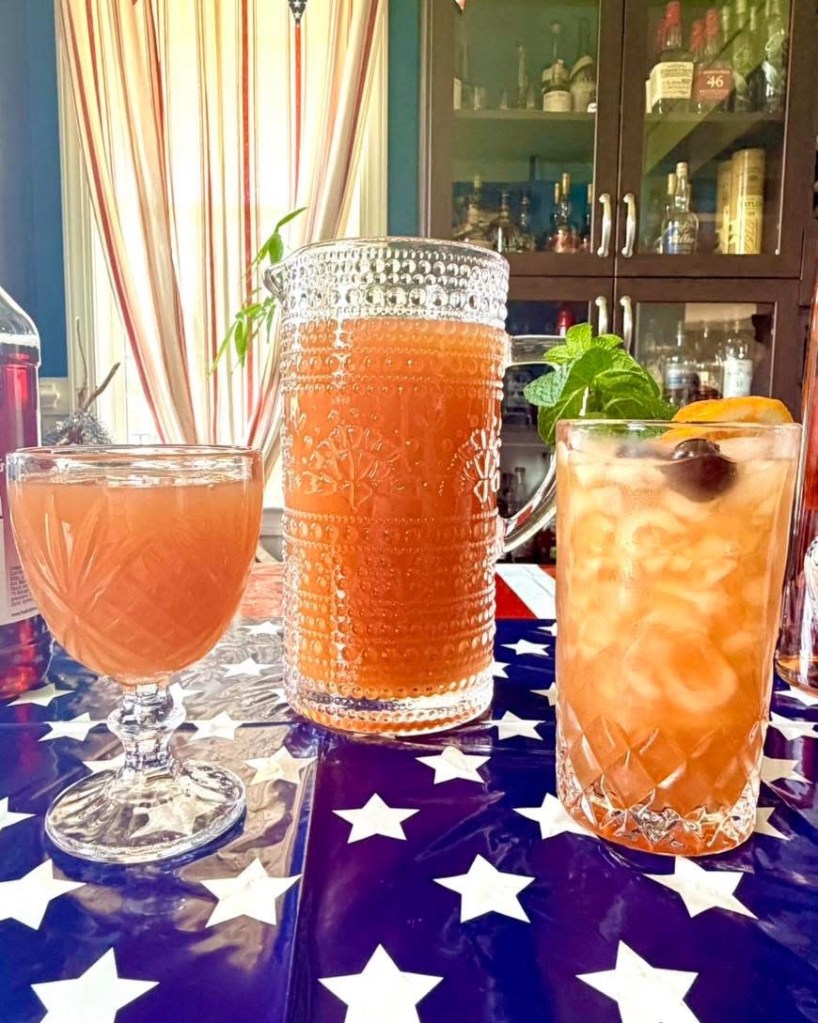
Chuckatuck Rum Punch

As we celebrate the Fourth of July, it seems only fitting to raise a glass to one of colonial America’s favorite traditions: rum punch.

Long before the modern cocktail bar, punch was the drink of fellowship — served in bowls, ladled into cups, and shared at taverns, homes, public gatherings, and celebrations. Rum was one of the great spirits of the Atlantic world, connecting the colonies with the Caribbean through trade, taste, and hospitality.

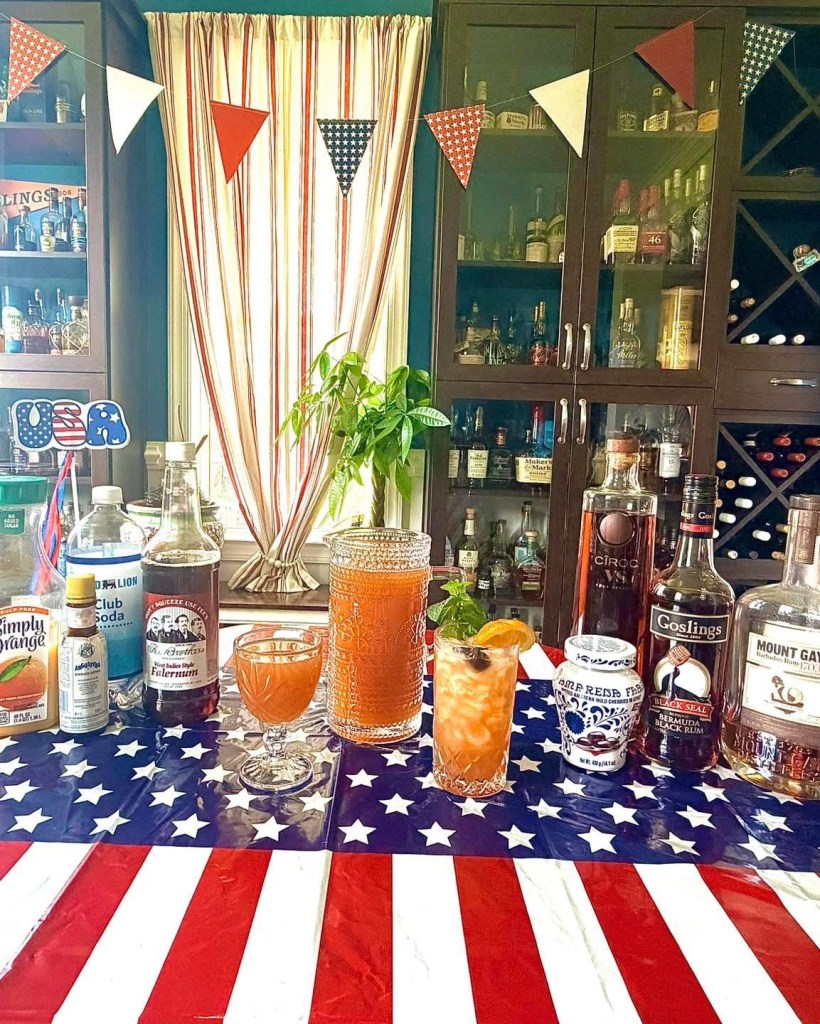
This “Chuckatuck Punch” is my version of that old tradition. It leans into Bermuda (surprise!) with Gosling’s Black Seal Rum, nods to the broader Caribbean with Barbados rum and falernum, and brings in the classic punch elements of citrus, spice, fruit, and a finishing touch of brandy.

Think of it as 18th-century punch bowl tradition meets a summer party — perfect for America 250, or any summer gathering worth remembering.

Chuckatuck Punch Recipe

Serves about 12

Ingredients

1 ½ cups Gosling’s Black Seal Rum
1 ½ cups Barbados rum or another quality amber/gold rum
⅜ cup falernum (Goslings or Fee Brothers)
same as 6 tablespoons or 3 ounces
1 cup fresh lime juice (or half lime & lemon)
1 ½ cups orange (or pineapple) juice
8 dashes Angostura bitters
2 ounces good quality brandy
same as ¼ cup or 4 tablespoons
2 ounces cherry juice and/or grenadine, to taste
Soda water, to top
Orange slices, fresh mint and your favorite cherries for garnish
Crushed ice
Directions

In a large pitcher or drink dispenser, combine the Gosling’s Black Seal Rum, Barbados rum, falernum, fresh lime juice, orange juice, and Angostura bitters.

Stir well and chill until ready to serve.

To serve, fill tall glasses with crushed ice. Pour the punch over the ice, top each glass with soda water, garnish with orange slices, mint & cherries, and finish each serving with a small splash — about 1 teaspoon — of brandy.

So, as we look back 250 years toward the founding generation, “Chuckatuck Punch” offers a small taste of the kind of shared hospitality that would have been familiar in colonial America — bold, bright, convivial, and made for passing around.

Until next time, from our Chuckatuck porch to yours, cheers! 🍹