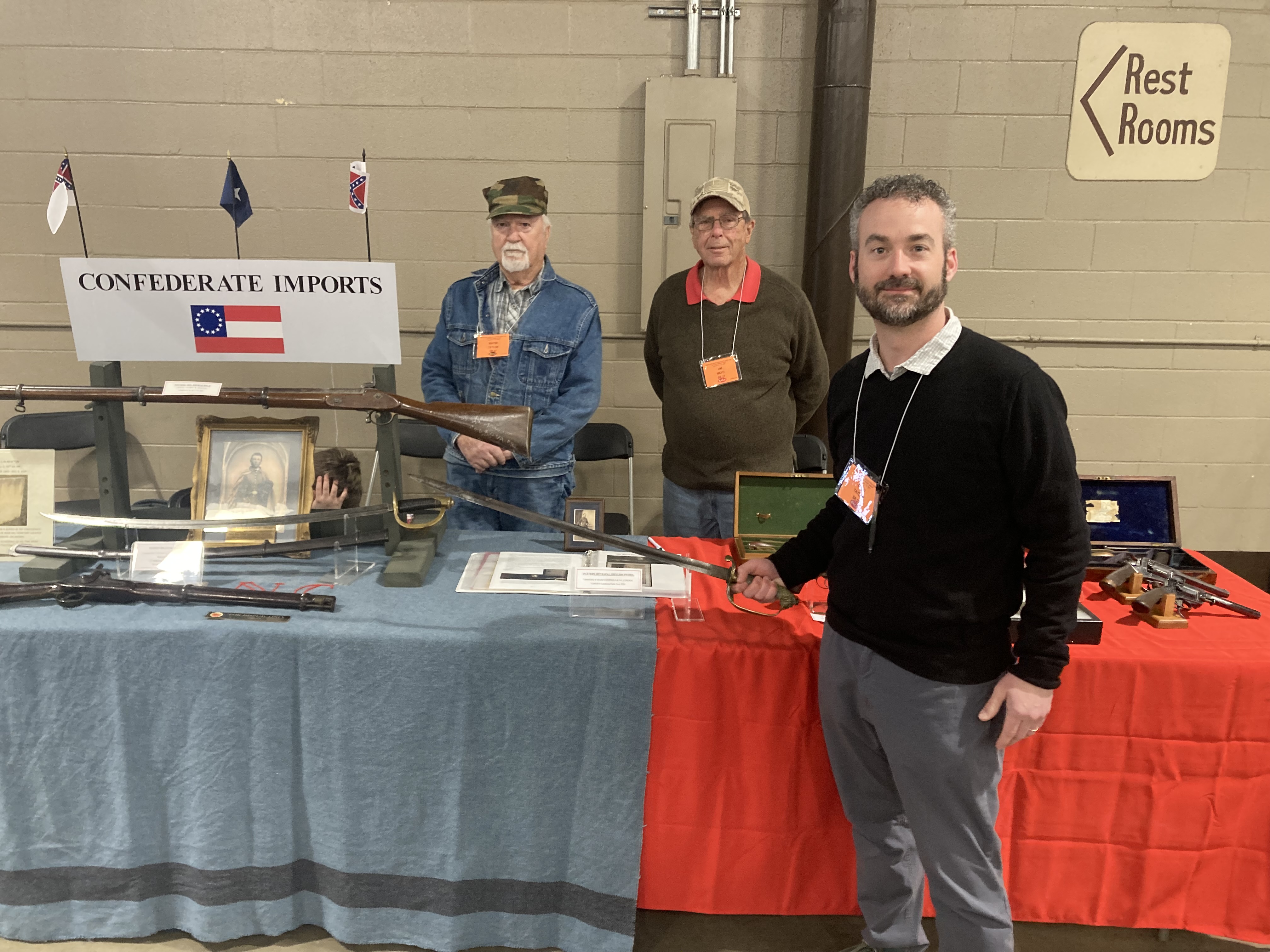
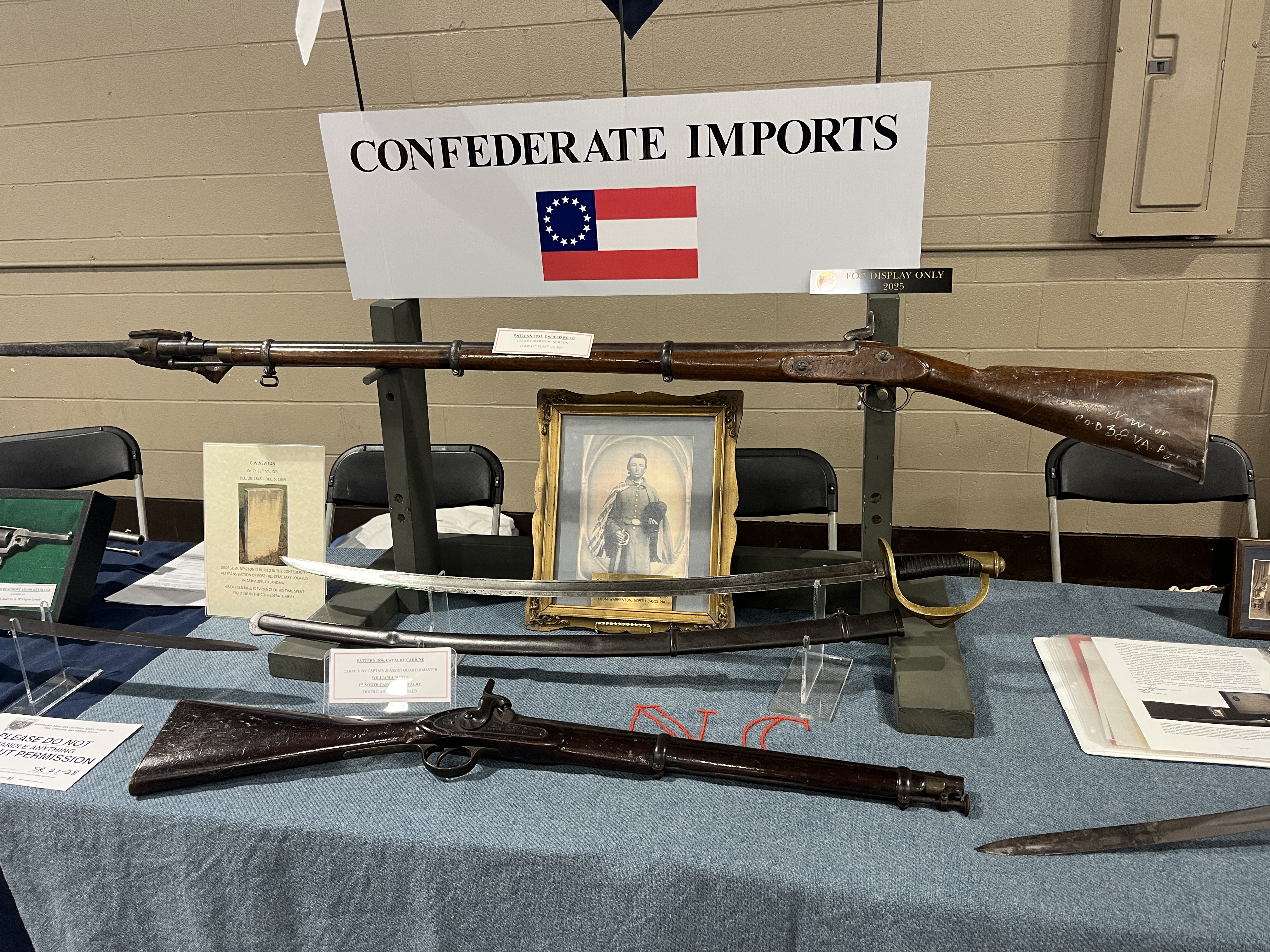
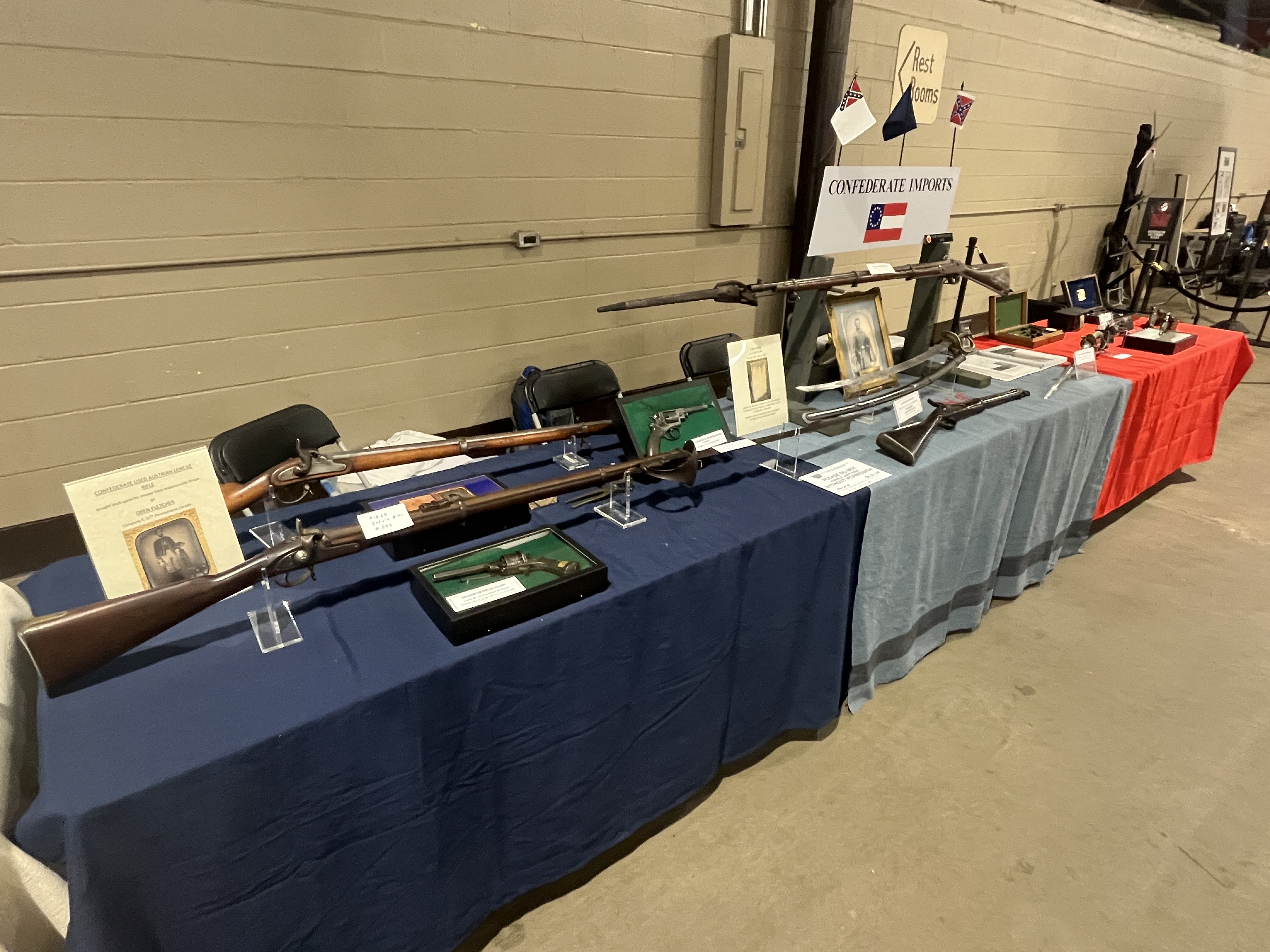
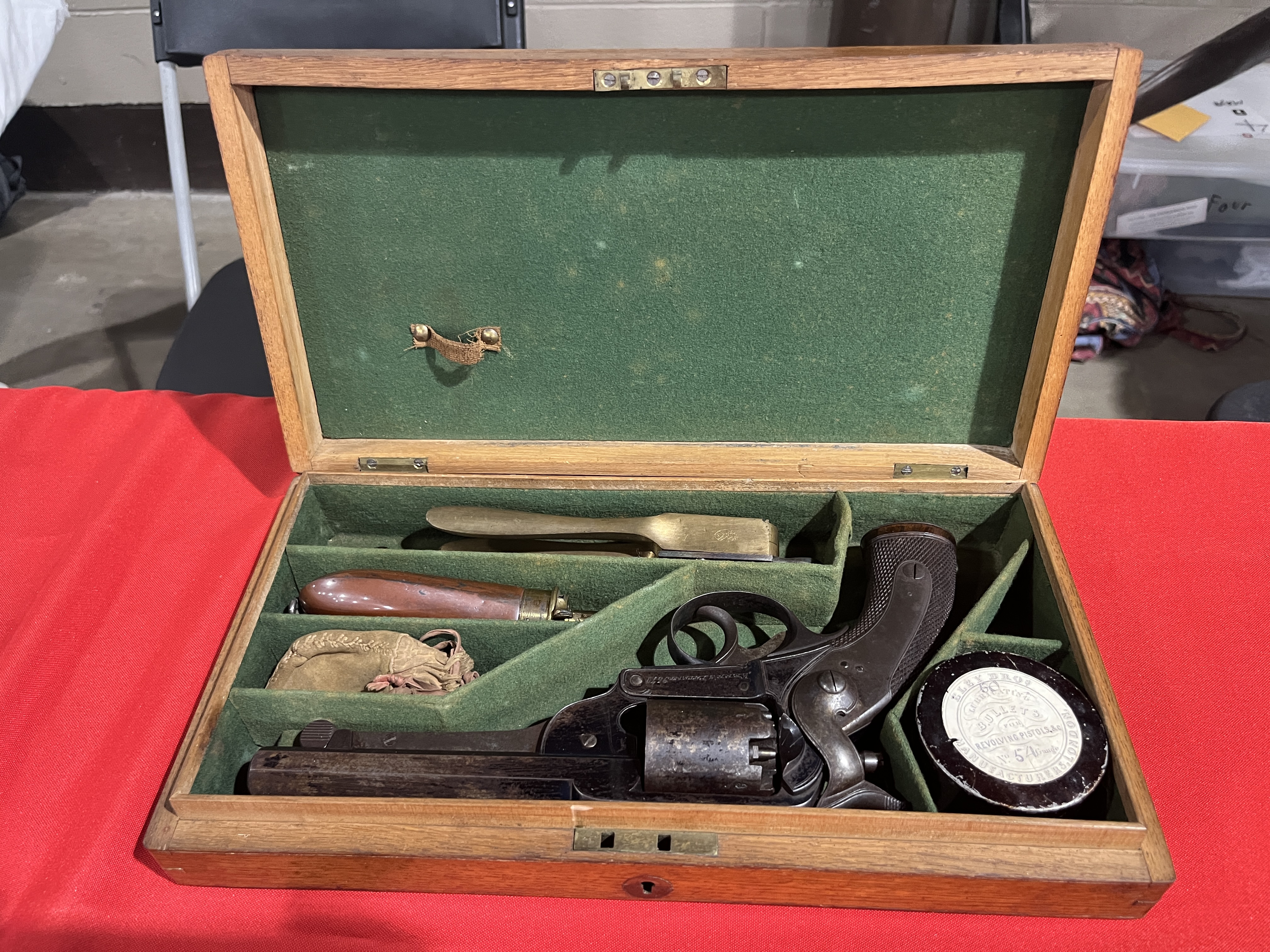
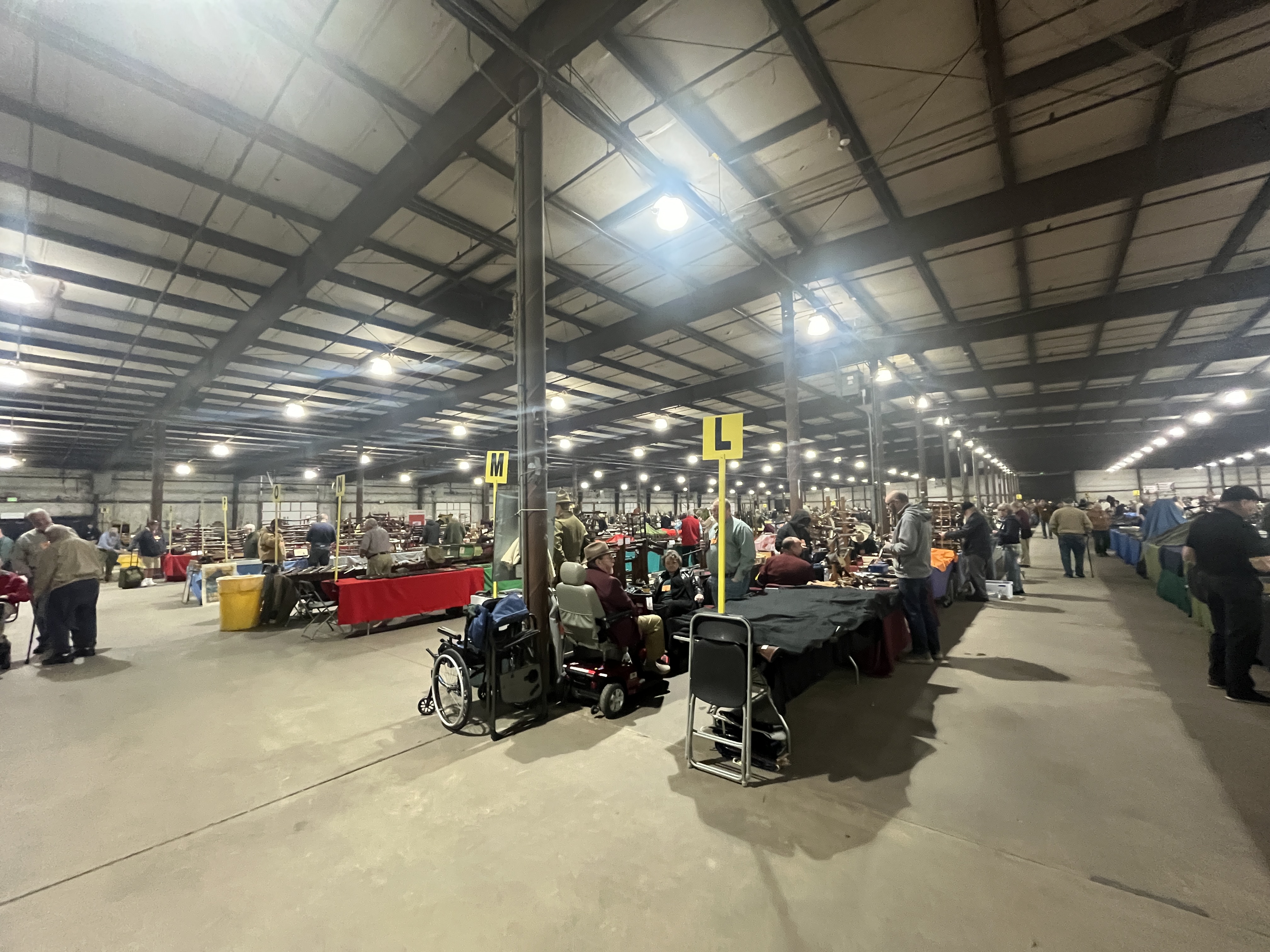
For this year’s event, my friend Jim Mayo and I collaborated on an educational display of arms, accoutrements, and accessories imported to the Confederacy through the blockade.
Photo courtesy of Cliff Krainik. Discussing Raphael Semmes and the CSS Alabama with author and historian, Cliff Krainik.
A couple of new additions to my “crew” of blockade runner images.
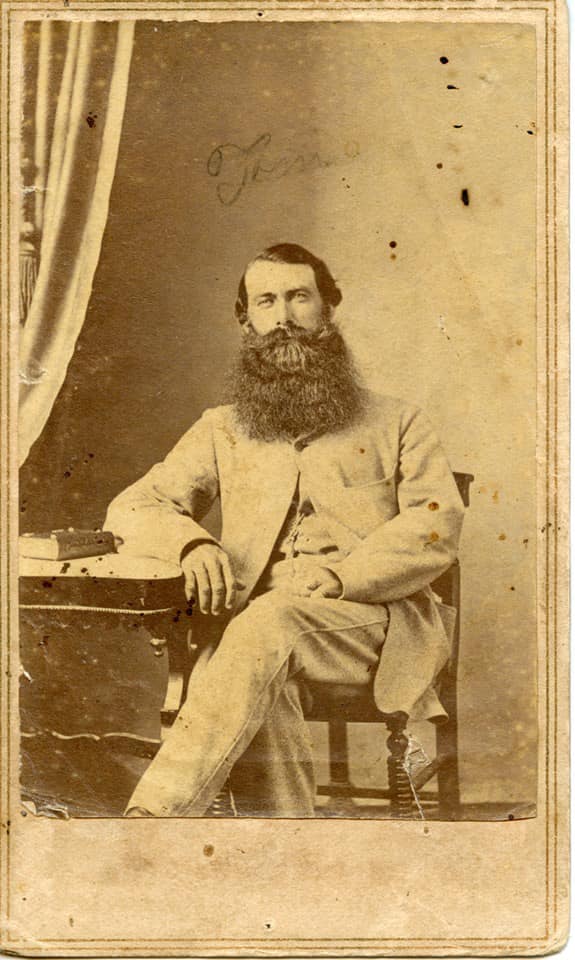
George Washington Davis of North Carolina (1832 – circa 1900)
G.W. Davis was born into a seafaring family near Shackleford banks, Carteret County, North Carolina, in 1832. Little is known of his early life until he appears as the 2nd Mate of the iron-hulled paddle steamer, Britannia, which had been launched from Scotland in the spring of 1862. The Britannia made six runs through the blockade before being captured off of the Bahamas on June 22, 1863, by the USS Santiago de Cuba. Davis, along with many of his fellow crew members, were sent to Fort Lafayette, NY; and later transferred to Fort Warren, Boston, Massachusetts, in September of 1863. Davis remained imprisoned at Fort Warren for the remainder of the War and after, until June 20, 1865.
This CDV of G.W. Davis was taken by photographer J.W. Black, Boston, Massachusetts, during his imprisonment at Fort Warren. Black also appears in several of the group images of Fort Warren prisoners that have been published.
After the War, Davis settled in Smithville (now Southport), North Carolina, where he married, raised a family, and continued in maritime pursuits as a sailor and pilot. He died prior to 1900.
George E. Lyell of Virginia (1837 – 1868)
A native of Norfolk, Virginia, George E. Lyell had been a member of the 54th Virginia Militia before he enlisted as a Private in Captain Nathan W. Small’s Signal Corps Company on March 5, 1862. This Company ultimately became a part of Major James F. Milligan’s Independent Signal Corps, operating as scouts and signal officers along the James and Appomattox rivers. Lyell was present with his company, and primarily stationed in Petersburg, until detailed in 1864 for signal duty to Wilmington, North Carolina, where he would serve on ships intended to run the blockade. Although the particulars of this service are unknown, he does appear on a list of Confederates in Havana, Cuba, in April of 1865, and later back in the Confederacy, where he was paroled at Charlotte, North Carolina, on May 4, 1865.
After the War, Lyell operated a restaurant and saloon in Norfolk, until an untimely death on July 23, 1868.
The CDV of George E. Lyell was photographed by A. Hobday & Co., Norfolk, Virginia, circa 1866-1868.
(These images are in the collection of and are courtesy of Fred D. Taylor.)
It seems like these last few weeks have been filled with nothing but news of illness and loss; and again this morning I woke up to learn of the passing of another friend.
I was first introduced to Nicholas Lusher back in 2018, as I began my journey into the early history of photography in Bermuda. To say he was an expert – and I do not toss that word around lightly – was an understatement, having an academic, professional, and personal/family background that did in fact make him what his obituary referred to as an “internationally esteemed art and antiques dealer dedicated to preserving the island’s cultural heritage.” But he was so much more than the acclaimed Caribbean and New York art dealer on the surface.
Upon learning of my interests, Nicky welcomed me into his world immediately, excited to provide research material, make referrals, and open doors that I otherwise would never have had as an outsider to Bermuda. We collaborated for several years thereafter as collectors, historians, and ultimately as friends. Once I published my story on photographer Samuel W. Gault (which I naively thought would be the end of my research), we remained in contact to share new historical findings and “talk shop.” And despite the fact he was in the business to find and sell art, he would frequently tip me off when Gault images would pop up in the marketplace, giving me the first chance on them.
I will forever be grateful for Nicky’s mentorship and the legacy he leaves in the art world, but most of all I send my deepest condolences to his family, of which I know he so loved and cherished even more. Requiescat in pace, my friend.
In recent memory, although some minor scholarship has been devoted to the subject of North Carolina and its Confederate hospitals, without question, Sokolosky’s book brings together a complete history on this oft overlooked topic. Starting with background on the organization of the Confederate medical department, Sokolosky leads the reader through the various officers and politicians involved with the creation of the state’s medical system. Further chapters present full coverage of the day to day operations of the hospitals in North Carolina (and some outside of the state that NC contributed toward) during the period 1861-63, to include perspectives from numerous individuals from Doctors to Nurses, Matrons, and a variety of other key personnel.
Clearly, NC’s Confederate Hospitals checks many boxes for professional historians, students, and the average lover of North Carolina Civil War history alike. As a reference work, the book is a go to for when and where hospitals operated, their capacities, and who ran them – whether it be the Confederate government, the state of North Carolina, or private efforts from local aid societies. The book is similarly a resource to the historian or genealogist studying a particular soldier or civilian involved within the system, whether it be in a medical role or as a patient. And for the casual reader, the book gives a unique look behind the curtain of the care for sick and wounded Confederate soldiers in the midst of War.
In sum, I highly recommend NC’s Confederate Hospitals, and am eager to see Colonel Sokolosky complete his efforts on this unique story with the publication of Volume II.
It has been a while since I have made a history-related post, and I was reminded that today is the anniversary of the battle of Sharpsburg, Maryland. 159 years ago.
While many look at the battle of Gettysburg as the deadliest of the Civil War – and it was – it also lasted over a course of several days. Sharpsburg, on the other hand, was a one day battle and due to that, is recognized as the single deadliest day in American military history.
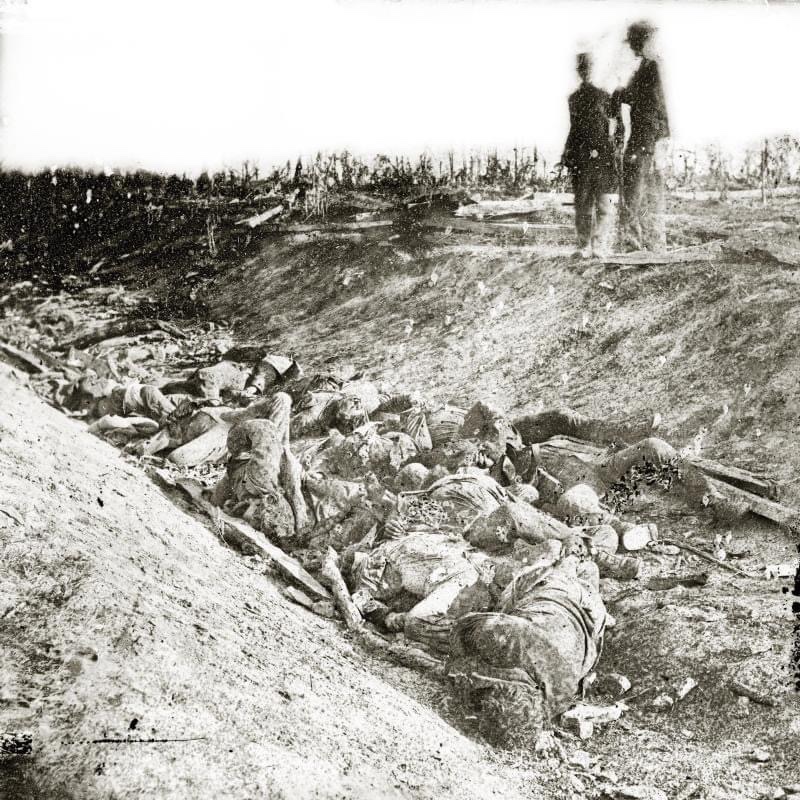
I have always been intrigued by this battle. And not just because I have walked the fields of conflict. My own family participated in the battle, and witnessed the carnage that day. In a 1905 letter to his daughter, one of my kinsmen – Sergeant Major Newsom Edward Jenkins of the 14th North Carolina – wrote of the battle. At the time, he was serving as an Orderly Sergeant and the acting Commissary. His old Company – A, the Roanoke Minute Men – on the eve of battle had no commissioned officers in the field. He recalled:
Newsom E. Jenkins
“The men had a premonition of an engagement, something you feel, but cannot explain, and my old company… wanted to know who would take them in if we had a fight. I promised I would stay and go with them – we were soon ordered to change our position. We were moved to a position in a lane known (now) as “Bloody Lane,” fronting up the creek. Our position was on the left center of the Brigade [Anderson’s Brigade, comprising the 2nd, 4th, 14th & 30th NC]… Soon after we had taken this position, we saw the columns of enemy moving towards us. Col. R.T. Bennett commanding the regiment… told me to take the Company out and deploy them as skirmishers, and go out to meet the enemy… we fired on them when they got in range. They then fired a volley into us. I ordered a retreat, we fell back to our position… but we had one of our best men killed [Bob Shearin] before we got back and several wounded. The lines of the enemy came up and charged our position a half dozen times or more, but we drove them back, and held our position for three hours under a terrific fire from the infantry line while shells were plowing the fields around us and clearing every thing in its sweep.”
Ultimately, the lines of Anderson’s Brigade were overwhelmed, flanked, and captured. What was left of the 14th Regiment in the Lane surrendered about 80 men. Of the twenty-eight from Company A who began the battle, nine were killed, and eighteen wounded and/or captured.
Amazingly, when Jenkins wrote this account some forty plus years later, he particularly recalled his capture by the command of Charles Augustus Fuller of the 61st New York Infantry, and asked his daughter to try to locate him. Fuller was also a Sergeant at the time of the battle, and ultimately rose to the rank of Lieutenant before his discharge due to wounds. His account, “Personal Recollections of the War of 1861,” is an excellent biography of his service and the history of his regiment.
Charles Augustus Fuller
To take the story a step further, I went on a tour of Sharpsburg in the late 1990s. As we walked the Bloody Lane, our tour guide began to recite the story of his own great-grandfather who had been on the field that day. Who was that man? Sgt. Charles A. Fuller. And there we all were, some one hundred and thirty years later the descendants of those same men, meeting under much different circumstances.
It doesn’t get much more close to history than that. “The past is never dead. It is not even the past.” – William Faulkner
Images: (1) Post war cabinet card of Newsom Edward Jenkins, donated by my family to Duke University; (2) the carnage of the Bloody Lane, photograph likely taken by Alexander Gardner, Library of Congress; (3) Charles Augustus Fuller of the 61st New York, image from Antietam on the Web (https://antietam.aotw.org/index.php)
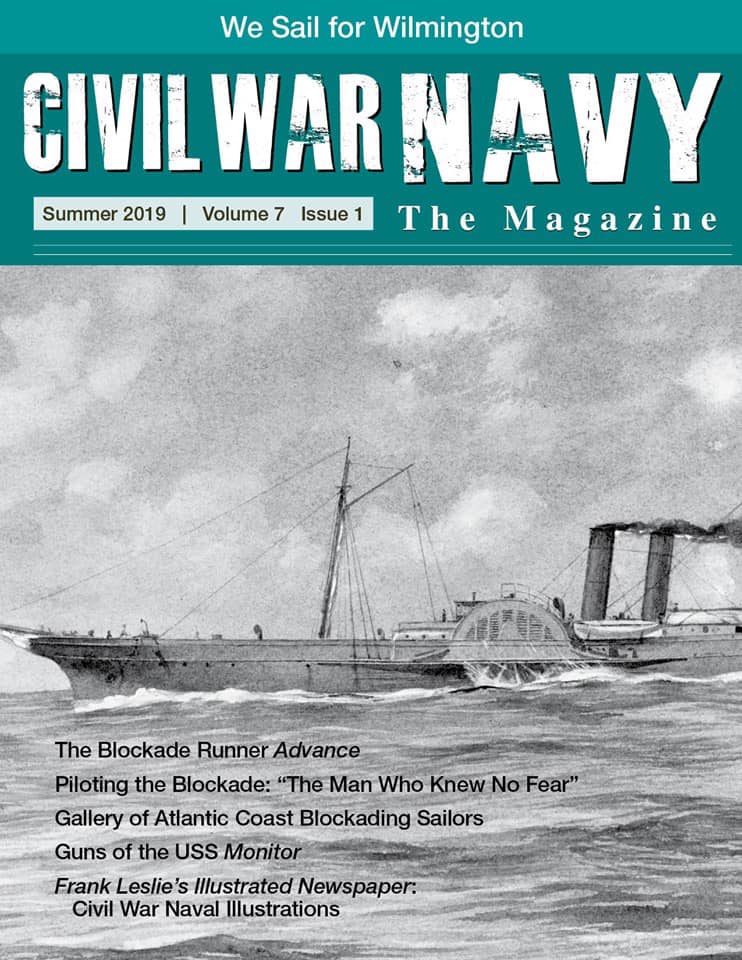
A sneak peak of my article in the Summer 2019 issue of Civil War Navy—The Magazine (civilwarnavy.com) profiles Thomas Mann Thompson, Jr., one of the Confederacy’s most successful blockade runner pilots, making over 30 runs through the blockade while escaping capture. Famed Confederate Captain Michael P. Usina called Thompson “an officer who knew no fear.”
(Thompson carte de visite courtesy of the Fred D. Taylor Collection. Image photographed by S.W. Gault, Hamilton, Bermuda, circa 1864.)
My latest project has recently been published in Military Imagesmagazine, on the life of Captain William Rice Jones of Brunswick Mineral Springs. Captain Jones was a Virginia native, West Point Cadet, Confederate artillery Captain, and ultimately, a Texas Rancher!
This all came together after years of research efforts, and the stars aligning to bring his story to life, through the help of the Jones family. I can’t express enough my gratitude to his family members who provided the images, Ron Coddington at Military Images, and the ever-faithful assistance of William J. Stier and my wife, who have always been willing to read drafts of my stories and provide much-needed critique!
Find out more about the article and Military Images magazine here.