A Chuckatuck Connection to Pickett’s Charge

Most folks have heard of Pickett’s Charge and the battle of Gettysburg. Fewer know that one of the family stories connected to that famous moment in American history runs right through Chuckatuck.

Meet James Jasper Phillips.

Born in Nansemond County in 1832, Phillips came from a local family tied to the Chuckatuck area. After graduating from the Virginia Military Institute in 1853 — ranked near the top of his class — he returned home and became an educator.

In 1854, he helped establish what became known as the Chuckatuck Military Academy, also remembered as the Chuckatuck Male and Female Institute. Imagine that for a moment: before public schools as we know them today, Chuckatuck had its own school, led by a young VMI-trained teacher, with boys and girls receiving an education right here in the community.

But history soon came calling.

When the War Between the States began, Phillips helped organize the Chuckatuck Light Artillery, a local company of men from this area. Despite the name though, the unit became Company F of the 9th Virginia Infantry. Phillips was elected captain, later rose to colonel, and served through some of the hardest fighting of the war. He was wounded at Gettysburg during Pickett’s Charge, and was later captured at Sailor’s Creek just days before the surrender at Appomattox.

And here is where the family story becomes even more interesting…

James Jasper Phillips was actually the uncle of LaSalle “Sallie” Corbell Pickett, the Chuckatuck-born wife of General George E. Pickett! (… their story will definitely be a future post!) Through the Phillips and Corbell families, our little corner of Nansemond County had a direct family connection to one of the most famous names and moments of the Civil War.

That is what makes local history so powerful.

The great events of history may be remembered in capitals, battlefields, and textbooks — but they were lived by real people from real places. Sometimes, those places are closer than we realize.

Chuckatuck has always been more than a spot on the map. It has been a crossroads of families, faith, education, service, hardship, memory, and story.

And James Jasper Phillips is one of those stories worth remembering.

Render Under Caesar

It’s Fred on History Friday!

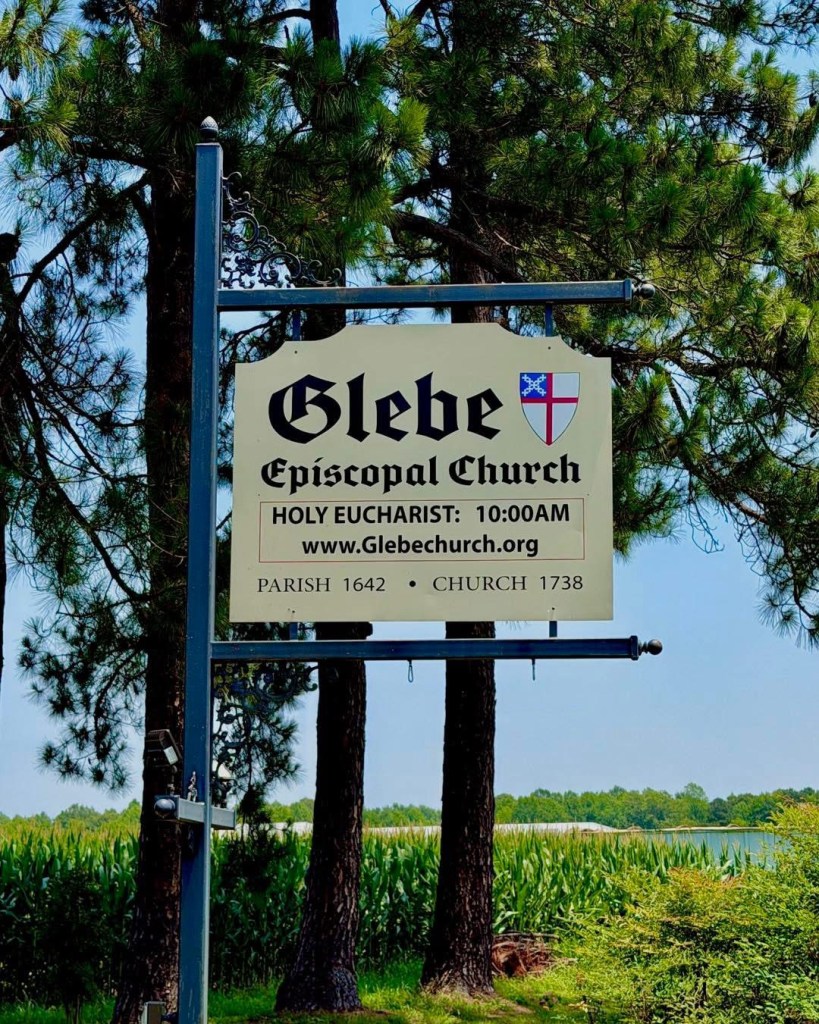
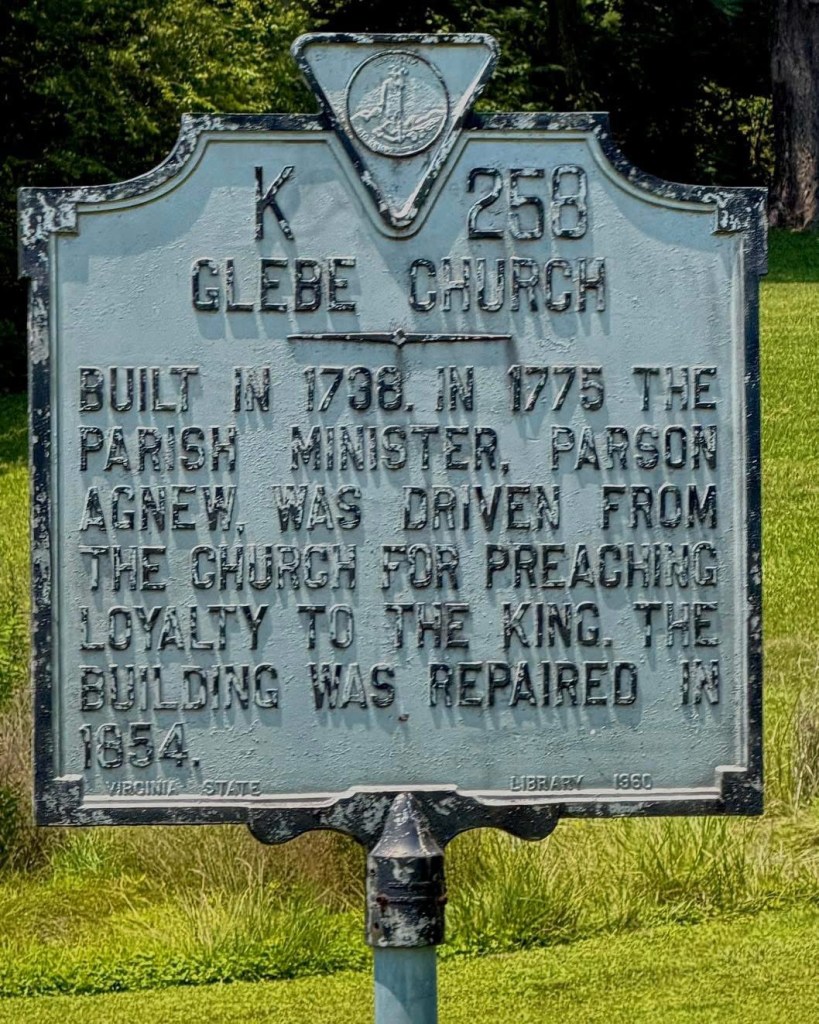
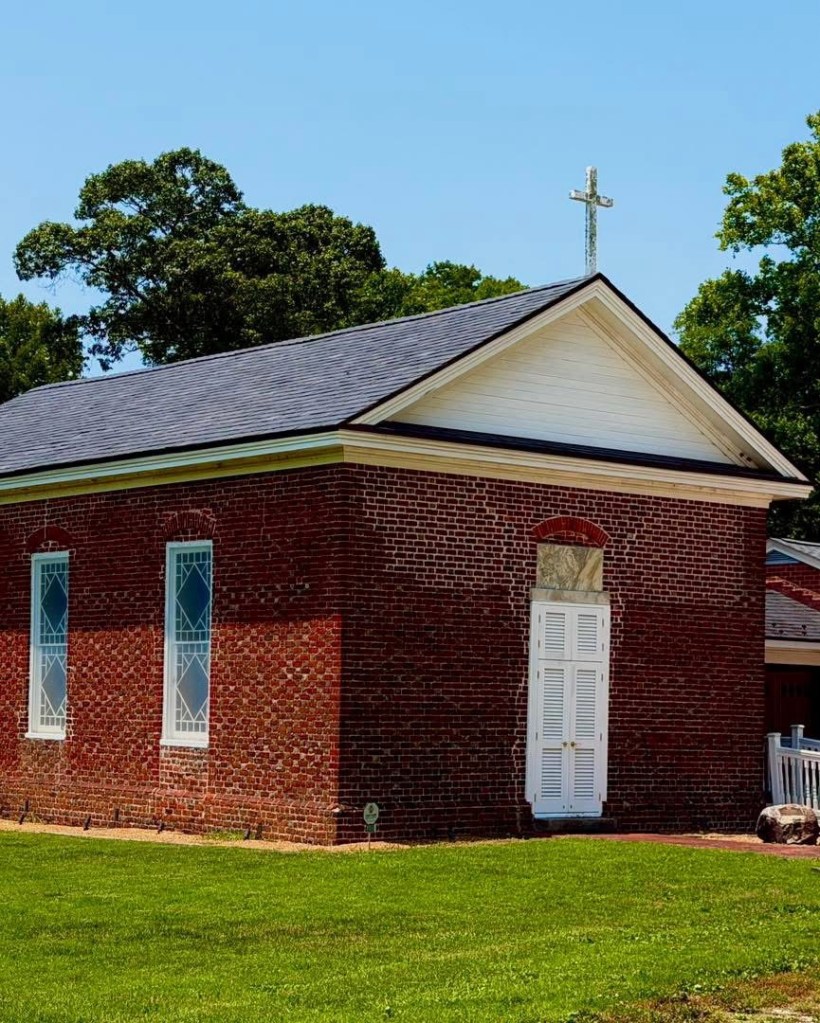
Last week, we talked about the “original” King’s Highway. And along that same old road, in what is now the Driver community, stands Glebe Church originally known as the Bennett’s Creek or “Lower Parish” Church, a historic place where local life and revolutionary feeling collided.

Interestingly, Glebe Church has a direct connection to Chuckatuck. Because of the lack of clergy, particularly in rural areas during colonial times, the minister at Glebe Church – the Rev. John Agnew – also served as minister at St. John’s Church in the Chuckatuck Parish. So, this isn’t the story of some distant colonial minister. It’s the story of a man whose ministry reached into Chuckatuck and whose choices reflected the divisions of the Revolution.

In 1775, with revolutionary feeling rising across Virginia, Agnew stepped into the pulpit at Glebe Church to influence his flock. As an Anglican clergyman, he was loyal to the Crown, and on this particular Sunday he took as his text the words of Jesus: “Render unto Caesar the things that are Caesar’s.” But the congregation knew where he was headed.

Agnew began his preaching, warning against disloyalty to lawful government — and in his view, disloyalty to the King. But before he could finish, William Cowper, a local vestryman and magistrate, stood and ordered him down from the pulpit.

Agnew reportedly replied, “I am doing my Master’s business.”

Cowper answered with the question that captured the Revolution: “Which master? Your Master in heaven, or your master over the seas?”

That question would mark the conclusion of the sermon. Agnew walked out of the Church that day, never returning.

During the War, Rev. Agnew left Virginia, casting his lot fully with the Loyalist cause. He served as a Chaplain with the “Queen’s Rangers,” a regiment in which his son was serving as an officer. In 1781, both father and son were captured by a French squadron while aboard the British frigate Romulus. They would be imprisoned for the remainder of the war in Rhode Island, Saint-Domingue — present-day Haiti.

Of course, because of the Colonies’ success, the Agnews found that the old world they had known was gone. They were unwelcome to return to Virginia and the new American republic, so they returned to England. But Rev. Agnew eventually immigrated to New Brunswick, Canada, among other loyalist exiles. He lived and prospered there – serving for at least one term in their House of Parliament – until his death in 1812.

This is why local history matters. The Revolution wasn’t simply America versus Great Britain. It divided families, neighbors, congregations — even pulpits.

Along the old King’s Highway in Chuckatuck and Nansemond County, people faced the same question that echoed across the colonies: When Caesar and conscience collide, who gets the final word?

As we remember America’s 250th Anniversary, stories like this remind us that independence wasn’t only declared in Philadelphia on July 4th — it was lived, debated, and defended here at home, along the roads, in the churches, and among the people who would help shape a new nation.

And that, too, is part of the Chuckatuck Life.

What’s in a name? King’s Highway Edition

Welcome to a “Fred on History” Friday here at The Chuckatuck Life….

So, what’s in a name?

Most people driving through Chuckatuck today have no idea they may be traveling over a road system older than our country itself.

Long before there was a State Route 10 or 125, or even a good ol’ U.S. of A., this part of Virginia was tied into what was known in colonial times as King (Charles II’s) Highway.

But the story starts even earlier than that.

Many of Virginia’s early roads followed older American Indian paths — trails that crossed rivers and creeks at the narrowest, most practical points. As English settlers arrived in the 1600s, those paths slowly became primary roads, mail routes, ferry routes, and eventually pieces of a larger highway system connecting communities across the colonies.

By the 1700s, the “King’s Highway” stretched in various forms for more than 1,300 miles, linking Boston, Massachusetts, to Charleston, South Carolina. And here in Tidewater, that route helped connect travelers moving between Richmond and Petersburg east to Suffolk, Portsmouth/Norfolk, and onward into North Carolina.

That made Chuckatuck more than just a quiet village. It made Chuckatuck a crossroads within a much larger network of travel.

Because of its location near both the Nansemond River and Chuckatuck Creek, this area became important for farming, trade, and transportation. Tobacco, corn, cotton, livestock, supplies, mail, merchants, soldiers, and the like all moved through here.

And one of the most important local connections along the King’s Highway was of course, Sleepy Hole Ferry.

Before modern bridges, ferries were lifelines. Sleepy Hole Ferry connected both sides of the Nansemond River and served as a critical crossing point for travelers, commerce, and — at times — armies.

Speaking of, during the American Revolution, Benedict Arnold’s British troops crossed near Sleepy Hole Ferry in January of 1781, as they were returning from a raid on Richmond. Famed Continental General Marquis de Lafayette would do the same, chasing after Arnold. And later that same year, British Commanding General Cornwallis crossed on the Sleep Hole Ferry on his way toward Portsmouth.

Think about that for a second.

British and Continental troops moving through this area — right here near Chuckatuck — during the fight for American independence.

That is what makes local history so fascinating.

History did not only happen in Boston, Philadelphia, Williamsburg, or Yorktown.

It happened along quiet roads. It happened at ferry crossings.

It happened in small communities like Chuckatuck that helped connect early America together.

And as we approach America’s 250th birthday, roads like the King’s Highway remind us that the story of America runs not just through the major cities or battlefields that make the history books, but through the places we pass by every day.

Even right here at home.

So from my porch to yours — cheers to more local history, until the next time!

Image: Excerpt from Map of Isle of Wight and part of Nansemond, made under the direction of A.H. Campbell and J.F. Gilmer, Chief Engineer’s Office, Army of Northern Virginia, 1864. Courtesy of the Archives of the United States Military Academy.

The Chuckatuck Life

Hey friends!

Adrienne and I are excited to share something we’ve been working on — our new blog, The Chuckatuck Life 🪴

It’s a space where we’ll be honoring traditions passed down through generations while creating new ones worth holding onto, and celebrating the everyday moments that make life in and around Chuckatuck so special. Think homemade recipes, seasonal traditions, local history, and a little bit of small-town charm along the way.

Welcome to The Chuckatuck Life 💛

Remember, remember…

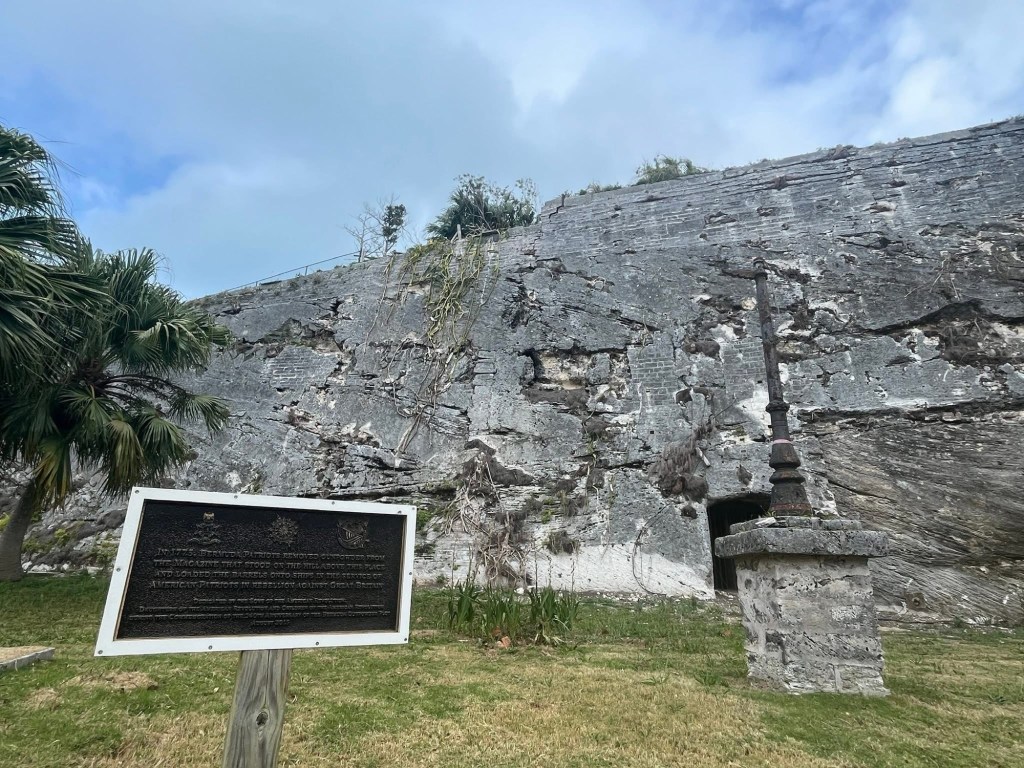
It’s throwback Thursday… and I get to talk about two of my favs, history and Bermuda! So…

🇺🇸 the 1775 Gunpowder Plot?! 🇧🇲

From a camp near Boston, on September 6, 1775, General George Washington penned a letter to the “Inhabitants of the Island of Bermuda,” calling on their “Favor and Friendship to North America and its Liberties…” Its purpose was to solicit much-needed gunpowder for Continental troops. This was a tricky request, as Bermuda had been under an American embargo some months before, and suffering from the loss of much needed food and other supply. What Washington proposed in essence was a trade.

His letter was unnecessary, though.

Much to his relief, friendly Bermudians had already come to the Colonies’ rescue just weeks before, on this day – August 14 – two-hundred and fifty years ago.

On that hot and humid night, under a full moon, several dozen Bermudian patriots under the guidance of Colonel Henry Tucker (father of Virginian, St. George Tucker) made their way to Tobacco Bay on the northeast coast of the island, climbing a steep hill and some distance to reach an unguarded powder magazine. There they acquisitioned and removed more than 100 casks of gunpowder, transporting them back to the Bay and loading the casks on two ships ready for transport to Philadelphia and Charleston.

The mission was a success, with thousands of pounds of gunpowder readily received for use by Washington’s army . And while investigated by the loyal Governor, no charges were ever brought against any suspect for their acts.

July 2, 1863

Yesterday’s #fredonhistory post got a lot of comments, so here we go remembering day 2 of Gettysburg, with two images featuring officers of the 33rd North Carolina, one of whom fell on the field that day…

When North Carolina seceded in May of 1861, forty-three year old attorney Tod Robinson Caldwell of Morganton held strong to his allegiance to the Union. A five time member of the North Carolina General Assembly, Caldwell was said to be an old line, “Henry Clay Whig,” who could not support secession.

Without a doubt then, he also hoped his teenaged son, John “Jack” Caldwell, would do the same. Young Jack was a Cadet at the Hillsboro Military Academy at the time though, and it did not take long for him to cast his lot with the South. By September of 1861, Caldwell was serving as a 2nd Class Drill Instructor for the state of North Carolina in training camps in and around Asheville. He continued in this capacity through 1862, until most of the volunteer regiments had organized and marched off.

Cadet John “Jack” Caldwell,
Hillsboro Military Academy

Reaching the age of 18 and longing to command in the field, Jack Caldwell called on his old family friend and neighbor, Colonel Clarke Moulton Avery, commander of the 33rd North Carolina Troops. When Caldwell reached the regiment in early May 1863, the 33rd (a part of Lane’s Brigade) was in action at the battle of Chancellorsville. That same day Caldwell was appointed to serve as a 2nd Lieutenant in Company E of the 33rd.

After receiving his baptism under fire at Chancellorsville, young Lieutenant Caldwell marched northward with the 33rd North Carolina in Lee’s second invasion of the north. The result was the battle of Gettysburg.

Colonel Clarke Moulton Avery
33rd North Carolina Troops

On the second day of the battle, Major General William Dorsey Pender called on the 33rd for volunteers to challenge a line of Yankee skirmishers who were wreaking havoc on their front. Seventy-five volunteered and were placed under the command of Lt. Wilson Lucas and Lt. Jack Caldwell. Lucas recalled Pender asking, “Can you take that road in front? If you can’t take it say so, and I will get someone who can.” Lucas responded, “We can take it if any other 75 men in the army of Northern Virginia can.” Lucas went on to describe:

“We formed the men in line, I commanded the right and Lieut. Caldwell the left. We had to charge through an open field, with no protection whatever… When we got within two hundred yards of the Federals, we charged with a yell, and they stood their ground until we were within ten steps of the road, then a part of them ran, but 26 surrendered. And the very last time they fired upon us, which was not more than twelve or fourteen feet from them, they shot Lieut. Caldwell in the left breast. I did not see him fall. As soon as we were in the road one of the men told me Lieut. Caldwell was killed. I went at once to the left and found him, lying partly on his back and side… I called two men, and we placed him on his back and spread his oil cloth over him. He was warm and bleeding very freely when I got to him. I could not send him out to the regiment, for it was such an exposed place the Federal skirmishers would have killed a man before he could get a hundred yards, as we were lying close to each other.”

As a result of his courage that day, Lt. Caldwell was recognized by his comrades on North Carolina’s Roll of Honor.

Following the engagement , Caldwell’s body was safely recovered and his remains returned home, where he is buried at the Forest Hill Cemetery in Morganton.

I should also add, Caldwell’s father went on to become Lieutenant Governor and Governor during the Reconstruction period in North Carolina.

Images:

1/4 plate tintype of John “Jack” Caldwell as a Cadet at the Hillsboro Military Academy. Courtesy of the Brem Family.

Carte-de-visite of Colonel Clarke Moulton Avery, M. Witt’s Photograph Gallery, Columbus, Ohio. Taken while prisoner of war at Johnson’s Island, 1862. Courtesy Fred D. Taylor Collection, Suffolk, Virginia.