With rain set in from the remnants of Hurricane Isaias, I’ve been thinking about how people watched the weather long before radar maps on our phones. We’ve been fortunate locally this hurricane season, but it’s a good occasion to explore an old tradition.
On an early trip to Bermuda, I discovered a unique weather gauge: shark oil. It took five more trips to obtain my own instrument, and this one has a story to tell!
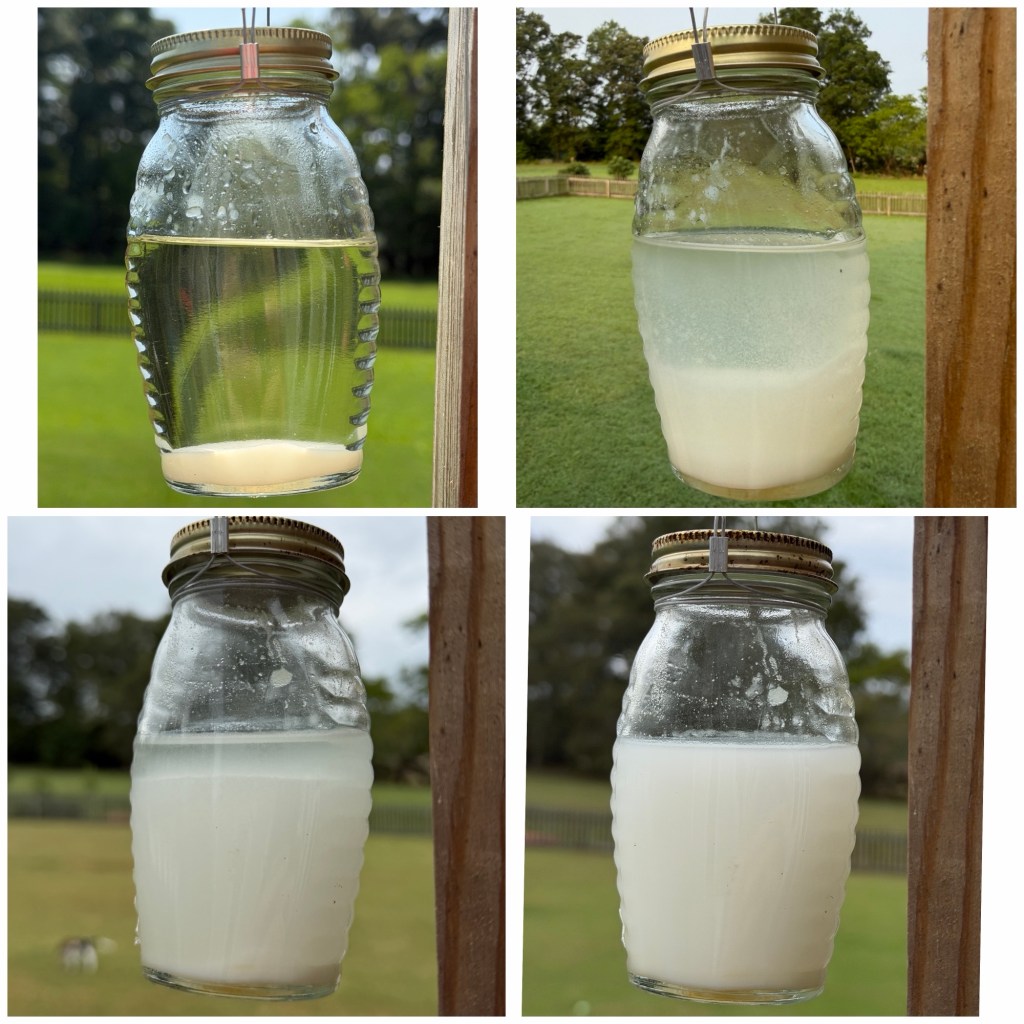
For over 300 years, Bermudians have hung bottles of shark liver oil outside their homes as weather indicators. Tradition holds that clear oil means fair weather; cloudiness, a milky appearance, or stirring sediment warns of unsettled conditions. On an island shaped by seafaring, those clues mattered.
But just any shark oil wouldn’t do. The custom calls for liver oil from juvenile, or “cub,” sharks. A 1982 account in The Bermudian described using small sharks caught between June and September, when their livers were plump, pale, and rich in oil. Fishermen also followed particular phases of the moon for the harvest.
Does it work? In 2015, scientists at the Bermuda Institute of Ocean Sciences found that warming the oil made it clearer, while cooling made it cloudier. Pressure changes alone produced no definitive response. Its changing appearance was real, but its reliability as a storm predictor remained unresolved. At least according to the “experts.”
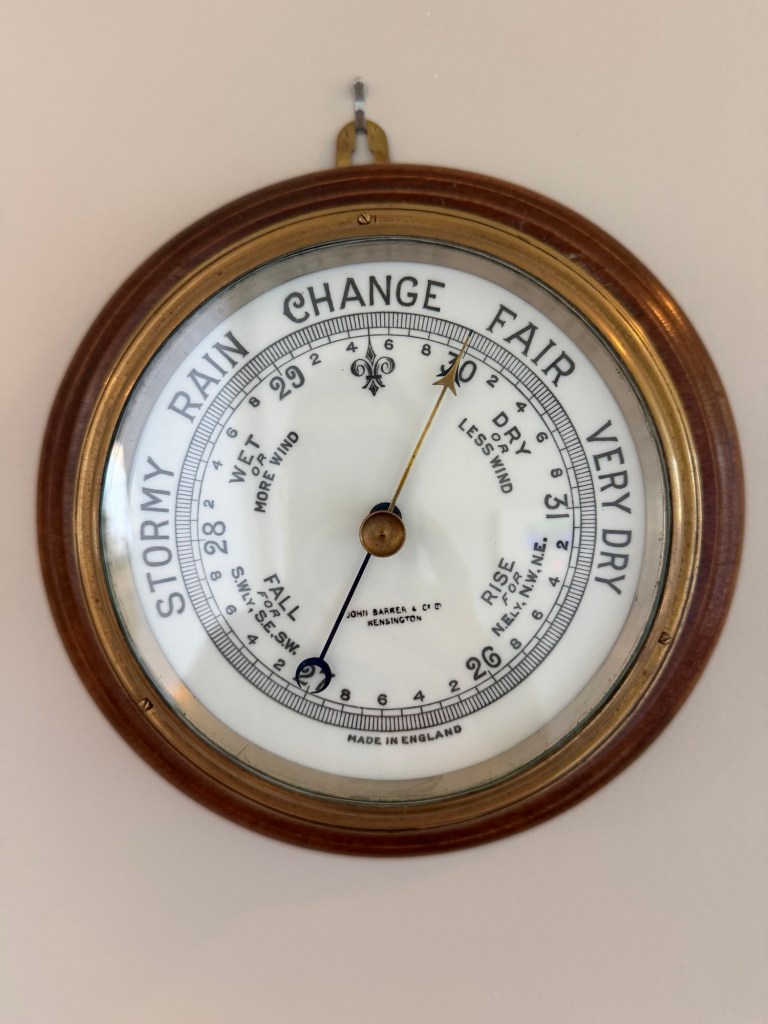
Conventional barometers work differently. The mercury barometer emerged in seventeenth-century Italy, measuring atmospheric pressure with a column of mercury. Later came the aneroid barometer, whose sealed chamber responds to pressure changes.
Falling pressure often signals unsettled weather; rising pressure generally suggests improvement. Watching the change over time helps tell the story.
What appeals to me about these traditions and devices is the habit behind them: paying attention. Watching the sky, studying the sea, and remembering what happened the last time things looked this way.
This weekend, I’ll be watching my little piece of Bermuda history and recording my findings. In the meanttime, what old sayings or traditions did your family pass down about the weather?

