Traditional Meteorolgy

With rain set in from the remnants of Hurricane Isaias, I’ve been thinking about how people watched the weather long before radar maps on our phones. We’ve been fortunate locally this hurricane season, but it’s a good occasion to explore an old tradition.

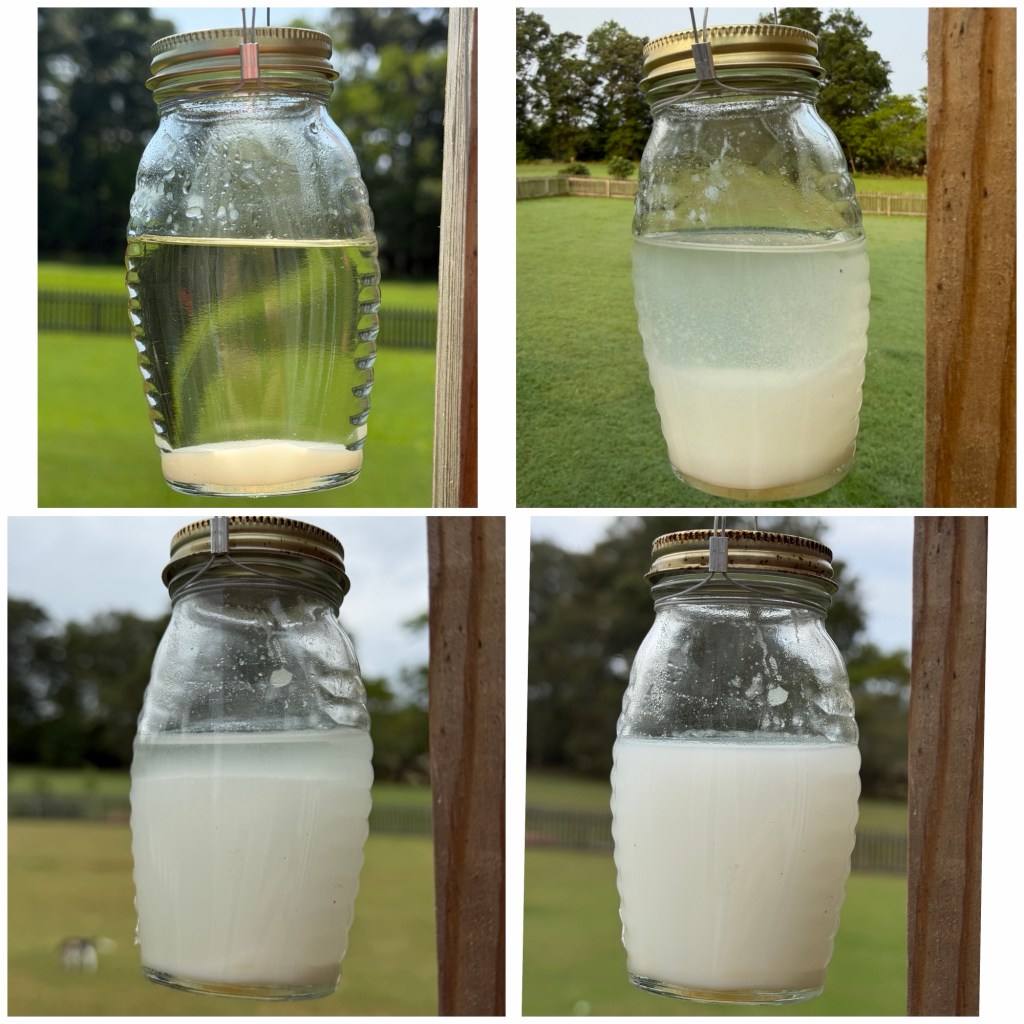
On an early trip to Bermuda, I discovered a unique weather gauge: shark oil. It took five more trips to obtain my own instrument, and this one has a story to tell!

For over 300 years, Bermudians have hung bottles of shark liver oil outside their homes as weather indicators. Tradition holds that clear oil means fair weather; cloudiness, a milky appearance, or stirring sediment warns of unsettled conditions. On an island shaped by seafaring, those clues mattered.

But just any shark oil wouldn’t do. The custom calls for liver oil from juvenile, or “cub,” sharks. A 1982 account in The Bermudian described using small sharks caught between June and September, when their livers were plump, pale, and rich in oil. Fishermen also followed particular phases of the moon for the harvest.

Does it work? In 2015, scientists at the Bermuda Institute of Ocean Sciences found that warming the oil made it clearer, while cooling made it cloudier. Pressure changes alone produced no definitive response. Its changing appearance was real, but its reliability as a storm predictor remained unresolved. At least according to the “experts.”

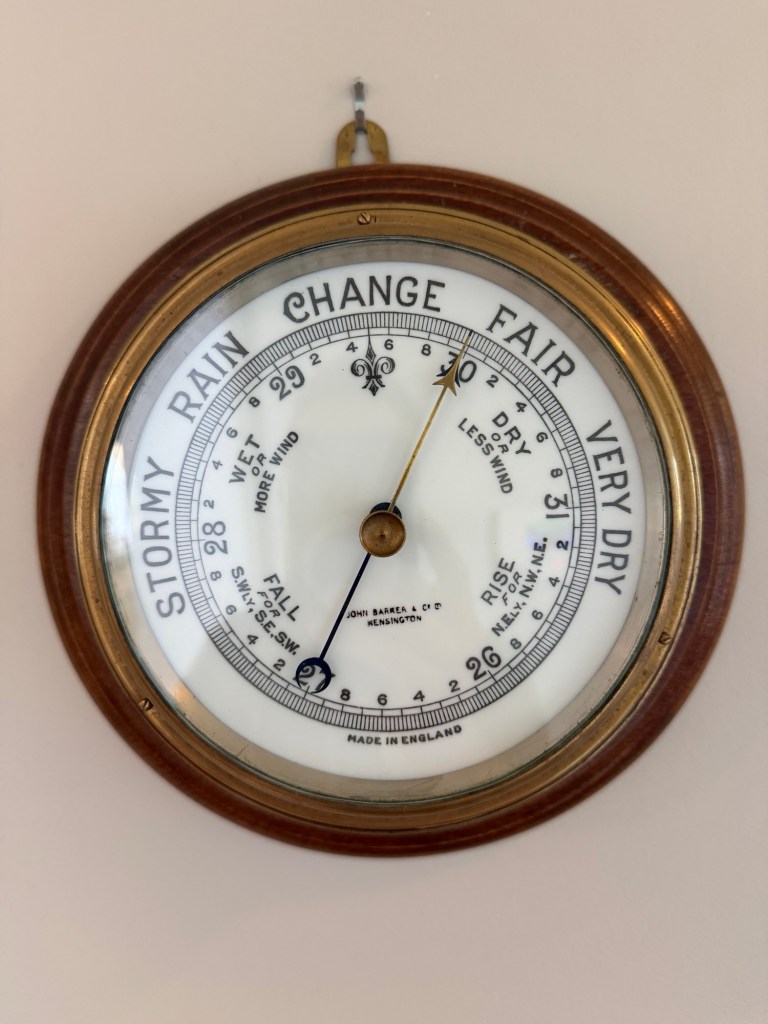
Conventional barometers work differently. The mercury barometer emerged in seventeenth-century Italy, measuring atmospheric pressure with a column of mercury. Later came the aneroid barometer, whose sealed chamber responds to pressure changes.

Falling pressure often signals unsettled weather; rising pressure generally suggests improvement. Watching the change over time helps tell the story.

What appeals to me about these traditions and devices is the habit behind them: paying attention. Watching the sky, studying the sea, and remembering what happened the last time things looked this way.

This weekend, I’ll be watching my little piece of Bermuda history and recording my findings. In the meanttime, what old sayings or traditions did your family pass down about the weather?
Let’s Talk Fashion

🤍 So… are we wearing white after Labor Day or not?

Labor Day has come, and for those of us raised in the South, that brings up one of life’s great etiquette questions:

Can you still wear white?

Southern Living recently tackled the subject, and while modern fashion says absolutely yes, old Southern habits can be mighty hard to shake.

The tradition of packing away the white after Labor Day goes back generations. White linen, dresses, suits, and shoes were practical choices for hot summer weather and became closely associated with summertime and vacation. As fall arrived, wardrobes traditionally shifted toward darker colors and heavier fabrics — and Labor Day eventually became the unofficial line in the sand.

But somewhere along the way, a practical seasonal change became a rule.

And in the South, we took that rule seriously. 😂

For many of us, “no white after Labor Day” was less about high fashion and more about what Mama and Grandmama taught us. You put away the white shoes, brought out the darker colors, and didn’t question it.

Today, fashion experts generally agree that white works year-round. Cream, ivory, winter white — and, yes, even those white jeans — can all have a place in a fall wardrobe.

Still, traditions have a funny way of sticking with us.

So while my head may say wear the white, there’s a little Southern voice somewhere in the back of my mind asking:

“After Labor Day, though?” 😳😂

How about y’all? Are you Team Wear the White or Team Put It Away Until Easter?

September is Bourbon Month

Today we turn the calendar to September, and along with the return to school, football, and the hope that fall may eventually find its way to Virginia, September also happens to be National Bourbon Month.

Now, around The Chuckatuck Life, we don’t need much encouragement to appreciate a good bourbon — but there is actually a little history behind the glass.

We generally think of bourbon as synonymous with Kentucky, and rightly so. But there is an interesting Virginia footnote to that story:

Kentucky was Virginia.

Following the American Revolution, settlers pushed westward into what was then Virginia’s “Kentucky country,” taking with them the tradition of turning surplus grain into whiskey. Kentucky would not become a separate state until 1792. So perhaps Virginia can claim at least a seat at the table whenever the history of America’s native spirit is being discussed.

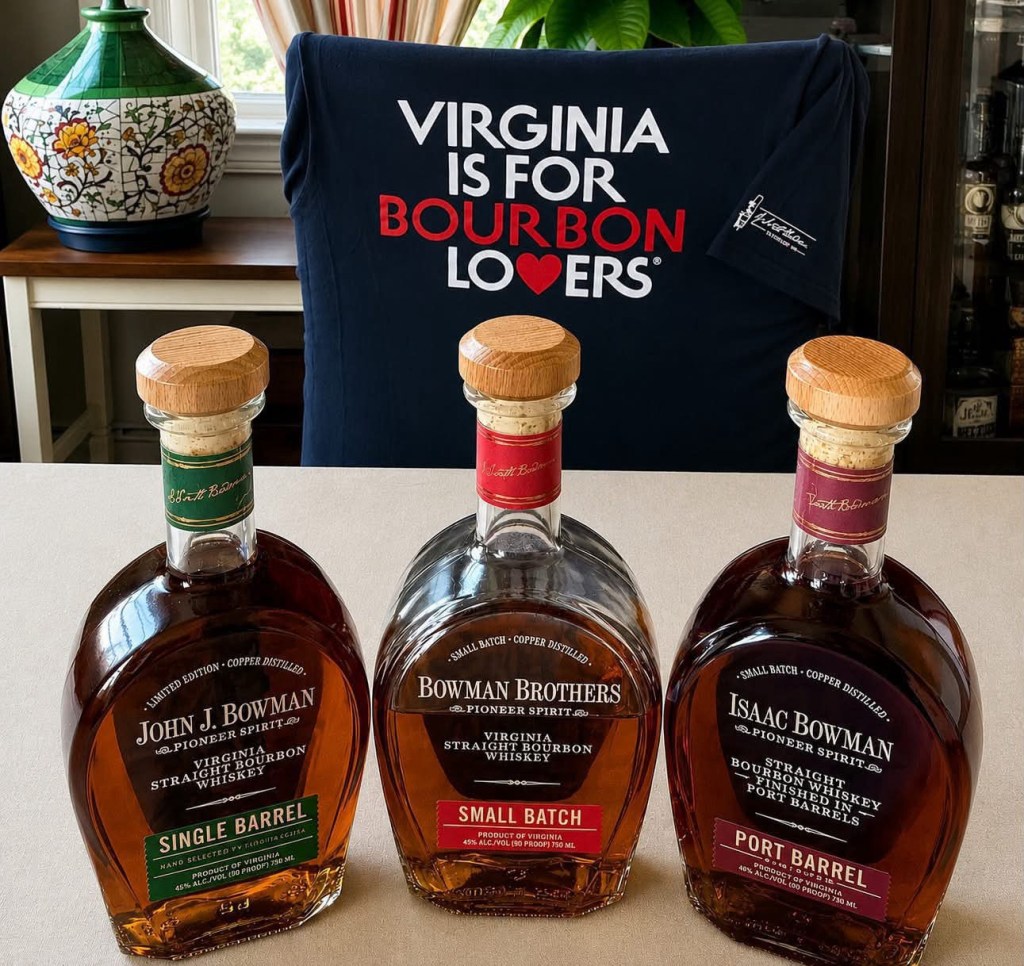
And if you want to turn National Bourbon Month into an excuse for a day trop, put A. Smith Bowman Distillery in Fredericksburg on the list.

Bowman’s story began after Prohibition. In 1927, Abram Smith Bowman purchased a 7,200-acre farm in Fairfax County. With an abundance of grain being produced there, the family entered the whiskey business, establishing the distillery in 1934. The operation later moved to Fredericksburg, where Bowman (now owned by Sazerac) continues the tradition today.

There’s also an interesting Kentucky-Virginia partnership inside the bottle. The Bowman recipe is believed to use a mix of the Buffalo Trace #1 and #2 mash bills. The exact proportions are proprietary, but the whiskey receives its initial distillation in Kentucky before coming to Fredericksburg, where Bowman distills it again and then puts it into new charred oak barrels to mature in Virginia for 8-10 years.

My personal recommendation is the award-winning John J. Bowman Single Barrel.. At 100 proof, it has enough strength and character to be interesting without becoming overpowering, and each bottle comes from a single selected barrel rather than a blend. After first getting that “Virginia hug,” a proper taste will give you notes of toffee, leather, figs and almonds.

Best of all for fellow Virginians, you don’t necessarily have to make the drive to Fredericksburg to find a bottle: Bowman Single Barrel is carried by Virginia ABC, although inventory naturally varies by store.

Still, I recommend the field trip.

The Fredericksburg distillery gives you the opportunity to see how that Kentucky-distilled spirit becomes Virginia bourbon — from that additional distillation through barreling, aging and ultimately bottling.

So sometime this September, pour a good bourbon neat, mix an Old Fashioned, or better yet, take the drive to Fredericksburg and learn a little of the history behind the glass.

Because sometimes learning a little history is best done one barrel — or one glass — at a time. Cheers from Chuckatuck. 🥃

And we’re just getting started. Stay tuned throughout National Bourbon Month as we highlight some of our favorite bourbons, share a few favorite recipes and cocktails, and find plenty of good reasons to raise a glass along the way.

So what is your favorite bourbon, and how do you take it?

Everyday Should be a Cheesecake Day

Happy National Cheesecake Day! 🍰

Around here, we’re always looking for a reason to gather around the table, and cheesecake has a way of turning an ordinary evening into something worth remembering. Whether it’s shared after Sunday dinner, brought to a backyard cookout, or enjoyed on the porch with a cup of coffee, it’s one of those timeless desserts that never goes out of style.

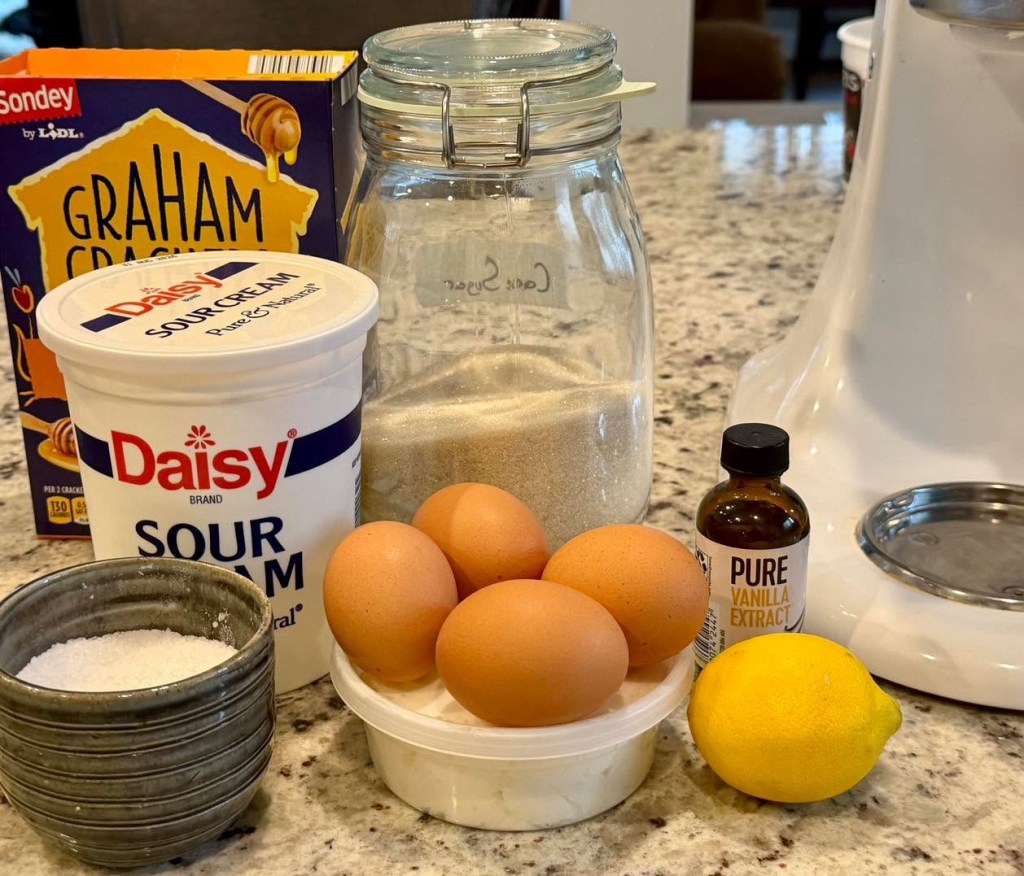
Our Favorite Classic Cheesecake

Graham Cracker Crust

Ingredients

  • 12–15 graham cracker sheets, crushed
  • 1 stick unsalted butter, melted

Directions

  1. Preheat oven to 325°F.
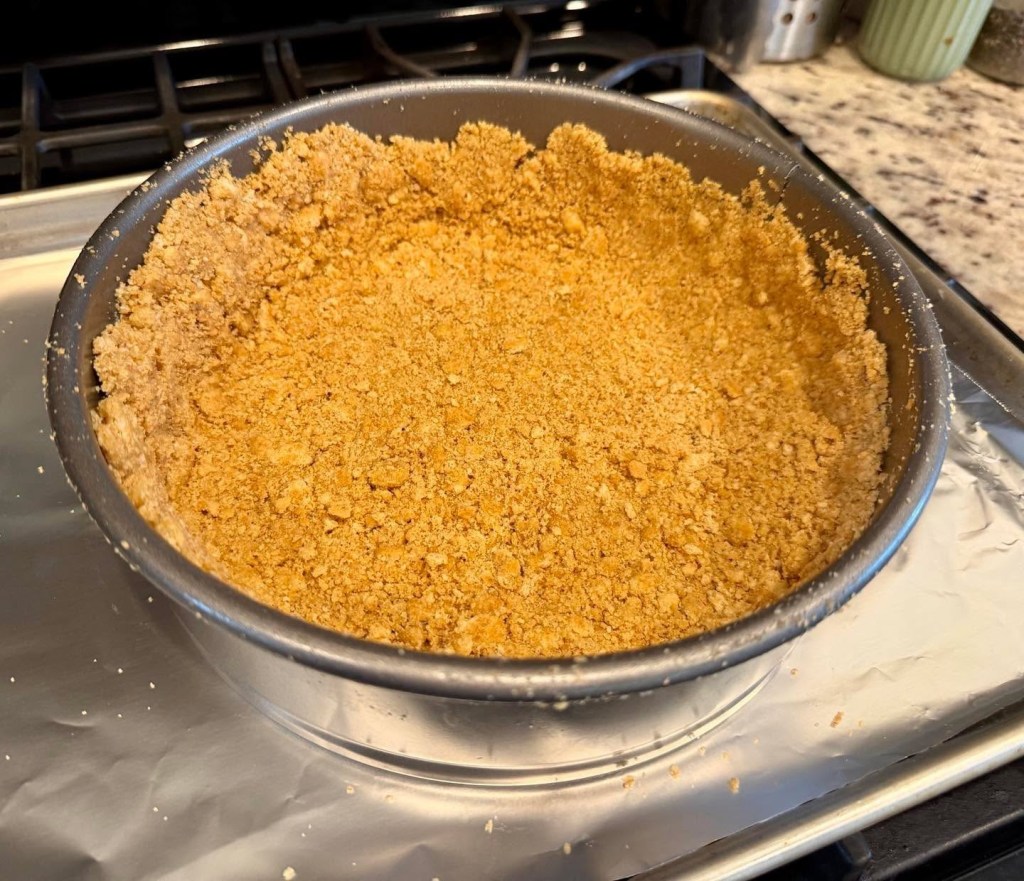
  2. Crush the graham crackers into coarse crumbs and combine with the melted butter using a fork until evenly moistened.
  3. Press the mixture firmly into the bottom and up the sides of a 9-inch springform pan. (Use a few extra graham crackers if you prefer a thicker crust.)

Cheesecake Filling

Ingredients

  • 32 oz cream cheese (4 blocks), softened to room temperature
  • 1 cup sugar
  • ⅔ cup sour cream, room temperature
  • 1½ teaspoons vanilla extract
  • Pinch of salt
  • 4 large eggs, room temperature and lightly beaten

Directions

  1. Beat the cream cheese on low speed until smooth and creamy.
  2. Slowly add the sugar and continue mixing until incorporated.
  3. Mix in the sour cream.
  4. Add the vanilla extract and a pinch of salt.
  5. Add the eggs one at a time, mixing on low until each is fully incorporated before adding the next.
  6. Scrape down the sides of the bowl occasionally to ensure everything is evenly mixed.
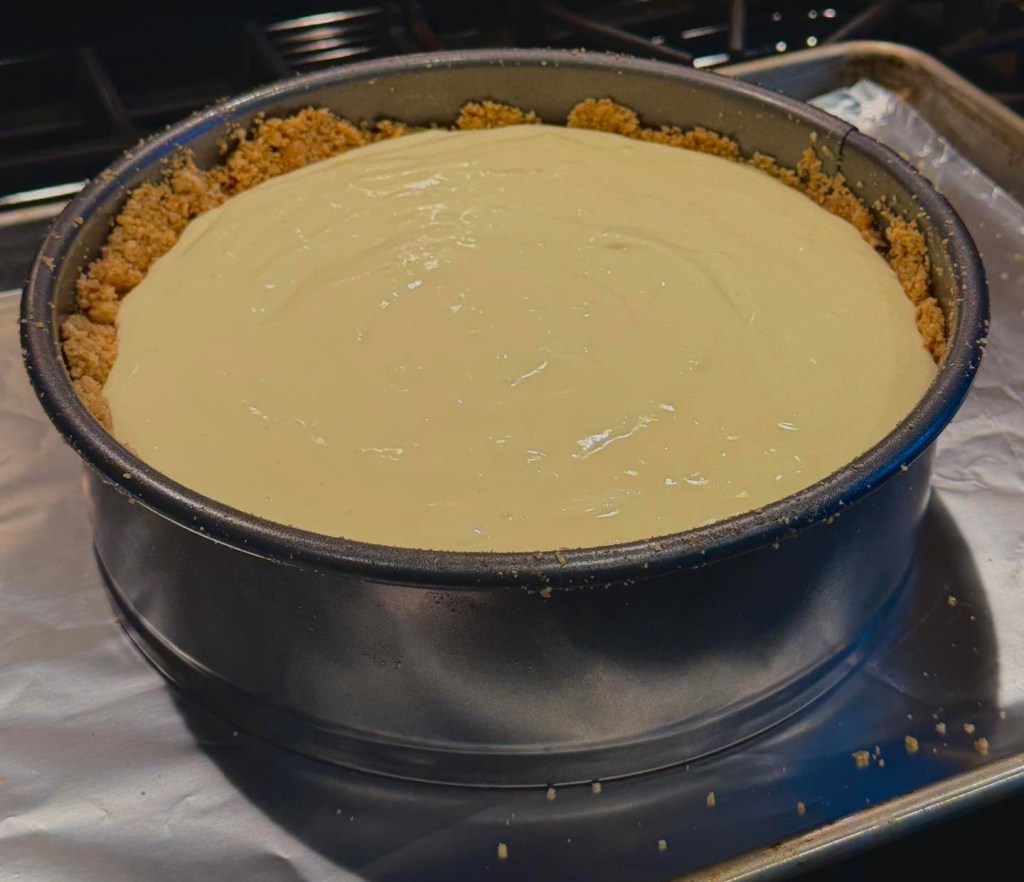
  7. Pour the filling into the prepared crust. Place the springform pan on a baking sheet (optionally lined with foil) to catch any drips.
  8. Bake at 325°F for about 60 minutes. Begin checking around the 50-minute mark. The cheesecake should be puffed, lightly browned around the edges, and the center should still have a slight jiggle. Depending on your oven, it may take anywhere from 50–75 minutes.
  9. Let the cheesecake cool for about 30 minutes. If needed, carefully run a butter knife around the edge to loosen the crust from the pan. Continue cooling until it’s close to room temperature.
  10. Refrigerate for at least 8 hours (overnight is even better) before serving.

Top with fresh Chuckatuck blueberries, strawberries, peaches, or whatever’s in season—or enjoy it just as it is.

Now it’s your turn… What’s your favorite way to top a cheesecake? 🍓🫐🍑 We’d love to hear your family traditions and favorite recipes in the comments!

From the Orchard

Summer in Chuckatuck has a way of showing up in the sweetest places.

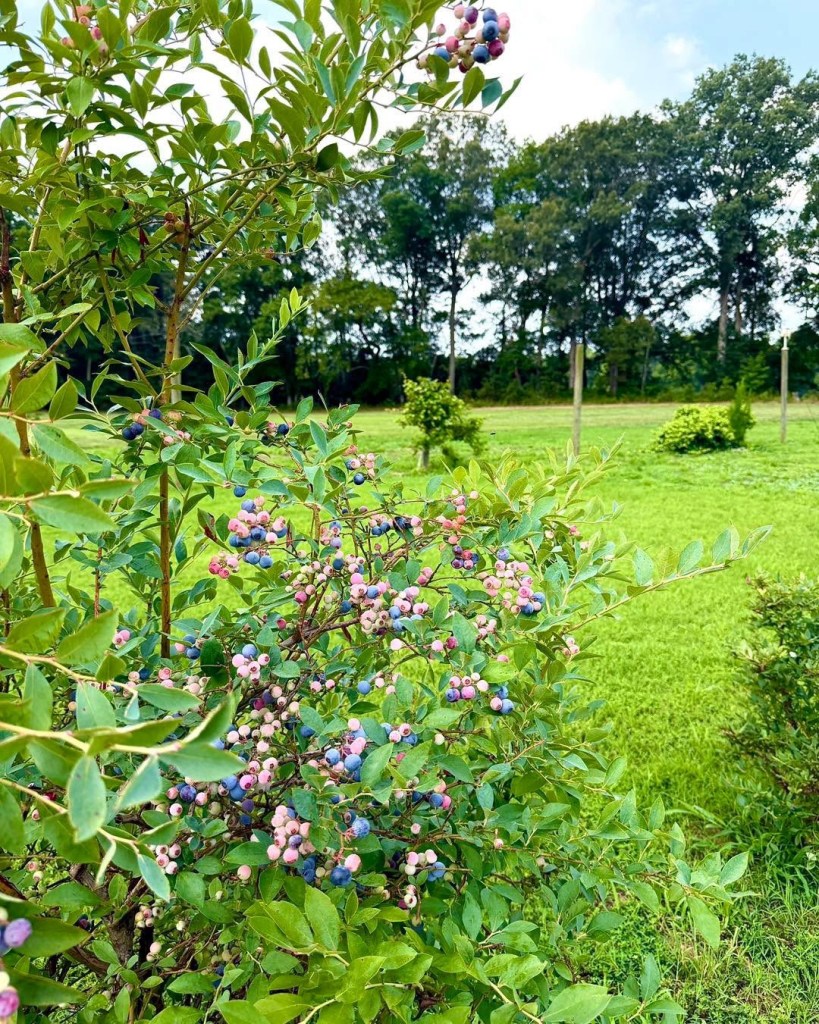
Around here, the orchard knows its own timing, and there’s no sense in hurrying it. The blueberries are already putting on a show — some dressed up in their best of deep, dusty blue, while the rest are still wearing a rosy blush, taking their own sweet time. The figs are hanging heavy on the branches, not quite ready to be picked, but if you listen close, they seem to whisper, “Just a little longer.”

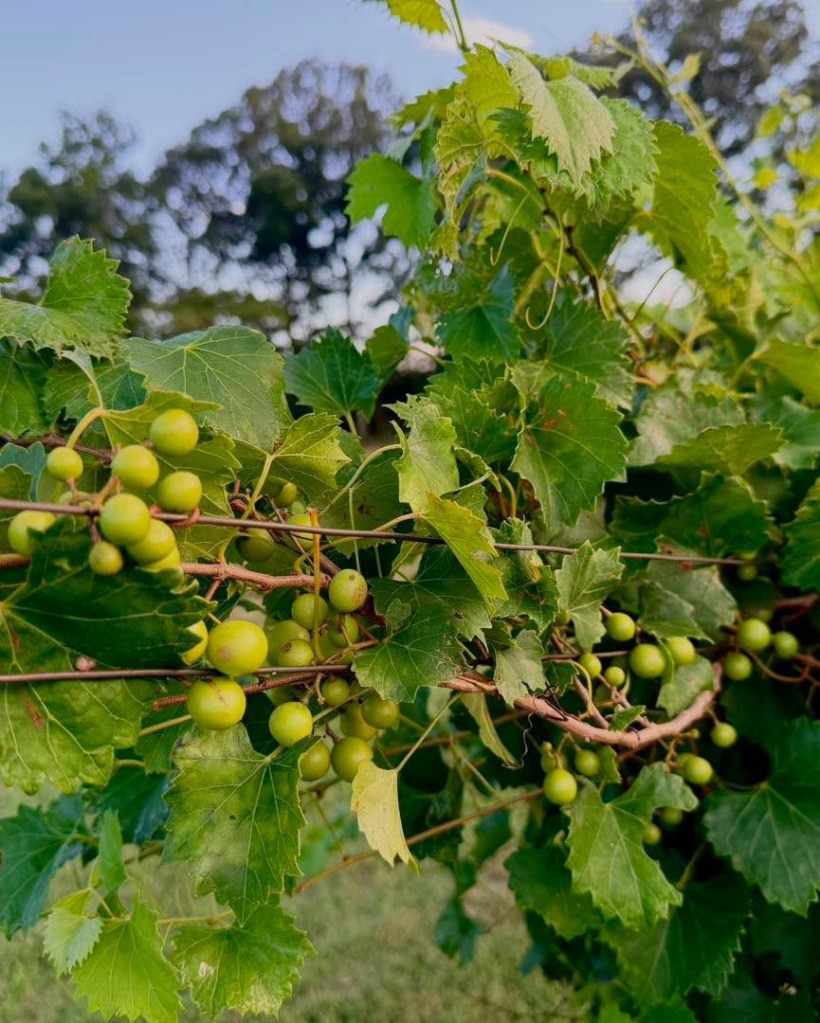
Out back, the muscadine vines are climbing and rambling like they’ve got all the time in the world. Come September, they’ll be heavy with sweet, thick-skinned grapes that carry the taste of the South itself — sun-warmed afternoons, mason jars full of sweet tea, and the kind of childhood memories that never really leave you. That’s the funny thing about a Southern orchard — it doesn’t just grow fruit; it grows stories.

We even have a couple of olive trees. Now, those are more of an act of faith than a sure thing, but that’s part of the joy of gardening here. Sometimes you plant for the harvest, and sometimes you plant just to see what kind of story the good Lord and Mother Nature decide to write.

There’s just something about summertime fruit that feels like home. Blueberries tucked into a warm cobbler with a scoop of vanilla ice cream melting on top. Fresh figs paired with a slice of cheese, stirred into preserves, or eaten right off the tree before anyone else notices. Muscadines picked straight from the vine, turned into jars of jelly, baked into pies, or maybe made into something that warms you from the inside on a cool evening. And if those olive trees ever decide to bless us with a real crop, well… we’ll call that a Chuckatuck miracle.

Now I have to ask…

What’s your favorite summertime fruit, and what do you do with it? Do you bake it into a pie, stir it into jam, freeze it for later, can it for the pantry, or eat it standing in the yard with the juice running down your chin?

Tell us in the comments. And if you have an old family recipe, or a story about something your grandmother used to make that nobody else could quite get right, we’d sure love to hear it. Those are the kinds of stories worth passing down right alongside the recipes.

The Chuckatuck Life

Hey friends!

Adrienne and I are excited to share something we’ve been working on — our new blog, The Chuckatuck Life 🪴

It’s a space where we’ll be honoring traditions passed down through generations while creating new ones worth holding onto, and celebrating the everyday moments that make life in and around Chuckatuck so special. Think homemade recipes, seasonal traditions, local history, and a little bit of small-town charm along the way.

Welcome to The Chuckatuck Life 💛

The Bermuda Diaries

Very pleased to make this new website public!

What began some eight years ago for me as a passing interest in a Bermuda-related photograph (of NC blockade runner/pilot Thomas Mann Thompson) has since resulted in two magazine articles, and continuing on with the identification and documentation of nearly seventy-five images taken by photographer Samuel W. Gault during his time in Bermuda from 1861 to 1865.

With a desire to share that research, I have compiled an online database for any others who may be interested in photographer Gault, Bermuda photography, American Civil War, Royal military or just general 19th century Bermuda history, etc. to be able to research. Here is the link:

Bermuda Through the Lens of Samuel Walter Gault, 1861-1865

The site was created through a software called Omeka, which is a web-publishing platform used internationally for the display of library, museum, archives, and scholarly collections. (It’s the same one we use for the North Carolina, State Troops and Volunteers project.)

The site not only allows interaction and the ability to share images and stories, but also is user-friendly for research purposes, whether you are a scholar or hobbyist. A full word/phrase search engine is included, and images can also be browsed by a topical tag. Additionally, you can directly submit your own images and stories for inclusion. There are currently over 45 images, from private collections as well as Universities, Museums, and Historical Societies, that have been kind enough to grant permission. And I am optimistic that many more will be added in the coming months as I gain additional permissions.

So please, enjoy, share, bookmark, and visit again soon! I am rather partial to the result here, but I encourage you to take a look and find out for yourself. Likewise, please let me know what you think, or any recommendations you may have for improvements!